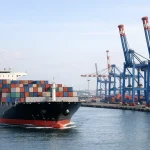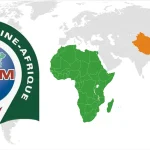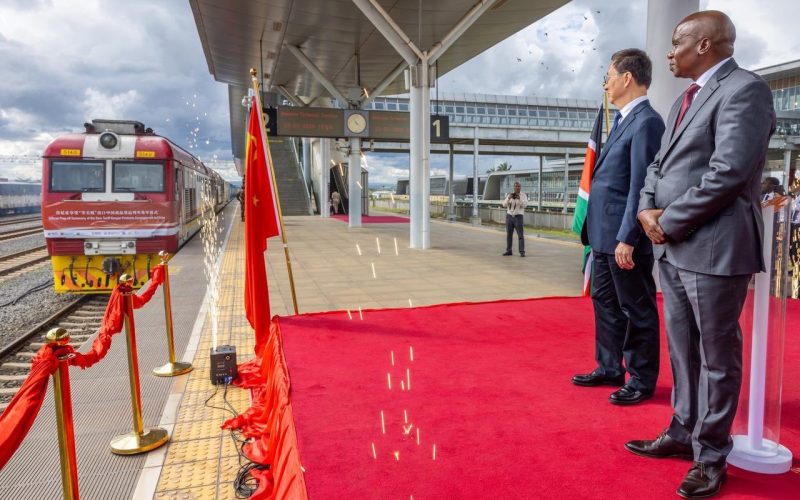
KENYA has dispatched its first commercial consignment to China under a sweeping zero-tariff arrangement that Beijing extended to 53 African nations, granting duty-free access on all tariff lines. The shipment, formally flagged off at the Standard Gauge Railway Nairobi Terminus on Tuesday, included fresh avocados, avocado oil, hides and skins, coffee, and green beans — a product mix that reflects Kenya’s current export strengths but also, analysts note, its persistent struggle to move beyond raw and minimally processed goods.
| 1.4B Chinese consumers | 53 African nations covered | 100% Tariff lines at zero duty | 2025 Policy effective year |
The ceremony was attended by Deputy President Professor Kithure Kindiki alongside Chinese Vice President Han Zheng, lending the event notable diplomatic weight. Cabinet Secretaries Lee Kinyanjui (Trade and Industry) and Davis Chirchir (Transport) were also present, alongside senior principal secretaries for trade, industry, and transport — a ministerial turnout that underscores just how much Nairobi is banking on the preferential access framework as a lever for economic rebalancing.
“The agreement presents a timely opportunity to expand Kenya’s export footprint in the Chinese market of over 1.4 billion people.”
Deputy President Prof. Kithure Kindiki, SGR Nairobi Terminus, March 2026
Market Access Is Necessary — But Not Sufficient
Trade economists are cautious about conflating market access with market success. China’s zero-tariff policy, formally implemented in 2025 under Beijing’s broader commitment to the Forum on China–Africa Cooperation (FOCAC), removes a longstanding price disadvantage for African exporters. But tariffs were never the primary constraint for most Kenyan exporters. Phytosanitary compliance, certification costs, cold-chain logistics, and the sheer complexity of navigating China’s import regulatory environment have historically kept Kenyan export volumes modest relative to the country’s agricultural potential.
Kenya’s avocado sector — perhaps its best-positioned commodity for the Chinese premium food market — has grown rapidly, but the bulk of its output continues to flow to the European Union under the EU–Kenya Economic Partnership Agreement. Redirecting or scaling supply chains toward China will require sustained private sector investment in post-harvest handling, certification infrastructure, and in-market distribution networks. The Deputy President’s call on the private sector to ‘take full advantage’ of the framework is well-placed, but the government’s role in de-risking that investment remains the decisive variable.
The Structural Question: Processing or Perpetual Primaries?
The composition of this inaugural shipment is telling. Raw avocados, raw hides and skins, unprocessed green beans, and coffee — all commodities at the lower end of the value-addition spectrum — dominate the consignment. Avocado oil represents the most processed product in the cargo, and even that sits at an early stage in a longer value chain that terminates in Chinese cosmetics, pharmaceuticals, and speciality food manufacturing.
This pattern is not unique to Kenya. Across the continent, Africa’s trade relationship with China has been characterised by the export of unprocessed primary commodities in exchange for manufactured goods — a structure that replicates, in important respects, the extractive dynamics that African governments have been seeking to escape since independence. The zero-tariff framework does not, by design, incentivise processing: a zero-tariff on raw avocados and a zero-tariff on avocado-based skincare products are equivalent in headline terms, but vastly different in their implications for employment, technology transfer, and retained value.
For the framework to catalyse genuine structural transformation, Kenya — and African exporters broadly — will need to use the breathing room created by preferential access to deliberately upgrade product sophistication. Industrial policy, export financing, and investment in food processing clusters are the levers that determine whether this milestone becomes a turning point or a reinforcement of the status quo.
“Zero tariffs on raw commodities and zero tariffs on processed exports look identical on paper — the difference lies entirely in what Africa chooses to ship.”
Trade Economics Analysis, The African Mirror
The Geopolitical Dimension
The high-level optics of the flag-off — with a Chinese Vice President present alongside Kenya’s Deputy President — are not incidental. Beijing has invested heavily in the narrative that FOCAC commitments are translating into concrete, visible benefits for African partners. The SGR itself, which carried the consignment from Nairobi toward Mombasa port, was financed and built by China, making the ceremony something of a full-circle moment in the China–Kenya infrastructure-for-access bargain.
That bargain has attracted significant scrutiny. Kenya’s SGR debt obligations to China’s Exim Bank remain a politically sensitive issue domestically, with parliamentary oversight committees and civil society organisations raising questions about transparency and the terms of refinancing arrangements. The government has consistently maintained that the SGR’s operational benefits and its role as a trade-enabling asset justify the debt load. Tuesday’s ceremony, broadcast widely, is in part a communication strategy: evidence that the infrastructure investment is generating real commercial returns.
Regionally, Kenya’s early activation of the zero-tariff channel positions it ahead of many peer exporters in sub-Saharan Africa who have been slower to meet China’s phytosanitary and certification requirements. First-mover status in an untapped market of this scale is commercially meaningful, provided Nairobi can sustain and scale what it has started.
What to Watch
The critical test of this milestone will not be visible for another 12 to 24 months. Investors and policymakers should track: the volume and product mix of subsequent consignments — particularly whether processed goods begin to feature alongside raw commodities; the extent to which SME exporters access the framework versus large agribusiness players; progress on bilateral phytosanitary negotiations for additional Kenyan products, including mangoes and macadamia nuts, which China has yet to open to Kenyan imports; and whether Kenya’s export promotion agencies deploy dedicated in-market support in Shanghai and Guangzhou, where premium agricultural products command the strongest margins.
For now, the first shipment is a genuine and warranted milestone. It validates years of diplomatic groundwork and signals that the commercial relationship between Kenya and China is entering a more reciprocal phase. The question is whether Nairobi has the institutional bandwidth and the political will to convert preferential access into lasting structural gains — or whether, a decade from now, Kenya will still be flagging off containers of raw avocados.