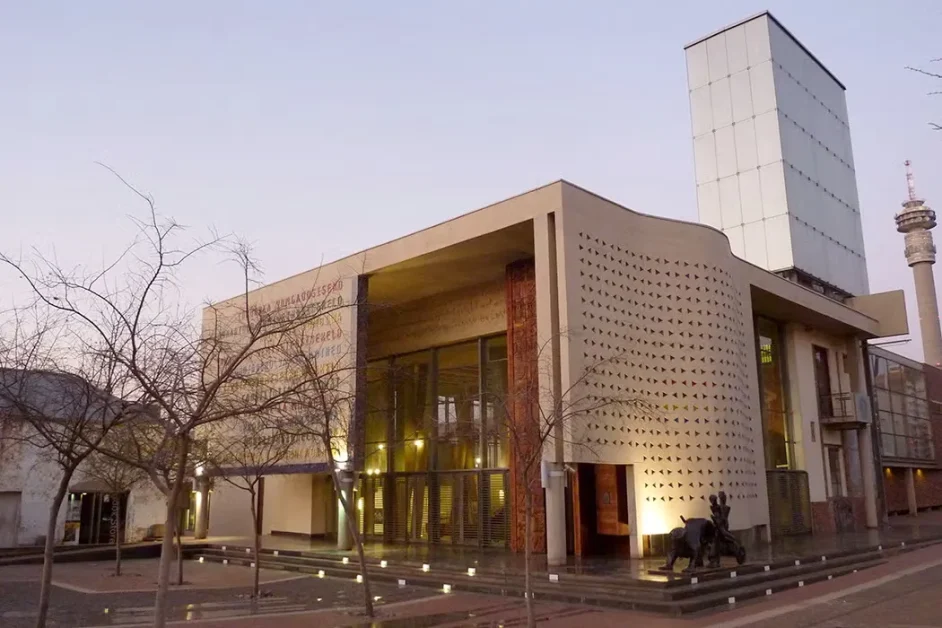
ON 8 May 1996, a young Cyril Ramaphosa stood before the Constitutional Assembly in Cape Town and called South Africa’s newly minted supreme law “our new nation’s birth certificate.” The apartheid securocrats, he noted with evident wonder, were sitting next to the people they had once labelled terrorists. The gallery was full. The country was alive with the sense of something irreversible and magnificent having just happened. Mandela watched in silence from the podium as the chamber erupted into song.
Exactly thirty years later, on the same calendar date, Ramaphosa – now the President of the Republic, the highest officer of that same constitutional order – was plunged into the gravest crisis of his political life by the court that the birth certificate created. The Constitutional Court ruled on Friday morning that Parliament had acted unconstitutionally when it voted, in December 2022, to kill a Section 89 independent panel report that found Ramaphosa had violated his oath of office and had a case to answer over the now-notorious Phala Phala scandal. The court has ordered that an impeachment committee be constituted. The process it shut down must now resume.
“When we vote today to adopt the constitution before us, we will be giving life to a new nation. A nation of free and equal people. ”
Cyril Ramaphosa, 8 May 1996
The date is not incidental. It is the load-bearing irony of the entire affair. The man who chaired the Constitutional Assembly through its two years of exhausting, historic work – who negotiated across the widest imaginable political fault lines to produce a document that the world would come to regard as among the most progressive ever written – now finds that document turned upon him. Not by his enemies wielding it improperly, but by the court doing exactly what the Constitution designed it to do: hold power to account without fear or favour.
What Parliament did — and what the court has now undone
The facts of the underlying scandal are by now well established. In February 2020, approximately $580,000 in undeclared foreign currency was stolen from a sofa during a break-in at Ramaphosa’s Phala Phala game farm in Limpopo. The theft was not reported through official police channels. Instead, the Presidential Protection Unit conducted what the Independent Police Investigative Directorate would later describe as an unofficial operation — tracking suspects, recovering money, and conducting investigations entirely outside the law. The then-national police commissioner only learned of the incident through media reports after his retirement.
The Section 89 independent panel, chaired by retired Chief Justice Sandile Ngcobo, concluded that there was prima facie evidence that Ramaphosa had committed serious violations of the Constitution, exposed himself to a conflict between his official duties and private interests, and had a case to answer. That finding was the first step in the impeachment mechanism the Constitution’s framers designed precisely for such moments.
Then the ANC did what political majorities, left unchecked by constitutional guardians, invariably do: it used its numbers. In December 2022, when the ANC still commanded a parliamentary majority, the National Assembly voted down the Section 89 report, stopping the impeachment process dead. The Economic Freedom Fighters and the African Transformation Movement refused to accept this. They took the matter to the apex court. On Friday, more than 500 days after arguments were heard, the Constitutional Court gave its answer: Parliament was wrong. The vote is invalid. The report must be referred to an impeachment committee.
“Without the Constitution our country would be cast adrift, and be vulnerable to the excesses of unchecked power.”
Cyril Ramaphosa, Constitutional Court 30th anniversary, 2024
The bitter symmetry of Constitution Day
There is something almost Greek in the architecture of this moment. The Constitution’s framers built into it the very mechanisms now being used against its chief architect. Section 89 – the impeachment clause – exists because the negotiators of 1994 to 1996, Ramaphosa among them, understood that no individual, however celebrated, should stand above the law. The Constitutional Court exists for the same reason. As Ramaphosa himself said at the court’s 30th anniversary celebrations earlier this year, the court was built on the belief that “never again shall South Africa be governed without regard for dignity, equality, and justice for all who live in it.” The court has taken him at his word.
The ruling also draws an unavoidable parallel with the 2016 and 2017 ConCourt judgments that found Parliament derelict in its constitutional duty to hold Jacob Zuma accountable. Then, as now, the court affirmed that parliamentary majorities cannot function as executive shields. Ramaphosa was among the most vocal critics of that constitutional failure under Zuma. He campaigned on restoring the integrity of the institutions Zuma’s era had hollowed out. That the same constitutional logic now applies to him is not a contradiction the court could ignore, nor should it.
Two choices, no safe road
Ramaphosa’s political options are stark and unforgiving. He can fight – enter the impeachment committee process, contest the findings, and rely on GNU coalition partners to prevent the two-thirds parliamentary majority that removal requires under Section 89. This path is gruelling, politically corrosive for the already fragile Government of National Unity, and deeply unfamiliar territory for a leader who has always preferred to negotiate rather than fight.
Or he can go. Resignation would spare the country a prolonged constitutional ordeal, trigger a new presidential election in the National Assembly, and reshape South African politics in ways that are, as yet, incalculable. Deputy President Paul Mashatile’s ambition is no secret. The ANC’s succession landscape would be convulsed overnight.
What makes this moment uniquely dangerous for Ramaphosa is not the legal jeopardy alone. It is the collapse of the personal support architecture that saved him once before. In November 2022, when the ad hoc committee report was first published, Ramaphosa is reported to have come to the very edge of resignation – telling advisors he lacked the fight for what was coming, his resignation speech written and ready. That he stayed was the result of decisive private counsel from Pravin Gordhan, Derek Hanekom, and a forceful intervention from Gwede Mantashe. Those pillars are no longer in place in the same way. He must now decide alone.
The constitution’s vindication – and its test
For those who still believe in South Africa’s constitutional project, Friday’s ruling is not a cause for despair but for sober reflection on what constitutional democracy actually means. It means that no office confers immunity. It means that parliamentary majorities serve the Constitution, not the other way around. It means, as the court found, that the mechanism for holding a president accountable cannot be switched off by the very party that benefits from the switch.
The Constitution that Ramaphosa presented to the world thirty years ago today was designed to be, in his own words, a protection against “the excesses of unchecked power.” On this Constitution Day, it is doing precisely that. The man who gave it life must now live under it — as must every South African who still believes that the birth certificate he signed thirty years ago means what it says.