ON 7 and 8 May 2026, Australian federal authorities crossed a constitutional threshold that had stood uncrossed for twenty-four years. Three women – returning nationals who spent more than seven years detained without charge in the dust and disease of northeast Syrian desert camps – were brought before Australian courts on charges that have never before appeared on the country’s docket: crimes against humanity.
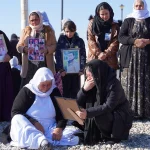
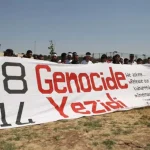
Two of the women are accused of enslaving female Yazidi captives, a community that the Islamic State (ISIS) systematically sought to annihilate through killings, sexual slavery, and torture. A third faces charges of entering a declared conflict zone and joining the organisation. All three are part of a group of thirteen Australians – four women and nine children – repatriated after years of detention by the US-backed, Kurdish-led Syrian Democratic Forces (SDF).
“This is the first time Australian authorities have charged anyone with crimes against humanity.”
Human Rights Watch, May 2026
If convicted, the women face up to 25 years in prison under legislation the Australian parliament enacted in 2002 – statutes that, until this week, had never been invoked. The charges land with the weight of international precedent, but they also expose the full complexity of a reckoning that stretches far beyond the courtroom: into displaced communities, children in institutional care, and questions about who bears responsibility for a catastrophe that consumed an entire generation.
The Architecture of the Charges
Crimes against humanity occupy the apex of international criminal law, occupying the same moral register as war crimes and genocide. They are defined by their systematic, widespread nature – acts committed not in the heat of individual violence but as part of a deliberate, organised pattern. That Australian prosecutors have chosen this framework is not incidental. It signals an intention to establish a domestic jurisprudence of atrocity accountability – and to do so using the victims already living on Australian soil.
Human Rights Watch has confirmed that some of the alleged Yazidi victims of the crimes detailed in the charges are now residents in Australia. That proximity creates both prosecutorial opportunity and profound responsibility: the state must simultaneously pursue justice on their behalf, provide them meaningful support and protection, and do so without instrumentalising their trauma as mere courtroom evidence.
The charges have their genealogy in a 2002 statute that was itself a product of Australia’s ratification of the Rome Statute of the International Criminal Court. The law was always intended to be used. What is remarkable is that it took nearly a quarter of a century, and the return of ISIS-linked nationals to activate it.
Seven Years Without Charge – A Complicating Factor the Courts Cannot Ignore
Before a single prosecution argument is heard on the merits, the courts will face a foundational question of justice: how to account for the years the accused spent in arbitrary detention.
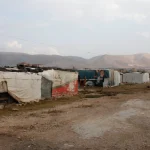
Human Rights Watch has documented the conditions at al-Hol and affiliated SDF-controlled camps in northeast Syria in extensive detail. They are places of preventable death – lacking adequate food, water, healthcare, and any meaningful legal process. Children have grown up in them. Women have given birth in them. People have died in them without ever facing a charge, let alone a trial. The women now before the Australian courts endured more than seven years in these conditions.
The time spent in arbitrary detention in Syria must weigh on any sentence. Justice cannot be selectively applied.
Human Rights Watch has explicitly called on Australian courts to consider applying the period of arbitrary detention to any custodial sentence. This is not a novel legal concept – it reflects basic principles of proportionality and human dignity that are embedded in international human rights law. Whatever the women are ultimately found to have done in Syria, the state cannot ignore what was done to them in the name of security policy.
Australia has form here. Of the thirty-one women and children who have previously returned from ISIS-controlled territory in northeast Syria, twenty-five received direct government assistance. Not one has been reported as engaging in criminal conduct since their return. The evidence base for repatriation as a policy, in other words, supports itself.
The Children: A Crisis Within the Crisis
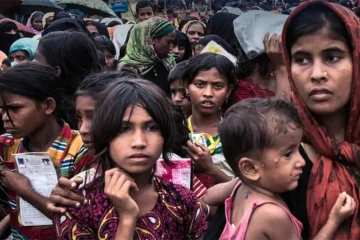
Amid the juridical machinery now in motion, nine children wait. They survived circumstances no child should endure – born into or transported into a caliphate, raised in camps, separated by geography from every social network that might have offered stability. They are now separated from their mothers.
The Australian government has not disclosed what provisions have been made for their welfare. This silence is not administratively neutral – it is a policy choice, and one with consequences that research has already illuminated.
Human Rights Watch’s 2022 global study on the reintegration of children returned from northeast Syria camps found that, where reintegration was handled thoughtfully and with adequate support, children fared well. The determining variables were trauma-informed care, stable family placement, and continuity of legal status. The determining failure mode, documented in Belgium, France, the Netherlands, and Sweden, was immediate family separation when a mother was under investigation.
In those countries, children were removed from their mothers the moment charges were filed, or investigations opened – not because the children had done anything wrong, or because any child-specific risk assessment had been conducted, but because the mother was legally entangled. Mental health professionals and family members documented the emotional and psychological devastation this caused. Extended family members – grandparents, aunts and uncles, people who had often been in contact with authorities for years – were subjected to lengthy investigations before they could even provide contact and care.
Children did not choose ISIS. They must not be punished by a state that cannot distinguish between protecting a child and abandoning one.
Australia now stands at the same crossroads. The government has the benefit of international research. It has the cautionary examples of European jurisdictions that got it wrong. What it does not yet have – or has not yet disclosed – is a publicly stated commitment to a reintegration framework that places the children’s wellbeing above bureaucratic risk-aversion.
Human Rights Watch has called directly on the Australian authorities to provide comprehensive trauma care and support for successful reintegration. It has also called on the government to attend to the needs of the alleged victims living in Australia. Both obligations are real. Neither cancels the other.
The Global Reckoning and What Australia’s Move Signals
Australia is not operating in isolation. Since the territorial collapse of ISIS’s self-proclaimed caliphate in 2019, governments across Europe, North America, Asia, and Oceania have grappled with the same question: what do you do with your nationals who went, who survived, and who come home?
Judicial authorities in Germany, France, Sweden, and Belgium have pursued atrocity crimes in ISIS-related cases. But these prosecutions have emerged from legal systems with longer histories of domestic war crimes jurisdiction, and in countries where the political debate about returns has been fought out more openly and often more bitterly.
Australia’s first use of its crimes against humanity statute arrives in a different context — a country that has long positioned itself as a regional leader on international rule-of-law standards, but that has also operated a detention regime on Manus Island and Nauru that was itself the subject of serious international human rights criticism. The jurisprudential reach now being extended to atrocities committed in Syria coexists with a domestic immigration enforcement architecture that has itself been accused of systemic rights violations.
That tension is not a reason not to prosecute. It is a reason to prosecute carefully, rigorously, and with full procedural integrity – which is precisely what Human Rights Watch has called for. Due process is not an obstacle to accountability. It is the condition under which accountability becomes legitimate.
What Justice Looks Like Here
The women before the Australian courts are entitled to the presumption of innocence. The Yazidi women and girls who are alleged to have been enslaved are entitled to truth, justice, and reparation. The nine children caught in the legal crossfire are entitled to care, stability, and a future that is not defined by what their parents may or may not have done in a warzone.
These entitlements are not in competition. A legal system adequate to this moment must hold all of them simultaneously. Australia’s 2002 legislation was designed for exactly this kind of moment – the moment when the horrors of the wider world land, through the agency of the state’s own nationals, on domestic soil.
The question now is whether the institutions of the Australian state – prosecutorial, judicial, child welfare, and victim support – are prepared to deliver not just a verdict, but justice in its fullest sense. The world, and in particular the Yazidi diaspora and the African and Global South communities who have watched ISIS’s predations with particular horror, will be watching.
Prosecution without compassion is not justice. It is performance.
The African Mirror will continue to track this proceeding as it unfolds – not merely as a legal curiosity, but as a test of whether Western democracies can hold their own citizens to account for international crimes while upholding the rights of the accused, the dignity of survivors, and the futures of innocent children. These are not easy things to do at once. Doing them imperfectly while trying is not failure. Abandoning any of them is.