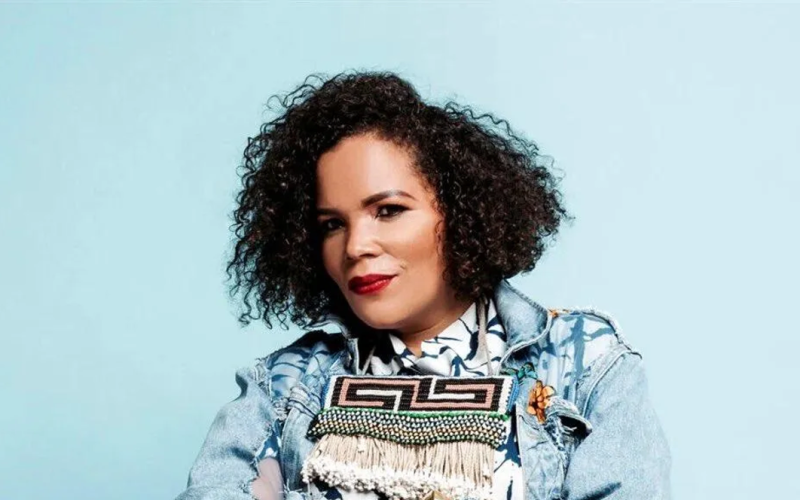
IF there is a name associated with a city, it’s Maria McCloy. Maria didn’t just love Johannesburg, she breathed it; she was part of the heartbeat of the city. A child of Africa, growing up in Maseru, Lesotho, and Maputo, Mozambique, she wanted to create and curate a space of stories told from an African perspective. She did just that.
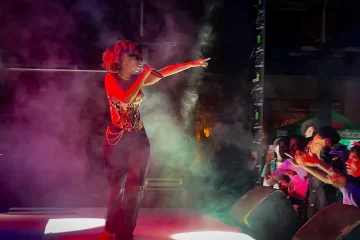
If you needed information for a cultural event, wanted details on an artist, or a story about the city’s latest cultural growth, Maria was the answer. As someone just over half her age, I saw McCloy as a gatekeeper of sorts – the person to go to if I needed to find artistic voices or wanted connections to some of the city’s most popular artists. It would not be much of an exaggeration to say that I saw Maria everywhere and doing everything. I’ve seen her as a DJ at parties across Braamfontein, the greater Johannesburg city, and Cape Town.
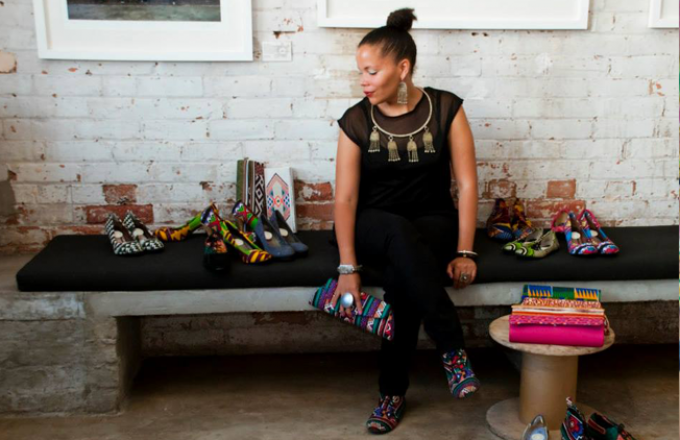
I’ve seen her selling her jewellery and clothing first at Maboneng, and then when it was still Neighbourhood Market on Juta street, Braamfontein in Johannesburg. I’ve seen her behind the scenes of the Basha Uhuru festival, when it was first launched as another platform to celebrate South Africa’s democracy, its cultural heritage, and diverse output of artists.
In my first interview with musician (and her friend) Thandiswa Mazwai as a junior reporter, I admitted my fear of flunking the entire thing to Maria, and she sent me a voice note that I had “nothing to worry about. Think of it as a conversation and just ask the questions. Thandiswa won’t bite.”
I never forgot that message in my first and subsequent interviews with King Tha, or any other artists that I interviewed. I looked to her as a guide of the city, leaning on any event she shared with me for the hopes of networking and to understand how she moves through the community. I began learning how someone becomes a proud ambassador of their city, their home, their community.
I would look forward to seeing her at some events because it gave me the chance to steal any nugget I could from her on the cultural scene, and sometimes to find out where she bought her jewellery because I was obsessed with her ring collection.
A DJ, publicist, designer, artist manager, McCloy was a creative stalwart, a real-life depiction of what life as a Jo’burg creative was to me. I can’t imagine how proud she was to see South Africans filling up venues to support local artisans and musicians at events like Basha Uhuru, Afropunk, Bassline Fest, Fête de la Musique, and countless cultural events at Constitutional Hill and around Braamfontein.
McCloy never failed to shine a light on the artisans and creators who kept the city pumping. Many who knew her, knew her as the writer of Kwaito and the then-fledgling hip-hop music scene, telling the nation about the ingenious sounds of trio TKZee, rappers Proverb, Reason, Zubz, and H2O.
Through her co-founded company, Black Rage Productions, she helped foster a space in the late 1990s that didn’t exist at a time when much of South Africa’s cultural landscape was still evolving. There was no box to fit her, because she found a way to make every box she stepped into work for her. Her work and fingerprints are entrenched in the fashion, music, artwork, people, and spaces we promote by foot, camera and microphone. Like how certain anthems are associated with South Africa — Waka Waka, Sister Bethina, Jerusalema— many of Jo’burg’s cultural successes carry her credits.
There is a song by Joe Nina called “Ding Dong (Maria Podesta),” released in 1990, which she took as a moniker after it came out, and Joe Nina then performed it live for her as a surprise at her 50th birthday celebration not too long before she passed away. That’s how much she mattered to the culture, to the city.
If you said her name to anyone in the community, best believe they had a song to sing about Maria, whether in the tune of Joe Nina, or in the tune of Blackstreet and Carlos Santana.
I don’t know if we will ever experience another like her, but I hope that she left a bit of her love for the city and South Africa’s cultural heartbeat in every person she touched, platformed, befriended and loved. Maria left us at 50 years young, due to heart failture, surrounded by her loved ones.
I hope those that weren’t familiar with her but learn of her will want to learn about why she was such a loud spokesperson for the community with her softspoken voice, big hair, and maximalist style.
I hope those who were close to her will carry her spirit as we grow in our roles as ambassadors of South Africa’s cultural scene. In a time where support and resources seem to be falling away, voices like Maria McCloy’s kept the industry in focus. So, let’s keep playing and singing the song of Maria.