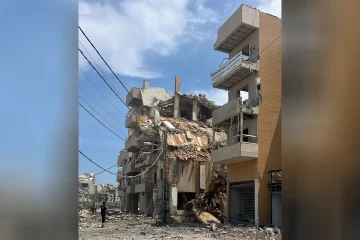
NEARLY three months after the United States and Israel launched a war that has killed thousands of Iranians and displaced hundreds of thousands across Lebanon, the two sides remain separated by a gulf that diplomatic language can barely bridge. Tehran’s latest peace proposal, disclosed publicly on Tuesday, lays bare just how far apart Washington and Tehran remain — and how precarious the current ceasefire truly is.
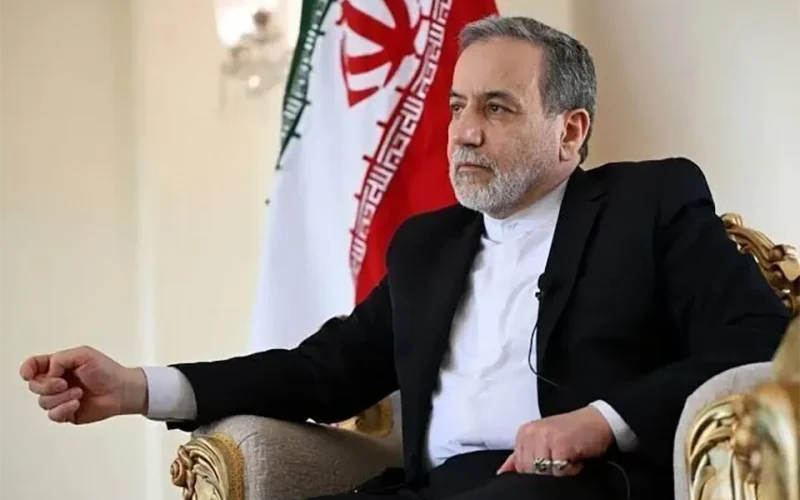
Iran’s Deputy Foreign Minister Kazem Gharibabadi confirmed on Tuesday that Tehran’s latest proposal to Washington demands an end to hostilities on all fronts, including Lebanon, the withdrawal of US forces from areas close to Iran, reparations for war damage, the lifting of sanctions, the release of frozen funds, and an end to the US naval blockade. In short, Iran wants acknowledgement of the destruction visited upon it – and it wants to be made financially whole.
The demand for reparations is, politically, the most striking element. It signals that Tehran is not approaching this as a negotiation between equals, conceding to a stronger power, but as a sovereign state asserting that it was wronged and is owed redress. That framing is unlikely to find any traction in Washington.
Indeed, the terms as described in Iranian state media appeared little changed from Tehran’s previous offer, which US President Donald Trump rejected last week as “garbage.” That the proposal has been resubmitted with its core demands essentially intact suggests Iran is either betting that time is on its side, or that it has calculated the domestic political costs of deeper concessions to be prohibitive — or both.
For his part, Trump appears to be in an uncomfortable middle space between the impulse to project strength and the pressure to end a conflict that is straining global commodity markets. Under pressure to reach an accord that would reopen the Strait of Hormuz — a critical chokepoint for global oil supplies — Trump has alternated between expressing hope that a deal is close and threatening devastating new strikes if Tehran fails to comply.
On Monday, he appeared to choose the softer register. Trump told reporters there was “a very good chance” the two sides could work something out, adding: “If we can do that without bombing the hell out of them, I would be very happy.” That is not the language of a president preparing for imminent escalation. But neither is it a commitment to restraint. Reuters reported it could not independently determine whether preparations had been made for a renewed round of strikes.
The role of Pakistan as a mediator deserves attention. Islamabad hosted the only round of formal peace talks since the ceasefire took hold in early April and has been conveying messages between the two sides. A Pakistani source confirmed that Iran’s latest proposal had been shared with Washington, but struck a notably pessimistic note: the sides “keep changing their goalposts,” with the source adding bluntly, “We don’t have much time.” That phrase carries weight. It implies that the window for a negotiated exit is not indefinitely open.
The nuclear question remains the deepest obstacle. Iran holds approximately 400 kilograms of uranium enriched to 60 percent — just below the 90 percent threshold for weapons-grade material. Washington has demanded that Iran either transfer its enriched uranium stockpiles abroad or halt enrichment for at least 20 years. Tehran regards its enrichment programme as a sovereign achievement; it will not surrender. According to a senior US official cited by Axios, Iran’s latest counterproposal does not include a commitment to suspend uranium enrichment — the precise red line Washington has drawn in every round of talks.
Although neither side has publicly disclosed any concessions, a senior Iranian official suggested Washington may be softening some demands. One source indicated the US had agreed to release a quarter of Iran’s frozen funds held in foreign banks, and had shown more flexibility on allowing Iran to continue some peaceful nuclear activity under IAEA supervision. The US has not confirmed it has agreed to anything.
The military reality underneath the diplomacy is telling. Despite weeks of US-Israeli strikes before the April ceasefire, the war has yet to deprive Iran of its stockpile of near-weapons-grade enriched uranium or its capacity to threaten its neighbours with missiles, drones and proxy militias. Iran’s clerical leadership, which had faced a mass uprising at the start of the year, withstood the assault with no visible sign of organised opposition collapsing. The war’s stated objectives – regime change conditions, dismantled missile capabilities, severed proxy networks – remain unachieved.
The ceasefire that halted the initial strikes took effect on 8 April through Pakistani mediation after 39 days of bombardment. Talks in Islamabad subsequently failed to produce a lasting agreement. Drones have since been launched from Iraq toward Gulf states including Saudi Arabia and Kuwait, a reminder that the conflict’s regional tentacles remain active even as the formal guns are quiet.
What is emerging is not a peace process but a stalemate with an uncertain shelf life. Iran has demonstrated it can absorb a superpower military campaign without capitulating. The United States has demonstrated it can inflict enormous damage without achieving its declared strategic goals. Both sides are now testing whether the other will blink — or fracture — before the ceasefire does.
For Africa and the Global South, the stakes of this impasse extend beyond the battlefield. Every day the Strait of Hormuz remains threatened, energy costs remain elevated and shipping disruptions ripple through economies least able to absorb the shock. A durable peace is not merely a geopolitical preference – it is an economic necessity for billions who had no voice in the decision to go to war.