For nearly four decades, public criticism of President Yoweri Museveni’s grip on power in Uganda has come from outside his family circle – from opposition politicians, civil society and a battered independent press. This week, in a striking departure, it has also come from inside the presidential household itself.
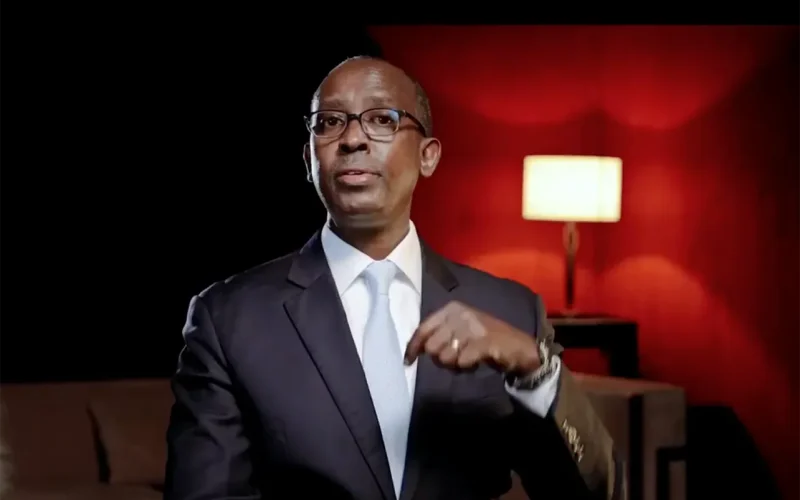
Odrek Rwabwogo, chairperson of the Presidential Advisory Committee on Exports and Industrial Development (PACEID) and a senior presidential adviser, is married to Museveni’s eldest daughter, Pastor Patience Museveni Rwabwogo. In an interview with The Observer, the 52-year-old businessman — long regarded as a Museveni loyalist and, at various points, a subject of succession speculation within the ruling National Resistance Movement (NRM) – broke from the party’s carefully managed messaging to deliver an unusually blunt account of what he witnessed during Uganda’s last general election.
Asked about the conduct of the poll that returned his father-in-law to a seventh term in office, Rwabwogo did not dispute the violence that marred it. Instead, he offered a raw, first-hand description of disorder so disturbing that he struggled to watch it unfold – by his own account, even in his own area.
“I want you to know that freedom does not always beget freedom,” Rwabwogo said. “It sometimes breeds anarchy and a resurgence of what is in the foundational DNA.”
“There were also groups inside the movement in the last elections dressed up in military uniforms, beating up people, invading polling stations in some of the constituencies, shooting and dispersing voters, and then openly doing ballot stuffing.”
“Some of these scenes were extremely disturbing for me to watch,” he said. “Other people lined up others and paid them to vote for them. No independent choice at all from citizens — some of the citizens in our area.”
The recording trails off as Rwabwogo begins to draw a wider lesson from what he describes: “This is what happens when we undermine, or when we lack a central uniting idea, and we…” – his sentence left unfinished in the portion of the interview made available to this newspaper.
Rwabwogo’s account, delivered as part of a broader reflection on what he called Uganda’s “elite disunity,” nonetheless amounts to one of the most explicit admissions yet, from inside the president’s own family, that the last election was marred not by isolated lapses but by organised, uniformed violence and ballot fraud carried out in plain sight. It is a rare crack in a wall of denial the NRM has maintained for years, even as opposition parties, election observers and rights groups have levelled similar allegations from outside the system.
A REGIME THAT NO LONGER HIDES ITS HAND
Rwabwogo’s remarks land at a moment when Uganda’s ruling family is making little effort to disguise the machinery of control behind it. Gen. Muhoozi Kainerugaba, Museveni’s son and the army’s Chief of Defence Forces, has in recent days behaved less like a uniformed officer answerable to civilian institutions than a ruler issuing decrees.
Hours before this report went to press, armed soldiers laid siege to the Kampala headquarters of Nation Media Group, forcing the country’s largest independent broadcaster, NTV Uganda, off the air along with Spark TV, and halting production at the Daily Monitor, Uganda’s biggest independent newspaper. Two radio stations, KFM and Dembe FM, also went dark. The order came directly from Gen. Muhoozi, who announced the shutdown in a string of late-night posts on X. “In Uganda, I DO NOT believe in a free press!” he wrote, adding that the outlets “will not re-open” without his personal permission and that “all bad stories about Uganda” would henceforth have to be cleared by his office. He said he had held the power to shut down any media house in the country “since 2017,” a power he said was given to him “by my great father President” Museveni.
THE VANISHING OF DR MIRIA MATEMBE
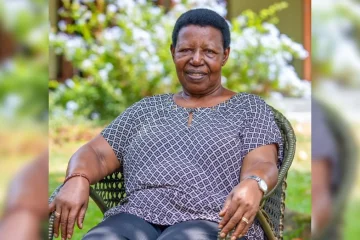
The media shutdown follows more than a week of mounting alarm over the fate of Dr Miria Matembe, the veteran former Minister of Ethics and Integrity and one of the architects of Uganda’s 1995 Constitution, who has not been seen or heard from since security operatives raided her home in Luzira, Kampala. Her family says she had gone out for her routine morning jog when armed men, some in military uniform and others in plain clothes, scaled the perimeter wall of her residence. Her husband, Nehemiah Matembe, said the family had received no word of her whereabouts since. Relatives fear she may have been intercepted while jogging and taken into custody.
Matembe, once a trusted figure inside Museveni’s NRM before breaking with the party over the removal of presidential term limits in 2003, had in recent months become one of government’s most persistent critics of enforced disappearances and the military’s expanding footprint in civilian life — the very conduct her own disappearance now appears to illustrate. Her case has drawn a personal intervention from Gen. Muhoozi himself, who took to social media to describe her as “a very OLD, UGLY woman” and warned that he would “teach her the manners her many husbands should have taught her” — remarks that have deepened, rather than eased, public alarm over her safety.
A LAWYER PUNISHED FOR DOING HIS JOB
Matembe’s disappearance follows the abduction and reported torture of Erias Lukwago, the lawyer representing four-time presidential candidate and detained opposition leader Dr Kizza Besigye. Lukwago, a former Kampala Lord Mayor, was seized by soldiers from his home in Wakaliga on 15 June, hours before he was due to serve Gen. Muhoozi with court summons in a lawsuit Besigye had filed accusing the general of threatening his life. According to his family, Lukwago was beaten and stripped in detention before being produced in court more than 48 hours later, well beyond the legal limit, visibly shaken and with his head shaved. He was subsequently charged with misprision of treason and remanded to Luzira Prison. The Uganda Law Society, describing the arrest as an attack “on the entire bar and on the rule of law itself,” called a nationwide lawyers’ strike in protest. Besigye himself remains in detention on treason-related charges that rights groups have condemned as politically motivated.
WHAT IT MEANS
Taken individually, each episode — a disputed election, a missing rights veteran, a tortured lawyer, a media blackout — might be explained away by Kampala’s security establishment as isolated incidents. Taken together, and set against an admission from inside the president’s own family that the last election was won by force as much as by ballot, they describe something more systemic: a state in which the institutional restraints on the military, the courts and the press are dissolving, and in which a single family — increasingly through one of its sons — exercises a form of control once reserved for elected office.
That it is Rwabwogo, of all people, who has put words to what Museveni’s critics have alleged for years says less about a crisis of conscience inside the First Family than about how openly Uganda’s ruling elite can now discuss what was once unspeakable. Whether his account changes anything for the citizens he says were beaten, shot at or paid to vote against their will remains, for now, an open question.
For nearly four decades, public criticism of President Yoweri Museveni’s grip on power in Uganda has come from outside his family circle – from opposition politicians, civil society and a battered independent press. This week, in a striking departure, it has also come from inside the presidential household itself.
Odrek Rwabwogo, chairperson of the Presidential Advisory Committee on Exports and Industrial Development (PACEID) and a senior presidential adviser, is married to Museveni’s eldest daughter, Pastor Patience Museveni Rwabwogo. In an interview with The Observer, the 52-year-old businessman — long regarded as a Museveni loyalist and, at various points, a subject of succession speculation within the ruling National Resistance Movement (NRM) – broke from the party’s carefully managed messaging to deliver an unusually blunt account of what he witnessed during Uganda’s last general election.
Asked about the conduct of the poll that returned his father-in-law to a seventh term in office, Rwabwogo did not dispute the violence that marred it. Instead, he offered a raw, first-hand description of disorder so disturbing that he struggled to watch it unfold – by his own account, even in his own area.
“I want you to know that freedom does not always beget freedom,” Rwabwogo said. “It sometimes breeds anarchy and a resurgence of what is in the foundational DNA.”
“There were also groups inside the movement in the last elections dressed up in military uniforms, beating up people, invading polling stations in some of the constituencies, shooting and dispersing voters, and then openly doing ballot stuffing.”
“Some of these scenes were extremely disturbing for me to watch,” he said. “Other people lined up others and paid them to vote for them. No independent choice at all from citizens — some of the citizens in our area.”
The recording trails off as Rwabwogo begins to draw a wider lesson from what he describes: “This is what happens when we undermine, or when we lack a central uniting idea, and we…” – his sentence left unfinished in the portion of the interview made available to this newspaper.
Rwabwogo’s account, delivered as part of a broader reflection on what he called Uganda’s “elite disunity,” nonetheless amounts to one of the most explicit admissions yet, from inside the president’s own family, that the last election was marred not by isolated lapses but by organised, uniformed violence and ballot fraud carried out in plain sight. It is a rare crack in a wall of denial the NRM has maintained for years, even as opposition parties, election observers and rights groups have levelled similar allegations from outside the system.
A REGIME THAT NO LONGER HIDES ITS HAND
Rwabwogo’s remarks land at a moment when Uganda’s ruling family is making little effort to disguise the machinery of control behind it. Gen. Muhoozi Kainerugaba, Museveni’s son and the army’s Chief of Defence Forces, has in recent days behaved less like a uniformed officer answerable to civilian institutions than a ruler issuing decrees.
Hours before this report went to press, armed soldiers laid siege to the Kampala headquarters of Nation Media Group, forcing the country’s largest independent broadcaster, NTV Uganda, off the air along with Spark TV, and halting production at the Daily Monitor, Uganda’s biggest independent newspaper. Two radio stations, KFM and Dembe FM, also went dark. The order came directly from Gen. Muhoozi, who announced the shutdown in a string of late-night posts on X. “In Uganda, I DO NOT believe in a free press!” he wrote, adding that the outlets “will not re-open” without his personal permission and that “all bad stories about Uganda” would henceforth have to be cleared by his office. He said he had held the power to shut down any media house in the country “since 2017,” a power he said was given to him “by my great father President” Museveni.
THE VANISHING OF DR MIRIA MATEMBE
The media shutdown follows more than a week of mounting alarm over the fate of Dr Miria Matembe, the veteran former Minister of Ethics and Integrity and one of the architects of Uganda’s 1995 Constitution, who has not been seen or heard from since security operatives raided her home in Luzira, Kampala. Her family says she had gone out for her routine morning jog when armed men, some in military uniform and others in plain clothes, scaled the perimeter wall of her residence. Her husband, Nehemiah Matembe, said the family had received no word of her whereabouts since. Relatives fear she may have been intercepted while jogging and taken into custody.
Matembe, once a trusted figure inside Museveni’s NRM before breaking with the party over the removal of presidential term limits in 2003, had in recent months become one of government’s most persistent critics of enforced disappearances and the military’s expanding footprint in civilian life — the very conduct her own disappearance now appears to illustrate. Her case has drawn a personal intervention from Gen. Muhoozi himself, who took to social media to describe her as “a very OLD, UGLY woman” and warned that he would “teach her the manners her many husbands should have taught her” — remarks that have deepened, rather than eased, public alarm over her safety.
A LAWYER PUNISHED FOR DOING HIS JOB
Matembe’s disappearance follows the abduction and reported torture of Erias Lukwago, the lawyer representing four-time presidential candidate and detained opposition leader Dr Kizza Besigye. Lukwago, a former Kampala Lord Mayor, was seized by soldiers from his home in Wakaliga on 15 June, hours before he was due to serve Gen. Muhoozi with court summons in a lawsuit Besigye had filed accusing the general of threatening his life. According to his family, Lukwago was beaten and stripped in detention before being produced in court more than 48 hours later, well beyond the legal limit, visibly shaken and with his head shaved. He was subsequently charged with misprision of treason and remanded to Luzira Prison. The Uganda Law Society, describing the arrest as an attack “on the entire bar and on the rule of law itself,” called a nationwide lawyers’ strike in protest. Besigye himself remains in detention on treason-related charges that rights groups have condemned as politically motivated.
WHAT IT MEANS
Taken individually, each episode — a disputed election, a missing rights veteran, a tortured lawyer, a media blackout — might be explained away by Kampala’s security establishment as isolated incidents. Taken together, and set against an admission from inside the president’s own family that the last election was won by force as much as by ballot, they describe something more systemic: a state in which the institutional restraints on the military, the courts and the press are dissolving, and in which a single family — increasingly through one of its sons — exercises a form of control once reserved for elected office.
That it is Rwabwogo, of all people, who has put words to what Museveni’s critics have alleged for years says less about a crisis of conscience inside the First Family than about how openly Uganda’s ruling elite can now discuss what was once unspeakable. Whether his account changes anything for the citizens he says were beaten, shot at or paid to vote against their will remains, for now, an open question.