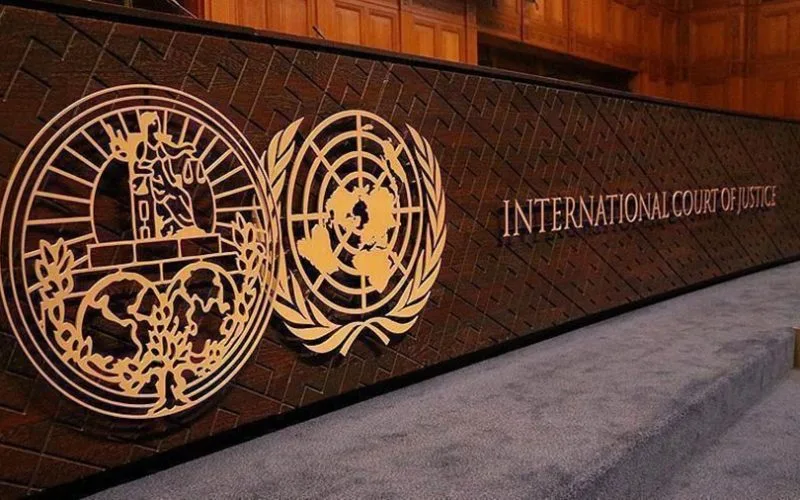
THE fragile diplomatic architecture holding together the Democratic Republic of the Congo and Rwanda cracked further this week after Kinshasa filed an application instituting proceedings against Kigali at the International Court of Justice (ICJ), accusing its smaller eastern neighbour of three decades of genocide, mass killing and systematic human rights abuse in the mineral-rich Kivus.
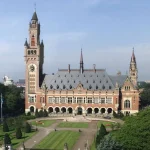
The filing, lodged at the Peace Palace in The Hague on 26 June 2026, concerns what the DRC describes as “abuses attributable to Rwanda over a period extending from 1996 to the present day”. It is the boldest legal escalation yet in a relationship that has lurched from ceasefire to collapse and back again since the resurgence of the Rwanda-backed M23 rebellion, and it lands at a moment when Washington and Doha are both straining to keep their respective peace tracks alive.
A Sweeping Indictment of a Three-Decade War
According to the ICJ’s own account of the application, the DRC alleges that the abuses were “committed as part of a campaign of genocide and serious, widespread human rights violations waged by the Rwandan authorities in eastern Zaire, and subsequently in eastern Democratic Republic of the Congo”. Kinshasa says the violence has primarily targeted Hutus who fled into Congolese territory after the 1994 genocide against the Tutsi in Rwanda, but has also struck other Congolese communities, among them the Nyindu, Bembe, Lega, Nande, Hunde and Bashi ethnic groups.
Congo’s Minister of State for Justice and Keeper of the Seals, Guillaume Ngefa, who personally lodged the application, framed the move as proof of his government’s faith in international legal institutions, telling reporters he had filed the request on behalf of the DRC against Rwanda for violations of several international conventions.
Kinshasa is asking the Court to find its jurisdiction on Article 36 of the ICJ Statute and on four specific treaties: the 1948 Genocide Convention, the 1966 International Convention on the Elimination of All Forms of Racial Discrimination, the 1979 Convention on the Elimination of All Forms of Discrimination against Women, and the 1984 Convention against Torture. Congo wants the Court to declare Rwanda internationally responsible, order an immediate end to the alleged violations, secure guarantees of non-repetition, and award reparations to both the Congolese state and individual victims.
Reporting from Kinshasa, the DRC government statement accused Rwanda of dispatching its own forces and of directing armed proxies, including the M23 and the broader Alliance Fleuve Congo (AFC) coalition, to carry out unlawful military operations on Congolese soil after the 1994 genocide. The alleged crimes catalogued in the filing span massacres, extrajudicial killings, torture, sexual violence and forced displacement over more than thirty years.
Third Time at The Hague
This is not Kinshasa’s first attempt to hold Kigali to account before the world’s highest court. An earlier case was withdrawn by Congolese authorities in 2001, while a second was thrown out by the ICJ in 2006 after the Court found it lacked jurisdiction, partly because Rwanda had either not signed or had entered reservations to key provisions of the treaties Congo cited at the time.
Congolese officials appear to have absorbed that lesson. The new application is anchored in four separate conventions rather than one, a structure legal observers say is designed to give the Court multiple possible jurisdictional footholds even if Rwanda contests some of them. There was no immediate response from Kigali, which has for years dismissed any suggestion that it commands or directs M23, instead casting its military footprint in the eastern DRC as self-defence against the Democratic Forces for the Liberation of Rwanda (FDLR) — a Hutu militia Kigali brands a “genocidal” remnant of the 1994 killers, and which it accuses Congolese forces of sheltering.
That denial sits awkwardly against the documented record. United Nations experts and a string of Western governments have for several years concluded that Rwanda provides material support to M23, the most powerful of the more than one hundred armed groups contesting the mineral-rich east. The UN now estimates M23’s ranks at roughly 6,500 fighters, up from a few hundred when the group re-emerged in 2021, and UN experts have separately put the number of Rwandan soldiers operating inside Congolese territory at up to 4,000.
The ICJ filing also does not stand alone. It joins a parallel case already before the African Court on Human and Peoples’ Rights in Arusha, which last year rejected a Rwandan jurisdictional challenge and ruled the matter admissible, as well as proceedings before the East African Court of Justice — giving Kinshasa three simultaneous legal fronts against its neighbour across continental and global judicial bodies.
A Peace Process Running on Empty
The timing is what gives the filing its sharpest edge. It arrives almost exactly a year after Presidents Félix Tshisekedi and Paul Kagame signed the US-brokered Washington Peace Agreement, and amid a parallel Qatari-mediated track that produced the Doha Declaration of Principles and, later, a framework for a comprehensive peace deal between Kinshasa and the AFC/M23 alliance.
Neither track has delivered the stability it promised. An independent assessment by the Barometer of Peace Agreements in Africa, compiled by researchers from Emory, Howard and Albany State universities, found that a year after the Washington signing ceremony, implementation of the accord stood at only roughly a third of its commitments, with just three of thirty agreed tasks fully completed and eight showing no progress whatsoever. The most advanced work has been bureaucratic — setting up a Joint Security Coordination Mechanism and a Joint Oversight Committee involving the DRC, Rwanda, the United States, Qatar and the African Union — rather than the harder business of disengagement on the ground.
Briefing the UN Security Council this week, the head of the UN’s stabilisation mission in Congo, James Swan, acknowledged that the Washington and Doha processes had created what he called an agreed pathway out of the conflict, but warned that the security situation in the east remained highly unstable, with fighting continuing between AFC/M23 and Congolese government forces across North Kivu, South Kivu and Ituri provinces.
Washington has shown signs of losing patience with Kigali’s pace of compliance. The US Treasury sanctioned the Rwandan armed forces in March, and followed up in late June with sanctions targeting a Rwandan gold-processing network accused of laundering stolen Congolese minerals into international supply chains. Secretary of State Marco Rubio told a House Foreign Affairs Committee hearing this month that compliance with the peace deal had not been good, though he suggested Rwanda was beginning to shift course only once sanctions started to bite. Rwanda’s foreign ministry hit back the following day, accusing the DRC of flagrantly violating the deal and signalling that unilateral withdrawal from the agreement remains off the table for Kigali.
The Human Cost Behind the Legal Filing
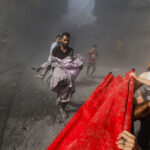
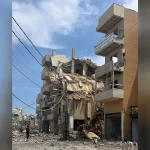
Behind the legal language lies a humanitarian catastrophe that has barely eased despite eighteen months of overlapping diplomacy. Researchers tracking conflict data over the past year recorded more than two thousand civilian deaths attributable to rebel violence, while monitors flagged a marked escalation in drone warfare from both sides of the front line, a shift that has made it harder for civilians to find safe ground regardless of which force controls a given area.
Displacement figures vary by source and month, but the trend line is unambiguous: aid agencies have tracked the internally displaced population in the east climbing from roughly 5.7 million people in late 2025 toward figures in excess of 7 million by the middle of this year, with some assessments citing as many as 7.8 million. The UN’s humanitarian country team says nearly 27 million Congolese — more than a quarter of the population — now face food insecurity, and that a $1.4 billion appeal to assist 7.3 million people this year remains barely half-funded. The crisis has been compounded further by an Ebola outbreak declared in May, unfolding in territory where active fighting has already overstretched what is left of the local health system.
It is against that backdrop — thousands killed, millions displaced, livelihoods and health systems shredded — that Kinshasa’s lawyers are now asking the world’s highest court to formally fix blame on Kigali, even as ministers from both capitals nominally remain bound to the same Washington and Doha texts.
What the Filing Signals — and What It Cannot Do
Legally, the case faces a long road. Should the ICJ find it has jurisdiction — itself uncertain given Rwanda’s history of contesting the Court’s authority — proceedings would still need to move through preliminary objections, written submissions and hearings before any judgment, a process that in comparable interstate disputes has stretched across several years. The Court cannot prosecute individuals or hand down criminal sentences; its power lies in binding state-to-state rulings, including orders to cease conduct and pay reparations, which carry the weight of international law but rely on diplomatic and political pressure, rather than a police force, to enforce them.
Politically, however, the filing has already done its work. It signals that Kinshasa no longer trusts negotiated diplomacy alone to deliver accountability, and it hands the DRC a parallel pressure track to run alongside the Washington and Doha processes rather than instead of them. For Kigali, it complicates a carefully cultivated international image as a stable, investment-friendly partner just as Western capitals — Washington chief among them — are simultaneously courting Rwanda diplomatically and sanctioning its military and mineral networks.
For the wider region and for African institutions watching from Addis Ababa, Arusha and Pretoria, the case is also a test of whether continental and global judicial mechanisms can do what successive rounds of mediation have not: impose a cost for non-compliance. Critics of the peace architecture have long argued that each agreement, from the original 2025 Declaration of Principles through to the Doha framework, has collapsed not for want of diplomatic effort but for lack of consequence — and that mineral interests have too often been allowed to outweigh civilian protection in how the international community has prioritised its response.
It is presumed, as a matter of law, that the allegations contained in the DRC’s application remain just that — allegations — until tested before the Court. But the act of filing them, at this particular moment, has already reshaped the diplomatic temperature between two neighbours whose fates, and whose roughly 110 million combined citizens, remain bound together by geography, history and an unresolved war that refuses to end on schedule.