
THE Assembly of States Parties to the Rome Statute closed its twenty-third session in The Hague this week with an admission rarely heard from an institution built on the language of universal justice: it is losing members it cannot afford to lose. In a statement issued as the session wound down, the Assembly’s Presidency confirmed that Burkina Faso, Mali and Niger have taken further steps toward withdrawing from the treaty that founded the International Criminal Court, and made an unusually direct plea for the three Sahelian states to reverse course.
The Presidency, chaired by Finland’s Päivi Kaukoranta alongside Vice-Presidents Michael Imran Kanu of Sierra Leone and Margareta Kassangana of Poland, said it had “taken note of the situation with concern” and “regrets these developments.” It warned that decisions by member states to walk away from the Statute risk unravelling the collective architecture built to end impunity, and it appealed to all three governments to stay engaged within the Assembly rather than exit the room.
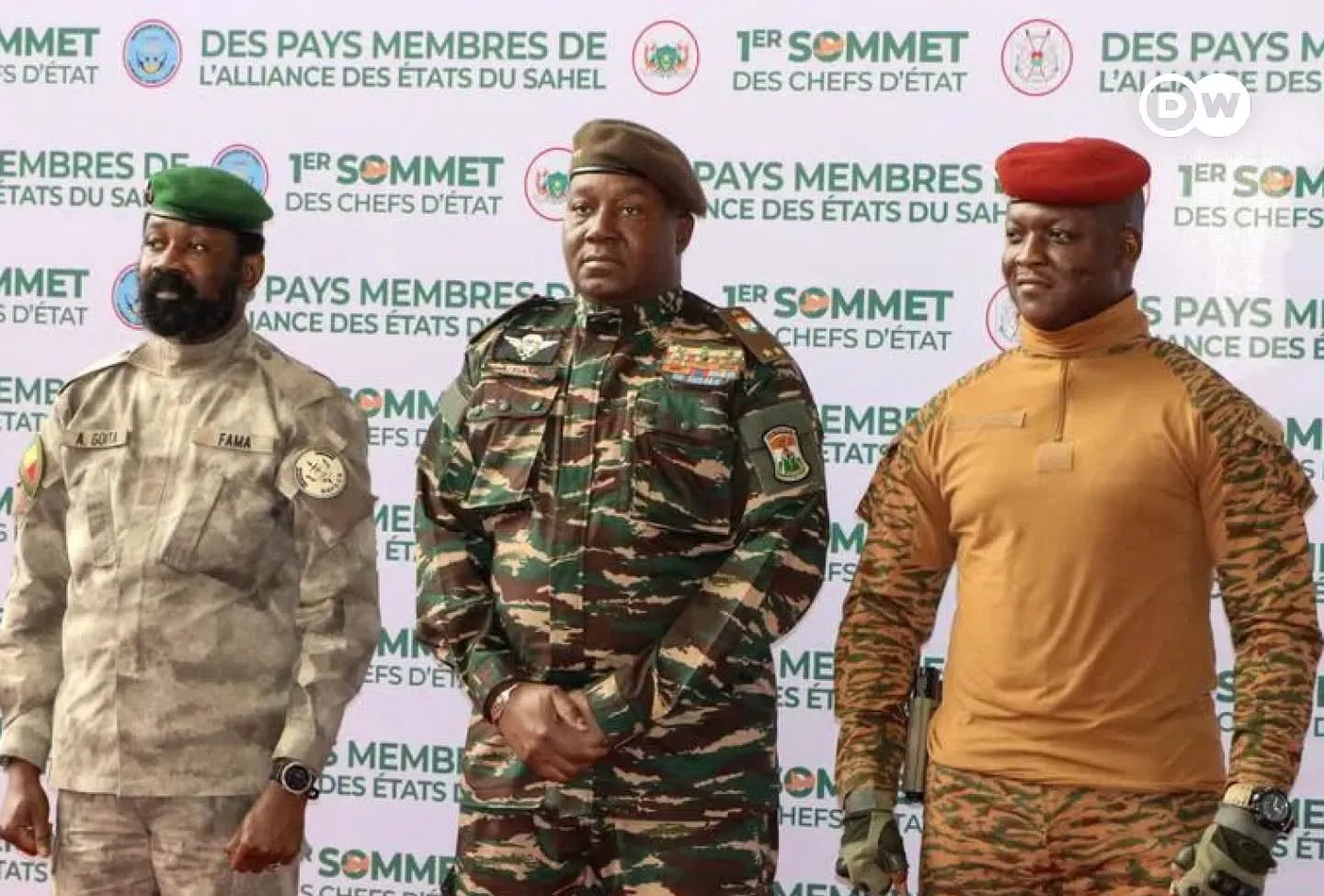
The appeal caps a saga that has run for close to a year and a half. The three military-led governments, aligned since 2024 as the Alliance of Sahel States (AES), first declared in September 2025 that they were quitting the ICC “with immediate effect,” dismissing the court as a tool of external interference in African affairs. But the Rome Statute does not permit instant exits: Article 127 requires a state to lodge formal written notice with the United Nations Secretary-General, after which withdrawal only takes effect a full year later. By January this year, reporting out of the region suggested the three capitals had still not filed that paperwork, prompting speculation over whether the walkout was more posture than policy. This week’s statement from the Assembly’s Presidency, referring to further “steps taken” by the three governments, suggests that the posture is now hardening into a process.
What is not in dispute is the stakes for the people the Statute was written to protect. Mali carries the heaviest exposure: it was Bamako’s own government that referred the situation to the ICC in 2012, a referral that has since produced convictions against Ansar Dine commander Ahmad Al Faqi Al Mahdi for destroying Timbuktu’s ancient shrines, and against Al Hassan Ag Abdoul Aziz for war crimes and crimes against humanity committed during the jihadist occupation of the city. A reparations process for victims in both cases remains open, and an arrest warrant for senior Ansar Dine figure Iyad Ag Ghaly is still outstanding. None of that lapses automatically — the Assembly’s Presidency was explicit that exiting the Statute does not erase obligations incurred while a state remained a party. But for future victims in Mali, Niger and Burkina Faso, an ICC exit closes off what rights groups have repeatedly called the court of last resort.
The withdrawal bid did not arise in isolation. All three AES states are led by juntas that seized power in a wave of coups between 2020 and 2023, have since delayed a return to elected civilian government, and have narrowed space for opposition politics and independent media at home. The ICC exit follows the trio’s earlier departure from the Economic Community of West African States, completed in January, which already stripped their citizens of recourse to West Africa’s regional court. Rights organisations, including Human Rights Watch, Amnesty International and a coalition led by the International Federation for Human Rights, have argued that the timing compounds an accountability gap rather than closing one, coming as national courts in all three countries remain largely unable to prosecute atrocities linked to jihadist insurgencies and, in places, to state security forces themselves.
Amnesty International’s regional director for West and Central Africa, Marceau Sivieude, called the withdrawal announcements an affront to victims and survivors of the most serious crimes, and urged the three governments to raise any grievances about the court’s record through dialogue inside the Assembly rather than by leaving it altogether. That argument — that legitimate criticism of an institution’s selectivity is better answered by reform from within than exit from without — is one the Assembly’s Presidency itself leaned on this week, stressing that all states parties, AES included, are entitled to raise concerns at the table.
The Sahel departures also land at a moment when the ICC’s membership is already under strain elsewhere: Hungary announced its own intention to leave the Statute earlier this year, a move that drew comparable criticism from international justice advocates. For an institution whose authority rests almost entirely on the willingness of states to stay inside its jurisdiction, two simultaneous exits from opposite ends of the ideological spectrum – a European government citing domestic politics, three Sahelian juntas citing sovereignty and “neo-colonial” bias – read less as coincidence than as a signal of how thinly stretched the post-Cold War consensus on international justice has become.
Africa’s relationship with the Court has always been more complicated than the current standoff suggests. African states were among the Rome Statute’s most enthusiastic architects in 1998, and several – Mali among them – voluntarily brought their own crises to The Hague when domestic justice systems could not cope. The Assembly’s Presidency was careful this week to acknowledge that history, noting that Burkina Faso, Mali and Niger have themselves contributed to the Assembly’s work in support of the Court as an independent judicial institution. Whether that history is enough to keep three juntas from completing a walkout already eighteen months in motion is a question the Assembly cannot answer for them. It can only, as it did this week, ask them not to leave.