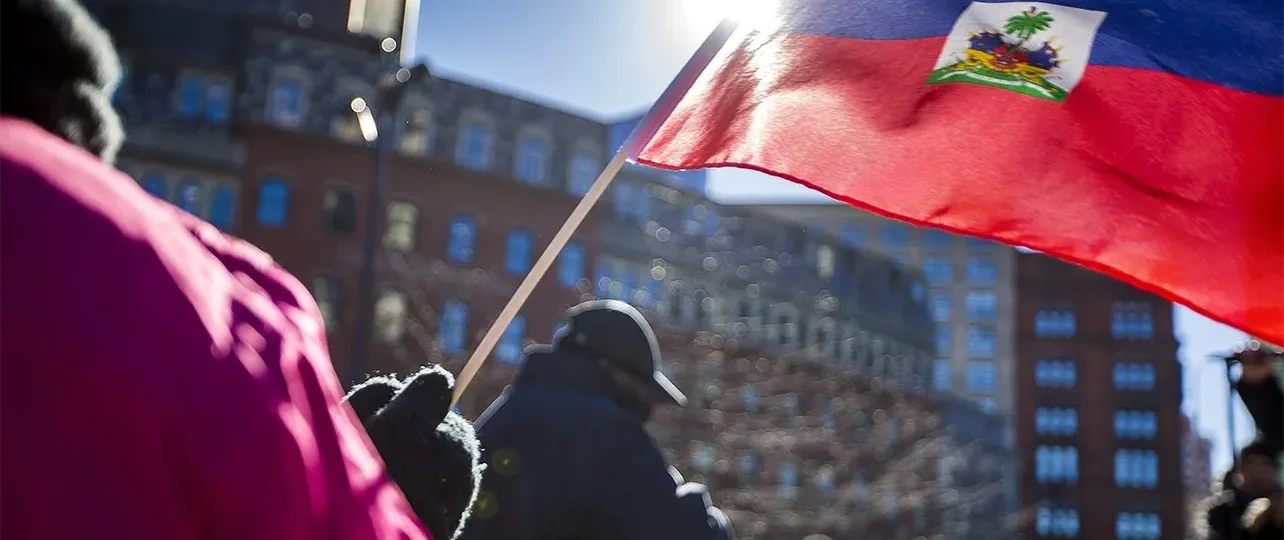

FOR sixteen years, Temporary Protected Status was the thin legal membrane standing between hundreds of thousands of Haitians and a homeland unravelling into anarchy. That membrane has now been torn away by the very court meant to be America’s final word on justice.
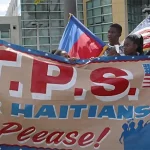
On June 25, 2026, the US Supreme Court ruled that Haitian Temporary Protected Status (TPS) holders challenging the Trump administration’s termination of their protections are not entitled to orders halting the removals while their case proceeds, and that their constitutional claims are unlikely to succeed. In one stroke, the country’s highest court cleared the path for the administration to end a protection regime first granted after the catastrophic 2010 earthquake and repeatedly renewed by successive administrations, Republican and Democrat alike, as Haiti’s crises deepened rather than eased.
The numbers at stake are staggering. Roughly 330,000 Haitians held TPS before the Trump administration moved against it, including some 158,000 in Florida alone, the largest Haitian community in the country. According to the immigration advocacy group FWD.us, these workers contribute close to $2.6 billion annually to Florida’s economy, $1.5 billion of that in Miami alone. They staff hospitals, elder-care homes, construction sites, hotels and restaurants. Within weeks, an untold share of them stand to lose the right to work, and with it, the right to remain.
The Country They Would Be Sent Back To
Human Rights Watch and the Miami-based Sant La Haitian Neighborhood Center, in a joint investigation released July 2 built on interviews with 40 TPS holders and 15 community organisation representatives, lay out in unsparing detail why the administration’s justification – that conditions in Haiti have “improved” – collapses under scrutiny.
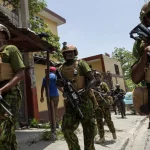
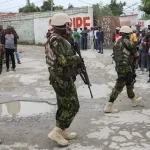
Criminal networks now hold approximately 90 percent of Port-au-Prince and have pushed into new territory beyond the capital, with a presence in at least five of Haiti’s ten departments. More than 8,200 people were killed between January 2025 and March 2026 alone; killings are said to have risen roughly 180 percent since 2022. Nearly 1.5 million Haitians are internally displaced, almost half of them children, and 5.83 million people – just over half the population – face acute hunger, the worst level ever recorded in the country. A UN-backed international security intervention, first a Kenya-led mission and later a Gang Suppression Force, has failed to reverse the collapse; a domestic task force’s reliance on armed drone strikes has instead added civilian casualties to the toll.
Those interviewed described a grim, shared calculation awaiting anyone deported: having lived in America marks a person as wealthy in the eyes of armed groups, making them a target for kidnapping or extortion whether or not they have a cent to their name. One 28-year-old man interviewed warned that losing protection would amount to a death sentence, since gangs would assume he had money and kill him when he could not pay. Accounts collected by the two organisations describe home invasions, arson, sexual violence, murdered relatives and near-total state absence – the same conditions that drove people to flee Haiti in the first place, now presented by Washington as sufficiently “improved” to justify sending them back.
A Political Fire Congress Has Failed to Put Out
The damage is not confined to some future deportation date. Human Rights Watch found that even before the Supreme Court ruling, expired work permits and employer confusion had already cost Haitian families jobs and income, forcing some parents to pull children out of school and skip medical appointments for fear of contact with immigration authorities. Sant La’s executive director, Thamara Labrousse, warned that families living paycheck to paycheck would feel the loss of work authorisation immediately, risking a wave of homelessness among a community that has built its life in the United States.
Congress has had months to act and has not. The House passed a bill in April to extend Haitian TPS to 2029; it has stalled in the Senate. A companion Senate bill followed in June. Florida’s Frederica Wilson has introduced separate legislation offering long-settled Haitian families a path to permanent residency, and Congresswoman Debbie Wasserman Schultz has announced plans for a bill allowing judicial and congressional review of TPS terminations. None has passed. The termination proceeds regardless.
The Larger Pattern
This is not an isolated episode. It fits a wider architecture of the Trump administration’s immigration enforcement – the same posture Human Rights Watch has documented in the mass expulsion of migrants to third countries with no connection to them, and in the abusive detention practices uncovered in Florida facilities and elsewhere. For a pan-African newsroom watching how the Global North treats the world’s poorest and most displaced, the Haitian case is a warning made in plain language: protection granted in the name of humanitarian necessity can be withdrawn the moment it becomes politically inconvenient, international law’s principle of non-refoulement notwithstanding.
The doctrine – that no state should return a person to a place where their life or freedom would be at serious risk – is enshrined in instruments the United States has signed onto, including the Convention against Torture and the International Covenant on Civil and Political Rights. The United Nations’ human rights and refugee agencies have for years urged governments not to forcibly return Haitians. Washington’s Supreme Court has now ruled, in effect, that domestic statute overrides that caution.
What happens next rests with a Senate that has shown no urgency and an administration that has shown no hesitation. For the Haitians of Florida, the clock that TPS once stopped is running again – toward a country where, by the government’s own record, a life can be extinguished over an unpaid fifty-dollar demand.