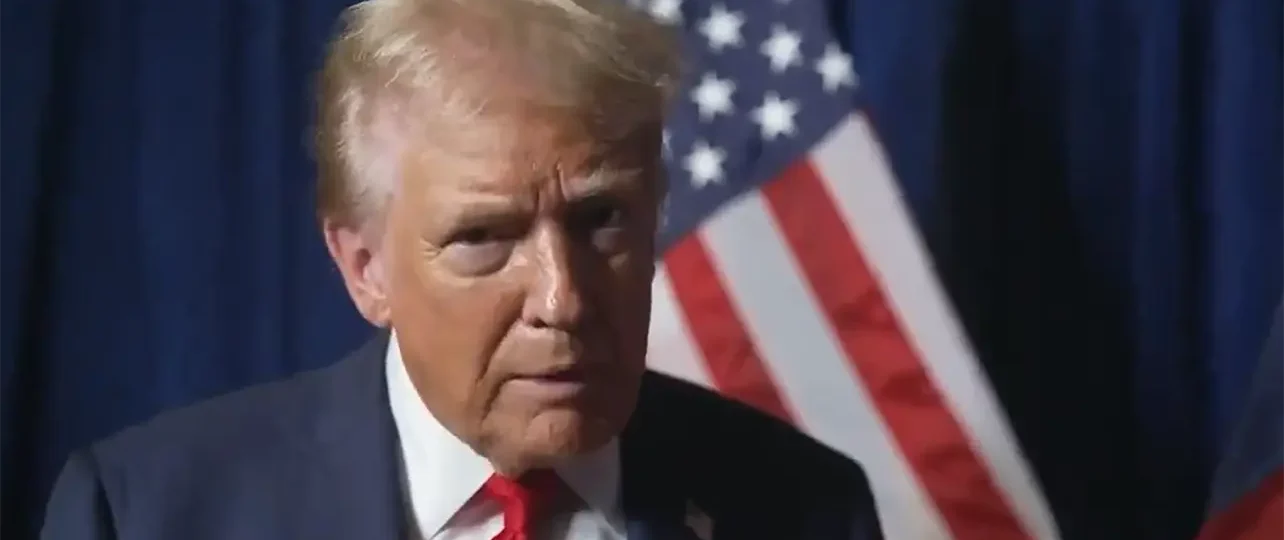

PRESIDENT Donald Trump announced that he is immediately terminating temporary deportation protections for Somali migrants living in Minnesota, targeting a program that has shielded them from removal since 1991.
In a late-night post on Truth Social, Trump called Minnesota “a hub of fraudulent money laundering activity” and claimed without providing evidence that “Somali gangs are terrorising the people of that great State, and BILLIONS of Dollars are missing.”
“I am, as President of the United States, hereby terminating, effective immediately, the Temporary Protected Status (TPS Program) for Somalis in Minnesota,” Trump wrote. “Send them back to where they came from. It’s OVER!”
The announcement represents an unusual departure from standard immigration procedures, as TPS designations typically apply nationwide rather than to residents of a single state. Legal experts and state officials say the targeted nature of Trump’s order raises constitutional concerns.
Despite Trump’s sweeping rhetoric, the actual number of people affected could be very small. According to an August report by the nonpartisan Congressional Research Service, only 705 Somali-born individuals nationwide currently hold TPS status.
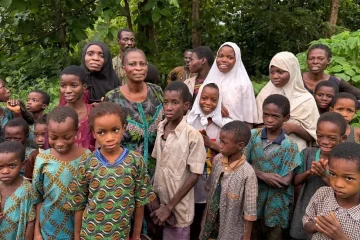
Minnesota is home to the nation’s largest Somali population, estimated at approximately 80,000 people. However, the majority are U.S. citizens or permanent residents who would not be affected by the TPS termination.
Congress created the Temporary Protected Status program in 1990 to prevent deportations to countries suffering from natural disasters, civil strife or other dangerous conditions. The designation is granted by the Homeland Security secretary in 18-month increments. The Biden administration had extended TPS eligibility for Somalis through March 17, 2026.
Minnesota Attorney General Keith Ellison said his office is “exploring all of our options” to respond if Trump removes TPS.
“Trump’s announcement of termination of Somali TPS holders in Minnesota is legally problematic – while a president does have a lot of authority to designate and revoke TPS, he cannot legally wield that power to discriminate against an ethnic group or to target a state,” Ellison wrote on X.
Julia Decker, policy director at the Immigrant Law Centre of Minnesota, noted that fraud investigations have no bearing on whether conditions in Somalia have stabilised, which is the legal standard for TPS decisions.
Homeland Security Secretary Kristi Noem told reporters Sunday at Minneapolis-Saint Paul International Airport that the department plans to “follow the process in law” and noted that TPS was “meant to be temporary.” She did not directly address whether Trump’s order would be implemented as announced.
Trump’s announcement appears linked to recent high-profile fraud cases in Minnesota involving some Somali residents. More than 70 people have been charged in connection with fraud in state-funded programs, including several Somalis.
Right-wing media outlets have amplified claims that fraudulently obtained funds were sent to Somalia, with some money allegedly reaching the terrorist group Al-Shabaab. Minnesota’s Republican congressional delegation elevated these allegations in a letter seeking a federal investigation, though the claims have not been independently verified.
Ellison said he has seen no evidence that fraudulent funds reached Al-Shabaab and noted that the group’s influence in Minnesota has waned significantly since it was a recruitment hub more than 15 years ago.
Jaylani Hussein, executive director of the Council on American-Islamic Relations in Minnesota, called Trump’s decision “a political attack on the Somali and Muslim community driven by Islamophobic and hateful rhetoric.”
“This is not just a bureaucratic change; it will tear families apart,” Hussein said Friday. “These are legal immigrants, and they should not suffer as a consequence of a political football that’s being played against the Muslim community.”
Democratic Governor Tim Walz suggested Trump was using the issue as a distraction, writing on X that “it’s not surprising that the President has chosen to broadly target an entire community. This is what he does to change the subject.”
Khalid Omar, an organiser with interfaith group Isaiah, said collective punishment of an entire community for the actions of a few individuals is wrong. “If anyone, regardless of their race, religion, or ethnicity, committed fraud, they should be held accountable under the law as individuals,” Omar said.
Representative Ilhan Omar, a Somali-American congresswoman from Minnesota who has been a frequent target of Trump’s criticism, noted on X that the majority of Somalis in America are citizens. “Good luck celebrating a policy change that really doesn’t have much impact on the Somalis you love to hate,” she wrote. “We are here to stay.”
Broader Immigration Crackdown
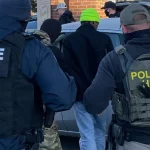
The move is part of Trump’s broader push to adopt hardline immigration policies and fulfil his campaign promise to deport millions of people. The administration has already moved to end TPS for 600,000 Venezuelans and 500,000 Haitians who were granted protection under Biden, and has sought to limit protections for migrants from Cuba, Syria, Myanmar and other countries.
However, those terminations have followed standard administrative procedures and applied nationwide. Trump’s announcement singling out Somalis in a specific state represents a departure from those protocols.
Somalia has been covered by TPS continuously since then-President George H.W. Bush first granted the designation in September 1991, receiving extensions dozens of times as the country’s civil war continued.
For those Somalis who would lose TPS protection, the consequences could be severe. They would lose the ability to work legally and could face arrest, detention and deportation if they do not leave voluntarily, according to immigration advocates.