
NINE months after Israel and Hamas announced a ceasefire meant to end the war in Gaza, the United Nations says the killing has not stopped – it has intensified, and it is once again falling overwhelmingly on civilians.
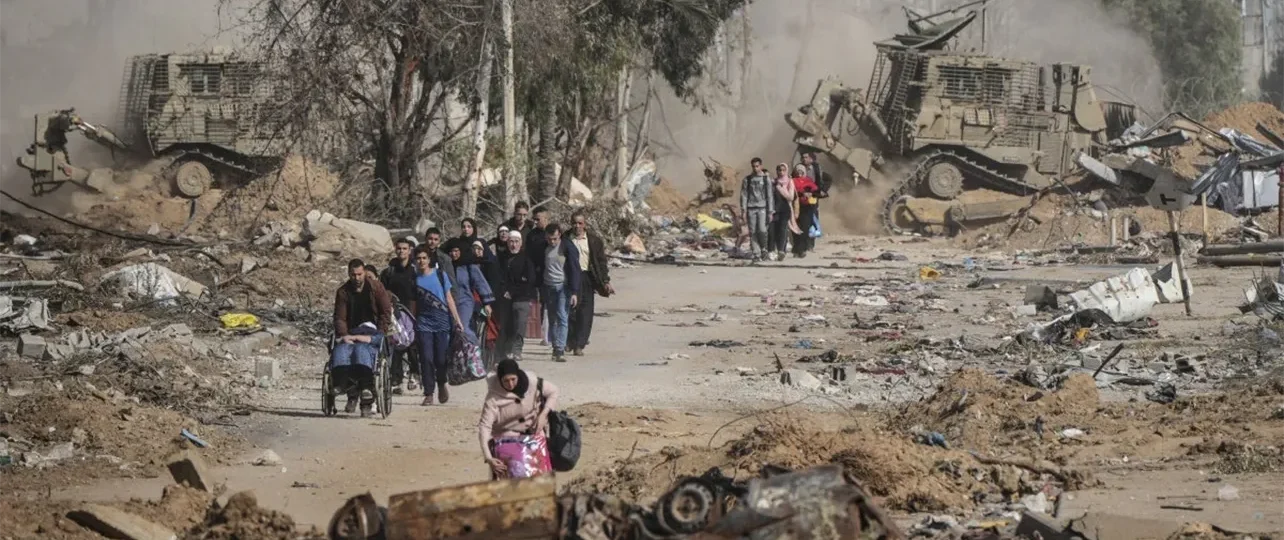
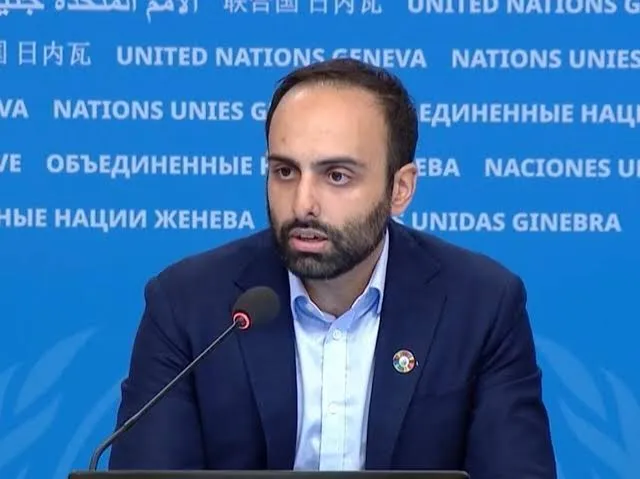
In a stark briefing this week, the Spokesperson for the UN Human Rights Office, Thameen Al Kheetan, said Israeli forces have escalated attacks across the strip in recent days, striking residential buildings, at least one tent sheltering displaced families, and other crowded civilian areas.
“The Israeli military has intensified its attacks in Gaza in recent days, killing and injuring dozens of Palestinians – children, women and men. These attacks have struck residential buildings, at least one tent sheltering internally displaced people, and other crowded areas.”
Thameen Al Kheetan, UN Human Rights Spokesperson
The numbers behind that statement are damning. According to the Palestinian Ministry of Health, more than 1,100 Palestinians have been killed by the Israeli military since October 2025 – a period that, on paper, has been governed by a ceasefire. The UN’s own human rights monitors, working independently and more conservatively, say they have so far verified over 600 of those deaths, among them 269 women and children.
“Nine months after the announcement of a ceasefire, still, nowhere is safe for Palestinians in Gaza,” Al Kheetan said. “The Palestinian Ministry of Health has said that over 1,100 Palestinians have been killed since October 2025 by the Israeli military. Our Office has so far verified the killing of over 600 Palestinians since October 2025, including 269 women and children, mostly in Israeli attacks reported across the Gaza Strip. Our verification work is ongoing.”
The most recent week captured in the UN’s data is especially grim. Between 13 and 20 July alone, the Human Rights Office recorded at least 57 Palestinians killed by the Israeli military, including six children and eight women. More than half of those victims – 34 people – were killed far from the Israeli-imposed “yellow line,” the internal demarcation Israeli forces have used to restrict Palestinian movement inside Gaza.
“From 13 to 20 July alone, our Office has recorded that the Israeli military killed at least 57 Palestinians, including six children and eight women. Among these victims, 34 were killed far away from the Israeli-imposed ‘yellow line’,” Al Kheetan said.
Two days in mid-July illustrate the pattern. On 17 and 18 July, ten separate Israeli attacks in Gaza City, Middle Gaza, North Gaza and Khan Younis killed at least 21 Palestinians, including four children and three women, the UN said. In one strike on an apartment in Gaza City, an entire family – both parents and three siblings, reportedly aged eight, 15 and 17 – was killed together.
For the UN, the pattern is no longer simply tragic. It is a matter of accountability under international law.
“The killing of civilians in these attacks raises concerns of continuing violations of international humanitarian law, war crimes and other possible atrocity crimes in Gaza. Under international law, deliberately attacking civilians is a war crime.”
Thameen Al Kheetan
Al Kheetan also drew attention to the shrinking geography of survival inside Gaza. The “yellow line” – the boundary Israeli forces use to mark territory under their control – has, according to the UN, been pushed steadily westward, compressing the space in which the Palestinian population can seek safety.
“The Palestinian population in Gaza remains trapped in an ever-shrinking area, with the ‘yellow line’ constantly being moved westwards by the Israeli occupying power, presenting a continuous threat to life as the Israeli military appears to routinely fire on Palestinians for mere presence in the vicinity of that line, in violation of international human rights law and international humanitarian law,” he said.
The briefing closed with a direct appeal to the international community – one that lands with particular weight for African and Global South states that have consistently called for an end to the war and a durable, enforceable peace.
“The violations, the suffering and the misery that continue to be imposed on the Palestinians in Gaza cannot be ignored. Third States must take urgent action to insist on full respect for the ceasefire, to put an end to all violations, and to ensure accountability and justice.”
Thameen Al Kheetan
ANALYSIS
What Geneva has laid out this week is not a description of a ceasefire under strain. It is a description of a ceasefire that, for Palestinian civilians on the ground, has failed to deliver its most basic promise: that people would stop dying.
The distinction the UN draws between the Health Ministry’s figure of over 1,100 dead and its own verified count of over 600 is itself instructive. UN human rights verification is deliberately conservative – each death is cross-checked before it is added to the tally – which means the true toll, even by Geneva’s own admission, is almost certainly higher than what has so far been confirmed. That over 600 verified killings include 269 women and children speaks to a pattern the UN has now described, in increasingly blunt language, as amounting to war crimes.
The “yellow line” detail deserves particular scrutiny. A demarcation line that is “constantly being moved westwards,” with civilians fired on “for mere presence in the vicinity,” functions less as a security perimeter than as a mechanism of continuous displacement — one that leaves Palestinians unable to know, from one week to the next, whether the ground beneath their tent or their apartment building is still considered safe.
Al Kheetan’s closing line – that “Third States must take urgent action” – is a pointed reminder that international law places obligations not only on the parties to a conflict but on the rest of the world. For African governments, many of which have been vocal at the UN and the African Union on the question of Palestinian civilian protection, the UN’s own verified casualty data now provides a harder evidentiary basis on which to press that case, in Geneva, in New York, and at the International Criminal Court.
Nine months into a ceasefire that was meant to end the killing, the UN’s message is unambiguous: it has not.