NIGERIA has officially entered the race for a share of the $7.7 trillion global halal economy, with the federal government launching a comprehensive national strategy projected to unlock over $12 billion in economic value by 2030.
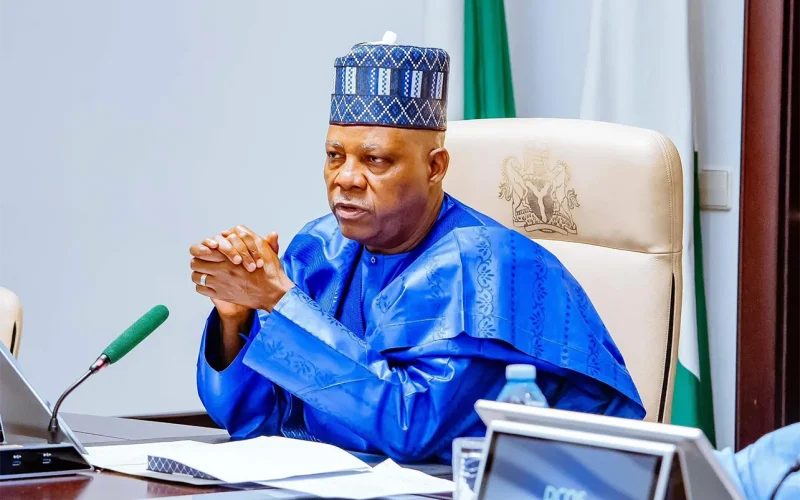
Vice President Kashim Shettima has unveiled the Nigeria National Halal Economy Strategy at the Presidential Villa, marking a significant shift in Africa’s second-largest economy’s approach to export diversification and industrial growth.
The strategy aims to add an estimated $1.5 billion to Nigeria’s GDP by 2027, with ambitious targets including expanded halal-compliant food exports, development of pharmaceutical and cosmetic value chains, positioning the country as a halal-friendly tourism destination, and mobilising ethical finance at scale.
“This document is a declaration of our promise to meet global standards with Nigerian capacity and to convert opportunity into lasting economic value,” Senator Shettima said during the launch, emphasising the initiative’s focus on delivering jobs, exports, and shared prosperity nationwide.
The halal economy, increasingly recognised as a quality assurance framework rather than solely a faith-based market, has attracted major Western economies, including the United Kingdom, France, Germany, the United States, and Canada, which are now leading producers and exporters of halal-certified products.
Dr. Jumoke Oduwole, Minister of Industry, Trade and Investment and chairperson of the National Halal Strategy Committee, highlighted the strategy’s potential to position Nigeria among the top halal goods exporters globally. The country plans to leverage the African Continental Free Trade Area (AfCFTA) to distribute halal-certified products across Africa and beyond.
“We are going to leverage AfCFTA to ensure we export our halal-friendly goods to the rest of Africa and beyond to any willing markets,” Oduwole said, noting the voluntary nature of participation in the initiative.
Beyond immediate economic gains, the strategy is expected to strengthen food security, deepen industrial capacity, and create substantial opportunities for small and medium-sized enterprises across Nigeria’s 36 states.
The initiative represents a public-private collaboration developed with the Halal Products Development Company, a subsidiary of Saudi Arabia’s Public Investment Fund, alongside technical support from the Islamic Development Bank and the Arab Bank for Economic Development in Africa.
Nigeria’s commitment was reinforced during President Bola Tinubu’s recent state visit to Turkey, which resulted in a bilateral agreement on halal quality infrastructure aimed at enhancing international acceptance of Nigerian halal products through improved standards, accreditation, and certification systems.
With an export program already underway to facilitate Nigerian companies’ entry into Saudi Arabian and other international markets, the strategy opens new avenues for foreign direct investment and market access for Africa’s most populous nation.