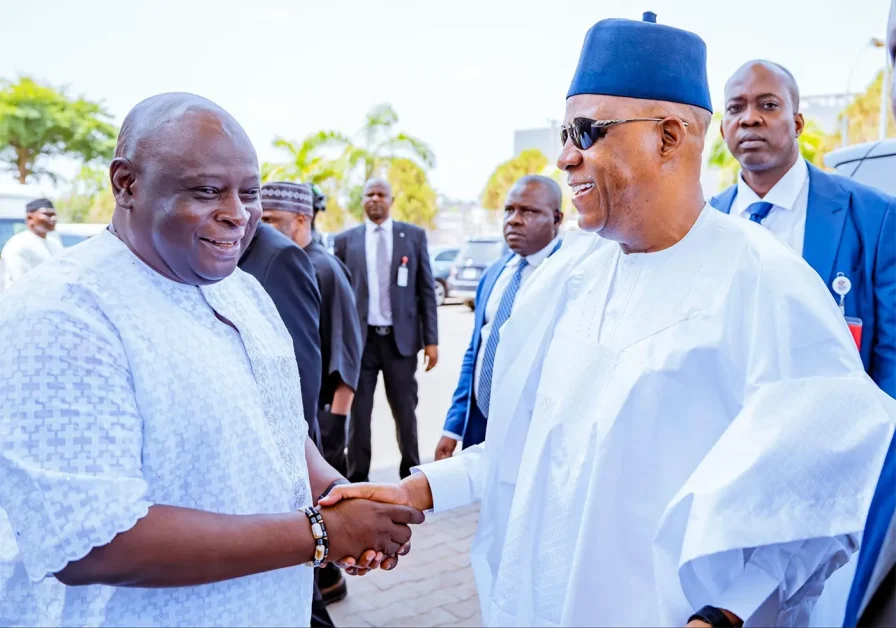
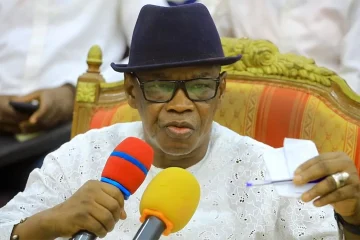
VICE President Kashim Shettima called on Nigeria’s media and government to unite as “partners in progress” through constructive journalism, delivering the message at a book launch amid escalating reports of journalist harassment across West Africa and beyond.
Speaking on Monday at the public presentation of “My Life and Journalists Hangout” by TVC News Director Babajide Kolade-Otitoju, Shettima praised the veteran’s 60th birthday and his program for fostering “critical engagement.” He warned that societies crumble not from lacking ideas, but from failing to interrogate them, positioning the media as democracy’s conscience – probing power, warning of dangers, illuminating truths, and avoiding chaos.
The remarks land urgently as Nigeria and Africa grapple with media freedoms under strain. In West Africa, Mali jailed journalists critical of military rule last month, while Senegal detained reporters ahead of elections. Further afield, Tanzania’s government raided newsrooms in February, and Ethiopia’s ongoing Tigray conflict has seen at least five journalists killed since 2025, per Committee to Protect Journalists data. Nigeria itself ranks 112th on the 2025 World Press Freedom Index, with 2026 arrests of bloggers accusing officials of corruption.
Shettima’s speech outlines implicit yet actionable steps to rebuild ties, prioritising mutual respect over confrontation:
- Institutionalise constructive dialogue platforms: Expand “Journalists Hangout”-style forums where officials engage critically but collaboratively, as Shettima lauded Kolade-Otitoju for nurturing. Governors like Kwara’s Abdulrahman AbdulRazaq echoed this, commending the media’s “patriotic contributions.”
- Protect journalistic integrity through policy shields: Enact laws safeguarding “critical thinking” that “disciplines public conversation” and counters “conspiracy theories,” as Shettima urged. This includes ending arbitrary detentions, with Nigeria’s government committing to independent probes into recent cases.
- Promote training in balanced scrutiny: Media must “know when to probe… and when to restrain,” Shettima said. Joint government-media academies could train reporters in evidence-based reporting, reducing “noise” and building trust.
- Celebrate exemplars publicly: High-level tributes, like those from Senate Leader Opeyemi Bamidele and Lagos Governor Babajide Sanwo-Olu, signal goodwill. Regular awards for “democratic courage” could humanise relations.
- Leverage media for national goals: Channel platforms toward “strengthening democracy,” per Shettima, via collaborative campaigns on economic reforms or security—mirroring successful South African models where media-government task forces tackled xenophobia in 2024.
Prof. Kyari Mohammed, book reviewer, hailed Kolade-Otitoju’s memoir as a blueprint for policymakers and journalists, detailing print-to-broadcast transitions and governance insights. Attendees, including Chief of Staff Femi Gbajabiamila and ex-Attorney General Mohammed Adoke, underscored elite buy-in.
Yet challenges persist: Critics argue such appeals ring hollow without prosecuting media attackers, as in Burkina Faso’s 2025 extrajudicial killings. Nigeria’s government must match rhetoric with reforms to avert continental trends.
Shettima’s vision positions media not as adversaries, but as “a republic of conscience.” Implementing these steps could model healthier relations, bolstering Nigeria’s democracy amid Africa’s press crisis.