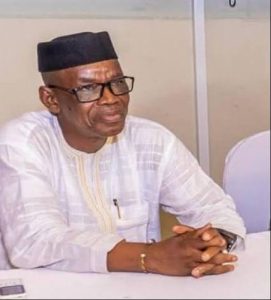
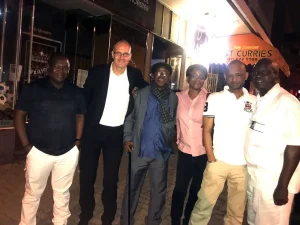
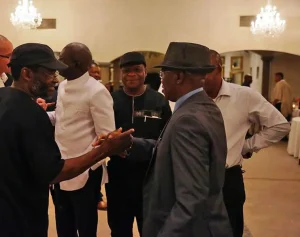
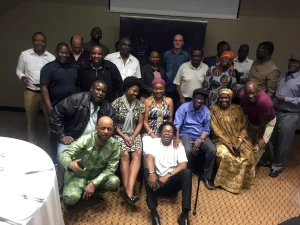
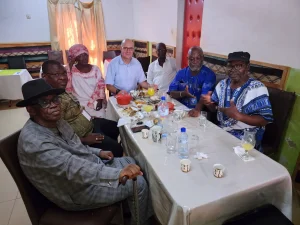
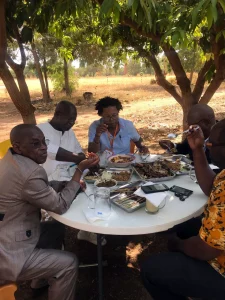
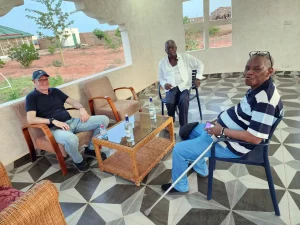
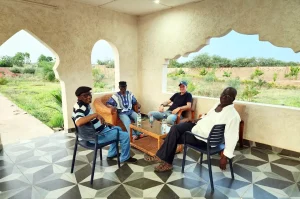
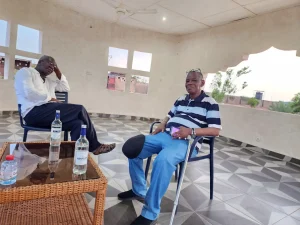
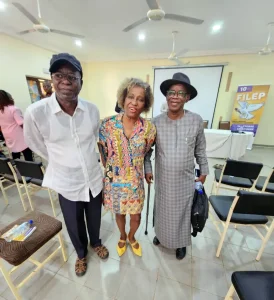
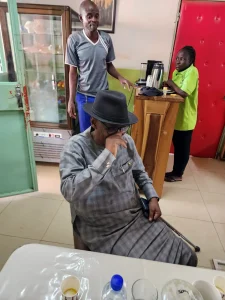
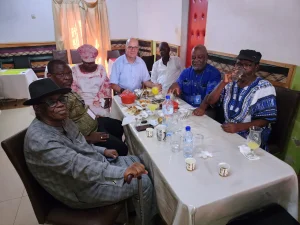
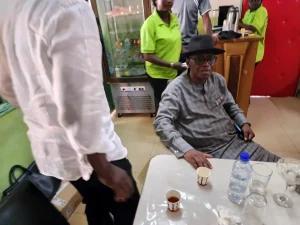
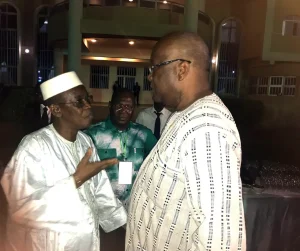
THE African Editors Forum (TAEF) has paid a warm tribute to Hameye Mahaman Cissé, one of the continent’s most consequential press freedom advocates, a co-architect of pan-African editorial solidarity, and a journalist whose moral clarity shaped the conditions under which African journalism was practised for more than three decades. Cisse passed away on Thursday and has been buried in Bamako, Mali.
In a statement that was equal parts institutional tribute and personal grief, TAEF described a man who was not merely present at the founding of African media structures, but foundational to them – someone who translated ideas into action, who showed up when others stayed home, and who held the continental editors’ network together through coups, crises, and the slow grind of sustaining independent journalism on a continent that rarely makes the work easy.
“His life did not simply intersect with African journalism; it helped define it,” TAEF said. “We are heartbroken by his passing. Africa has lost a towering voice, a man whose courage, clarity, and commitment to truth shaped not only stories, but the very conditions under which stories could be told.”
“Africa has lost a towering voice, a man whose courage, clarity, and commitment to truth shaped not only stories, but the very conditions under which stories could be told.”
TAEF
FROM LE SCORPION TO THE CONTINENTAL STAGE
Cissé’s journalism career began in Mali at Le Scorpion, a publication that required its journalists to choose, consistently, between clarity and comfort in a political environment that punished truth-telling. He made that choice without apparent hesitation, and it set the template for everything that followed.
TAEF’s tribute traces a career defined not by institutional advancement but by a single, sustained ethic. The forum’s statement put it plainly:
“As captured in the Africa Mirror tribute, he was among those rare journalists who do not just cover history, but become it. From his days at Le Scorpion in Mali, where he chose clarity over comfort in an environment that punished truth, to his role in shaping continental and regional media institutions, Hameye carried one consistent ethic: journalism is a duty, not a career.”
That ethic, TAEF said, governed not only how Cissé wrote, but how he led, how he travelled, and how he endured — including after a stroke that visibly affected his mobility but did nothing to diminish his institutional presence or his willingness to argue his corner.
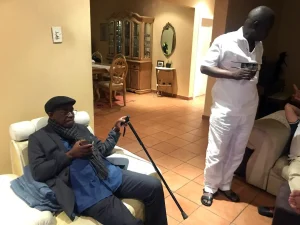
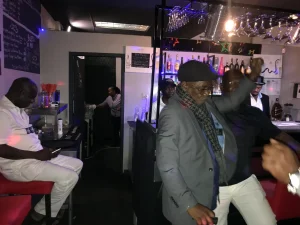
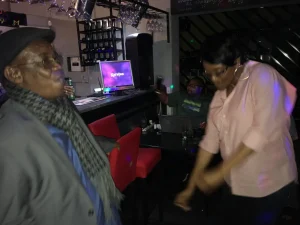
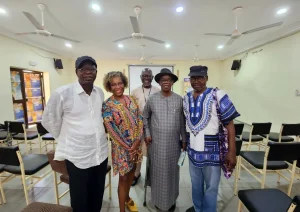
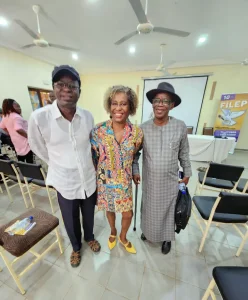
The forum recalled a recurring image that colleagues across the continent appear to share: Cissé arriving at conferences on his walking stick, making his case forcefully in the conference hall, appearing on the Highway Africa dance floor by evening, and returning to the hall the next morning to press his arguments again.
“That was Hameye, fragile in body perhaps, but unbreakable in spirit,” TAEF said.
THE MAN WHO MADE TAEF CONTINENTAL
Within TAEF itself, Cissé’s contributions were structural as much as they were inspirational. He was present from the early days of the organisation’s formation in Johannesburg and was central to the work of building regional structures across Francophone West Africa — a task that required both political patience and linguistic dexterity.
Among the most cited of his contributions is one that, by its nature, drew little public attention: the translation of the TAEF constitution into French. TAEF’s statement frames this as an act of institutional vision, not administrative housekeeping.
“He translated ideas into action, quite literally translating the TAEF constitution into French to ensure that the vision was shared across linguistic divides.”
For TAEF, a pan-African organisation operating across Anglophone and Francophone contexts, that act was foundational. Without it, the forum’s claim to continental reach would have remained aspirational. Cissé made it operational.
TAEF’s statement acknowledged the scale of the loss through its own institutional lens: “Many of us knew Hameye because of TAEF. We worked with him within it. We argued, built, and dreamed alongside him. And now, as we struggle with his loss, it is this same collective that holds us together, offering space to grieve, to remember, and to draw strength from one another.”
“He was not just present in TAEF. He was foundational to it.”
The African Editors Forum
CRISIS LEADERSHIP: BAMAKO, OUAGADOUGOU, AND THE RECORD OF RESISTANCE
TAEF’s tribute does not confine itself to the formal record. It reaches into the specific moments — the crises, the journeys, the difficult rooms — where Cissé’s presence made a material difference.
In Bamako, the forum recalls, he helped mobilise support that enabled editors to travel onward to Timbuktu. The detail is noted not as a logistical footnote, but as an act of symbolic reconnection — linking the present struggles of African journalism to one of the continent’s great centres of intellectual heritage.
In Ouagadougou in 2015, during what the statement describes as a siege — a period of deep political instability that left colleagues uncertain and morale depleted — Cissé held the line.
“Ouagadougou, during the siege in 2015, when uncertainty hung heavy and morale was low, and yet he remained steady, holding colleagues together when it mattered most. These are not small moments. They are the threads from which institutions, and indeed histories, are woven.”
The tribute also addresses his relationship to press freedom not as a cause he championed from a safe distance, but as a responsibility he exercised under fire. When colleagues were threatened or silenced, TAEF said, Cissé did not retreat. He organised, documented, and resisted.
“He named what was happening, and insisted that it be recorded, because he understood that memory is itself a form of resistance.”
TSEDU, THE FLOOR, AND THE FELLOWSHIP
The TAEF statement invokes Mathatha Tsedu – one of South Africa’s most respected editors and a long-standing figure in the continental editors’ movement – as a witness to Cissé’s institutional centrality.
“As Mathatha says, he was the glue in difficult moments.” TAEF added its own gloss: “As many have said in quieter ways, he was also the conscience in ordinary ones.”
The portrait that emerges from the statement is not only of the institution-builder or the press freedom combatant. It is of a man whose warmth and fellowship were inseparable from his convictions – someone who would host colleagues not with formality but with genuine hospitality, who would sit on the floor, share what he had, and speak with the quiet certainty of someone who had made an irreversible commitment long ago.
“Warm. Generous. Grounded. The kind of person who would host you not in formality, but in fellowship. Who would sit on the floor, share what he had, and speak with the quiet conviction of someone who had chosen his path long ago and never wavered from it.”
INSTRUCTION IN GRIEF
TAEF’s statement closes not with consolation but with something closer to instruction — a reading of Cissé’s life as a set of imperatives for the journalists and editors he leaves behind.
“Build the institutions. Show up, even when it is hard. Speak, especially when it is dangerous. Mentor, without holding back. And never mistake press freedom for a favour. It is a responsibility, held in trust.”
The forum also placed Cissé’s death in a broader symbolic frame — evoking his return to Bamako, and to what it describes as the ancestors of Timbuktu, as a form of homecoming that carries intellectual as well as personal weight.
“There is something profoundly fitting in the image of Hameye returning to the ancestors of Timbuktu, to the keepers of knowledge who understood that ideas must be preserved, defended, and passed on. He lived that philosophy. He protected the record of his time, and in doing so, strengthened the record of Africa itself.”
The statement concludes with the sign-off that TAEF has long used as its closing salutation — part political inheritance, part continental benediction.