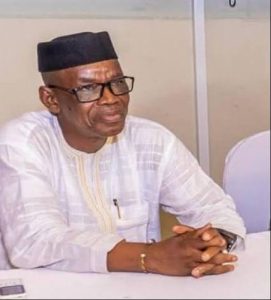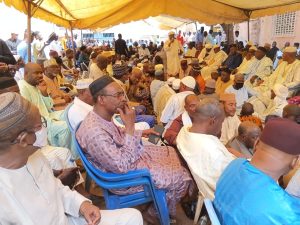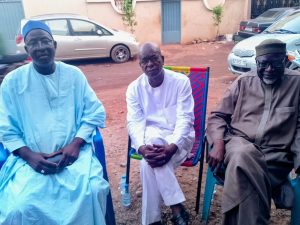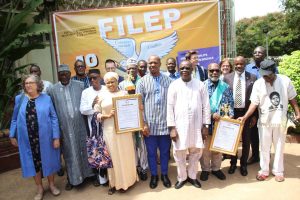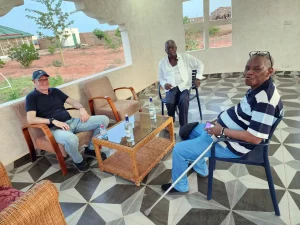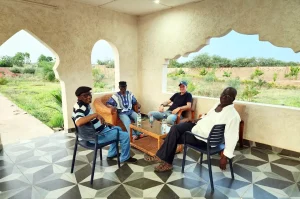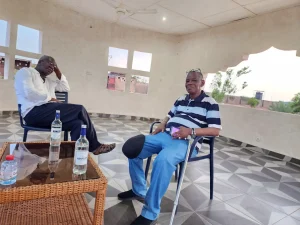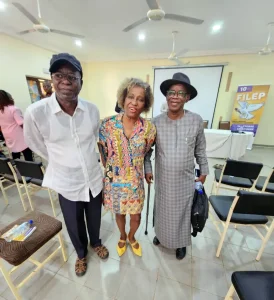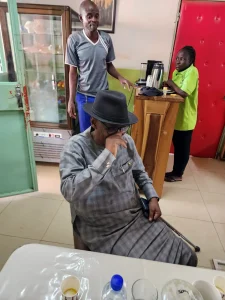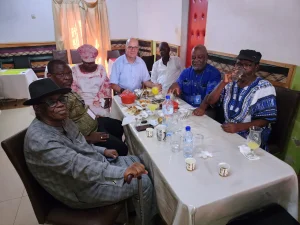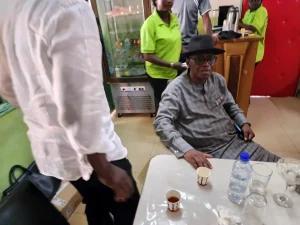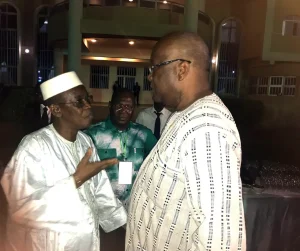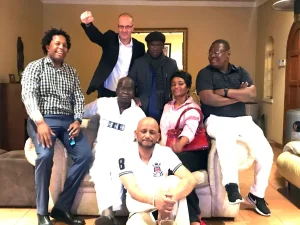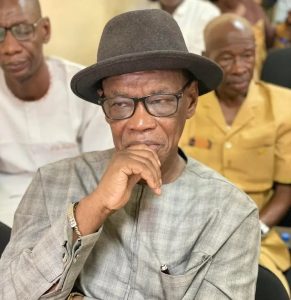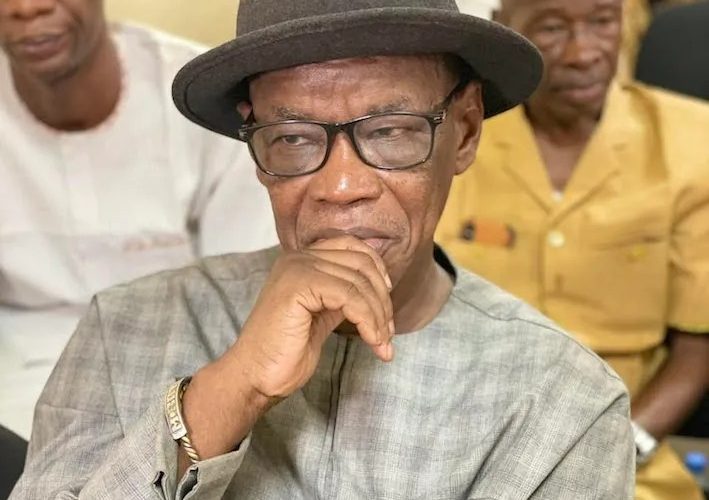
THERE are journalists who cover history. And then there are journalists who become it. Hameye Mahaman Cissé – Mahamane Hamèye Cissé in his native Mali – belongs, without contest, to that rarer and more precious second category. A founding force of the independent press in West Africa, a warrior for media freedom across the continent, a training mentor who shaped dozens of the region’s finest reporters, and a selfless soul who gave more to African journalism than African journalism will ever be able to fully repay: Hameye was, in the fullest sense of that worn phrase, a hero.
To those who knew him – and the fraternity of African editors who worked alongside him spans from Dakar to Nairobi, from Bamako to Johannesburg – the word hero is not flattery. It is a reckoning. It is the only word large enough.
| “Press freedom is not a gift from the powerful to the weak. It is a right we hold in trust, for the people, always for the people.” |
ROOTS IN THE REVOLUTION OF THE PRESS
Cisse came of age as a journalist at the very moment West Africa’s independent press was fighting for its right to exist. In Mali – a country of extraordinary cultural depth and a democracy that has cycled, painfully, between promise and betrayal – the emergence of the private press in the early 1990s was nothing short of revolutionary. The democratic opening of 1991, forged in the blood of the March 26 uprising, cracked open the door to media pluralism. Cisse walked through that door and never looked back.
He became the Editor of Publication of Le Scorpion, one of Mali’s most distinctive independent voices. In a press environment where self-censorship was rational, where economic precarity was chronic, and where the state and military could close a newspaper with a phone call or a fist, Cisse chose clarity over comfort, again and again. Le Scorpion was not a mild publication. It stung, as its name suggested. And Cisse made sure it stung in the right places: power, corruption, impunity.
Those who read his work or heard him speak at the Maison de la Presse in Bamako knew they were in the presence of someone who had made a decision – a real, costly, deliberate decision – to serve the truth rather than serve himself.
A CONTINENTAL BUILDER
It is one thing to be a great journalist in your country. It is another thing entirely to help build the architecture of journalism across an entire continent. Cisse did both.
He was a founding member of The African Editors Forum (TAEF) – that remarkable continental body born from a conviction that African editors needed their own collective voice, independent of Western media institutions, owned by the continent and answerable to its peoples. The TAEF founding conference, held in Kempton Park, South Africa, in October 2005, gathered editors from thirty African countries. Cisse was among them. He brought West Africa’s perspective, Mali’s particular experience of press under pressure, and his own uncompromising belief that African journalism had to define itself on its own terms.
For years after TAEF’s formation, he worked hard with TAEF leaders such as Mathatha Tsedu Cheriff Sy to build the organisation.
He was also central to the West African regional architecture – a key voice in the Forum des Éditeurs d’Afrique de l’Ouest (FORMAO), the regional editors’ body launched in Conakry, Guinea, in 2005 – helping to stitch together a community of editors across a region of extraordinary diversity and complexity. Francophone and Anglophone. Secular and deeply devout. Democratic and authoritarian. Cisse moved across those divides with ease, because he was guided not by politics but by principle.
| “In Africa, the editor who does not feel the pressure is the editor who has stopped asking the right questions.” |
THE VOICE OF THE REGULATOR WITH THE SOUL OF THE REBEL
Later in his career, Hameye served as a member of Mali’s Haute Autorité de la Communication (HAC), the national media regulator – elected to that body directly by the media sector itself. In 2020, he was decorated as a Chevalier of the Ordre National du Mali, a recognition of a career spent in service of democratic values and journalistic excellence. He accepted the honour with characteristic humility, pledging that the HAC would continue to serve media pluralism, protect individual rights, and promote quality journalism rooted in democratic culture.
But the regulator’s robe never quite hid the rebel underneath. Even in his elder-statesman years, Cisse continued to say what needed to be said. As recently as May 2025, speaking on World Press Freedom Day – a date sacred to all who know the cost of silencing a journalist – he said plainly: ‘The press in Mali is not doing well enough.’ He catalogued the arrests, the closures, the security pressures on reporters in the north and centre of the country, the economic precarity that made journalists vulnerable to compromise. He had spent thirty years fighting these battles. He was still fighting.
That continuity of engagement – that refusal to become comfortable – is perhaps what made Hameye singular. He was never a journalist who declared victory and went home. He understood, bone-deep, that press freedom is not a destination. It is a daily practice of resistance.
THE TRAINER, THE MENTOR, THE BUILDER OF JOURNALISTS
Great editors are not only measured by what they write. They are measured by who they develop. Cissé was an expert trainer, a focal point in Mali for the International Women’s Media Foundation (IWMF), a rapporteur for the committee of legal experts across the UEMOA media regulatory space, and a tireless teacher. He believed, with a conviction that never wavered, that better-trained journalists meant better-served citizens. In a region where journalism training resources were scarce, where newsrooms operated on thin air and thinner budgets, where young reporters learned on the fly and sometimes badly – Cisse offered structure, rigour, and pride.
He trained journalists who went on to run newsrooms. He mentored editors who became voices of conscience in their own countries. He sat on panels, wrote policy papers, gave testimony, organised forums – always with the patient, determined understanding that institution-building is slow work, but it is the only work that lasts.
He was a Scholar of his craft and a Democrat of his soul. A Jurist by additional training, he understood both the law and the spirit behind the law. He brought that dual understanding to every media freedom battle he fought – knowing precisely which statute protected or threatened a journalist, and knowing precisely why it mattered to the farmer in Ségou, the teacher in Timbuktu, the market trader in Bamako who depended on a free press to know the truth about their country.
| “We are historians of the present. What we write, or fail to write, becomes the record that those who come after us will inherit.” |
ON THE STREETS OF BAMAKO: STANDING WHEN OTHERS FLINCHED
When Mali’s political and military crisis erupted in 2012 – when the coup of 22 March shook a fragile democracy to its foundations, and when journalists became targets of threats, beatings, and arbitrary detention – Cissé did not retreat to the safety of a careful silence. He marched. On 17 July 2012, he joined his colleagues Alexis Kalambry, Tiégoum Boukary Maïga, and dozens of other Malian media men and women into the streets of Bamako to say, publicly and collectively: Non. Not here. Not to us. Not to this country.
He chaired the Comité de Crise Boukary Daou – the crisis committee formed by the Malian press to document and defend against the wave of violations that followed the coup. In that role he produced a meticulous account of sixty-two recorded press freedom violations in the space of a year: attacks, threats, intimidations, arbitrary arrests, attempted assassinations. He presented this record not as a complaint but as a case – argued with the same precision a lawyer would bring to court. Mali had fallen from 25th to 99th in the RSF press freedom rankings. He named that fall. He refused to normalise it.
That is the moral of Cissé’s life: that the naming of things, the insistence on counting what hurts, the refusal to let power escape the record of its own conduct – that is what journalism is for.
A GOOD MAN, A GREAT SOUL
This tribute has spoken of Cissé’s professional record because his professional record is extraordinary. But those who knew him personally will insist that the human being behind the byline was, if anything, even finer than the journalist.
He was warm. He was generous with his time, his knowledge, his contacts, his encouragement. He did not hoard expertise as some senior journalists do – as a form of power or protection. He gave it freely. He believed the stronger the next generation, the stronger the continent. He was never threatened by talent. He nurtured it.
He laughed easily and meant it. He argued passionately and without rancour. He could take a position, defend it under fire, and still leave the room as your friend. In a profession that can breed cynicism and ego in equal measure, Cissé remained – through all his decades, through all his battles – fundamentally decent. Fundamentally human. Fundamentally kind.
He was, to use a phrase that belongs more to the heart than to the headline, a bloody good soul.
WHAT WE OWE HIM
TAEF exists, in part, Cissé helped build it. West Africa’s tradition of independent press – battered though it has been, under siege though it remains – stands stronger because of the years Cissé gave to it. The journalists he trained carry something of his standard in their work, even when they may not know from whom it came.
We at The African Mirror – a publication born of the same pan-African conviction that drove Cissé’to his calling – pay tribute with deep respect, profound gratitude, and a recognition that his example is not merely something to commemorate. It is something to continue. The battles he fought have not ended. The values he embodied are not museum pieces. They are living obligations.
Be the journalist who names the thing. Be the editor who stands in the street when others do not. Be the mentor who gives away the knowledge. Be the voice that refuses to be comfortable.
That is the legacy of Hameye Mahaman Cissé. That is the inheritance we must honour, not with words alone, but with the daily practice of the press freedom he made his life’s work.