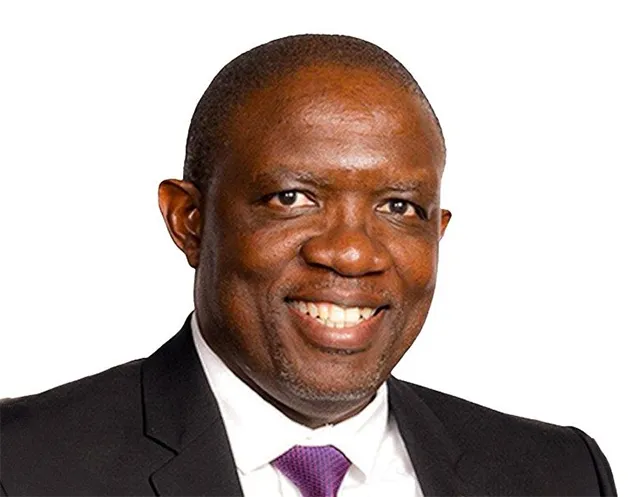
SOUTH Africa state-owned logistics enterprise Transnet has moved beyond stabilisation into a recovery and growth phase after three years of intensive restructuring, with every key performance indicator now showing improvement, Group Chief Operating Officer Solly Letswalo told the Mining Indaba conference in Cape Town.
Speaking to journalist Jeremy Maggs in a podcast interview focused on how the state-owned logistics company is enabling mining competitiveness, Letswalo painted a picture of an organisation that has transformed from a demoralised workforce facing potential collapse to one united behind measurable performance targets.
Three years ago, Transnet was fighting for survival with all operational and financial indicators trending downward. Today, the parastatal is simultaneously executing three parallel strategies: tactical recovery of operations, business reform including private sector partnerships, and capacity growth to meet customer demand.
The turnaround is evident across multiple metrics. Tonnage volumes, which declined year-on-year for three consecutive years, have now increased annually over the past three years. Security incidents, which saw infrastructure under siege with rail lines cut and copper wiring stolen, have decreased. Safety performance has improved, with fewer injuries and fatalities among employees, contractors, and the public. Employee culture surveys show rising confidence and belief in the organisation’s future.
“The difference between Transnet three years ago and Transnet now is that you’re starting to see in every aspect of the business improvement,” Letswalo said. “Every KPI you look at shows that Transnet is now improving performance, whether it’s safety, security, operations, or finances.”
The operational turnaround required shifting the employee mindset from victims to victors, Letswalo explained. The company created cross-functional team structures throughout the organisation, allowing employees from different divisions to collaborate on identifying problems, developing solutions, and executing improvement projects.
A unified focus on tonnage moved became the rallying point. Port personnel, rail operators, engineering teams, and port authorities all worked toward the same measurable objectives, with each division understanding its specific contribution to overall performance targets.
“Right now I’m seeing unity amongst employees across different businesses, across different functions, everybody trying to contribute their bit to get Transnet to reinvent itself,” Letswalo said.
However, scepticism persists among some employees and former workers who view reform initiatives as a precursor to privatisation. Letswalo acknowledged this concern but emphasised that the majority of Transnet employees believe in the organisation’s ability to improve performance with limited resources through structured collaboration.
Infrastructure Gaps Remain Critical
Despite operational improvements, significant infrastructure deficits continue to constrain performance. The rail network suffers from worn steel tracks, deteriorated sleepers, and ageing power supply nodes that force trains to operate at reduced speeds. Signalling systems that should operate automatically now require manual coordination between train drivers and controllers via radio, causing delays.
Port equipment, aged and previously poorly maintained, handles less cargo than its design capacity. Restoring infrastructure to manufactured standards remains essential for meeting customer requirements and running trains faster with shorter cycle times.
The infrastructure backlog creates a persistent performance gap that frustrates customers. While Richards Bay Coal Terminal reported a 10% volume increase attributed to logistics improvements, it requires 20-30% growth. Similarly, Kumba’s volume increases fall short of expectations.
Customer Expectations and Capacity Constraints
Customers benchmark Transnet against its historical performance when the organisation moved 220 million tons annually. Current volumes of 160-170 million tons leave a 30-50 million ton gap. This capacity constraint affects not only major mining companies but also prevents emerging miners from accessing the system.
Achieving the 250 million tons the President has identified as potential volume requires accommodating both established miners and new entrants. “If we get our capacity right, then we are able to give space to the imaging miners as well,” Letswalo said.
Funding the Infrastructure Gap
Closing the infrastructure gap requires a combination of funding sources beyond Transnet’s operational resources. Government support through grants and development finance institutions, customer contributions, and private sector investment together form the financial foundation for restoration and expansion.
The reform agenda specifically aims to enable private sector investment in areas that improve performance. In Durban, Transnet has secured a private operator partnership that is expected to reduce the burden on the parastatal while creating additional capacity and improving performance.
Private Sector Partnerships Progress Slowly
Private sector participation remains a point of tension. The Durban Gateway terminal, finalised two years ago, was delayed by litigation. Letswalo emphasised the need to execute partnerships properly to avoid years of court battles that produce no results.
“If you don’t do it properly, you’ll end up in court and you’ll be stuck in court for the next five years with no success,” he said. Projects typically require two to three years from conception to financial close.
While government and Transnet share a common understanding of the reform trajectory, private sector participants believe the process moves too slowly. Transnet is preparing to bring the Richards Bay bulk terminal and the manganese terminal in Ngqura to market in the coming months, following two years of preparation.
Lessons learned from the Durban Gateway experience are being incorporated into new partnership structures. Transnet is also working on a business case to invite private sector co-investment in a new manganese facility in Ngqura, while investing in rail network capacity to shift more manganese from road to rail.
Corridor Performance Varies
The coal corridor, serving the northern route to Richards Bay, shows the strongest improvement with RBCT’s 10% volume increase representing the highest performance gain. Manganese throughput has jumped significantly, though substantial volumes remain on road transport, representing a major opportunity for rail conversion.
The iron ore line has achieved some improvements but requires extensive network restoration due to a large maintenance backlog. Transnet plans to complete most of this restoration work during the current calendar year to bring the network into proper working condition.
Balancing Short-term Wins and Long-term Reform
Letswalo identified the competing demands of immediate operational performance and structural reform as one of the organisation’s biggest challenges. Both objectives require the same strategic resources, forcing difficult trade-offs.
Customers support both processes but expect results. As a recognised bottleneck in South Africa’s economic growth through logistics, Transnet must deliver in both the short and long term. The tension between stopping operations for comprehensive refurbishment versus maintaining current service while gradually improving infrastructure remains unresolved.
“Remember I said to you, the customers want to see this big jump and the country needs the big jump,” Letswalo said.
Digital Transformation Still Years Away
Real-time data visibility across the logistics chain remains aspirational. Letswalo estimated that fully integrated data showing the entire system from mine to port will take approximately three years to achieve. The ultimate goal is a digital twin of installed facilities, enabling AI-driven optimisation without physical site visits.
Teams are currently working on data collection systems and the infrastructure needed to support such visibility, but significant work remains. “I wish we had totally integrated data throughout our logistics,” Letswalo said.
Two-Year Vision: Volume and Partnership
Looking ahead two years, Letswalo envisions customers reporting substantial volume achievements: RBCT handling 71 million tons approaching 81 million tons, the iron ore corridor reaching 60 million tons, and manganese exceeding 20 million tons toward 24 million tons.
Beyond volumetric success, he expects Transnet to be recognised as a true partner to rail, port, and pipeline users. “Transnet will be seen as a partner to all of the users, their preferred partners,” he said.
Leadership Alignment Critical
The turnaround required alignment from the ministerial level through the board to the CEO and executive team, then throughout the entire organisation. CEO Michelle Phillips, who was initially appointed in an acting capacity before becoming permanent leader, led the transformation supported by a capable executive team.
Leadership’s primary role was instilling the belief that improvement was possible despite limited resources and funding. “That’s where the leadership played a big role, to just instil that belief that we can do it,” Letswalo said. “With the little bit that we have, it can be done. And transnetters have got the skills, the capability to do it and they have done it.”
Analysis
Letswalo’s assessment reveals an organisation navigating the tension between demonstrating immediate improvements to rebuild credibility and making the structural investments required for long-term competitiveness. While operational metrics show consistent improvement, the infrastructure deficit creates a performance ceiling that frustrates mining customers and limits economic contribution.
The organisation’s success in shifting workforce culture and achieving incremental gains demonstrates capability, but the 30-50 million ton capacity gap relative to historical performance and customer expectations underscores the scale of remaining challenges. Whether Transnet can maintain operational momentum while executing complex private sector partnerships and infrastructure restoration will determine its role in enabling South Africa’s mining competitiveness and broader economic growth.