FOUR years ago, Russell Baatjies would have faced a chilly reception from South Africa’s mining executives. Today, the chief executive of Transnet Freight Rail stands before a packed room at Mining Indaba, welcomed not with scepticism but with cautious optimism – and a shared determination to reach an ambitious goal: 183 million tons of rail freight by the end of this financial year.
The target represents more than just a number. It’s a beacon of recovery for an organisation that hit its lowest point at 149 million tons, down from a peak of 226 million. It’s a lifeline for mining companies haemorrhaging money as their commodities travel by road instead of rail. And it’s a critical test for South Africa’s ability to rebuild its economic infrastructure after years of decline.

“We’d be fooling ourselves if we say we’ve arrived,” Baatjies said candidly in an exclusive interview. “But you can see some of the commodities improving very nicely.”
The Numbers Tell a Story of Incremental Gains
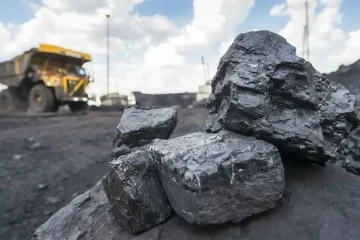
The coal line – South Africa’s critical export artery – delivered 56.8 million tons last year, up from 52 million the year before. Iron ore volumes are climbing between 5 and 6 percent annually despite massive infrastructure work still underway. Manganese posted its best export numbers ever. Chrome and magnetite are recording top-five annual performances.
These aren’t the soaring triple-digit growth figures of a booming economy. They’re the hard-won gains of an organisation learning to “sweat the assets” – extracting every possible ton from ageing infrastructure while simultaneously trying to repair it.
“It’s like fixing the car while the car is moving,” Baatjies explained. The challenge is acute: Transnet has just two 10-day maintenance windows per year to conduct major infrastructure work on the coal and iron ore lines. The rest of the time, trains must keep running.
Moving People, Not Just Freight
Baatjies’ strategy for reaching 183 million tons doesn’t rely solely on new locomotives or repaired tracks. It depends on moving people where they’re needed most.
In one telling example, Transnet shifted 104 workers from the Durban-Johannesburg container corridor – where volumes remain relatively low – to the coal line. The result: coal volumes jumped 4.8 million tons in a single year.
“We can’t just employ more and more people,” Baatjies said. “We need to be smart about expenditure. So we optimise – we move people from this area to that area so we can get more volumes and run more trains.”
The approach reflects a broader transformation at Transnet: abandoning the monopoly mindset that dominated for decades and embracing competitive thinking. With private train operating companies preparing to enter the market under South Africa’s new open-access policy, Transnet Freight Rail is restructuring into business units focused on bulk commodities – the rail-friendly freight where it holds advantages.
From Wheel Tappers to Artificial Intelligence
Perhaps nothing illustrates Transnet’s reinvention better than its embrace of technology that would have seemed like science fiction just a few years ago.
The railway is deploying artificial intelligence to capture high-speed photographs of rolling stock at six locations across the country, comparing each wagon to an ideal state and instantly flagging problems. It’s shifting from time-based maintenance – where locomotives come in for service on a rigid schedule – to condition-based maintenance that monitors actual wear and performance.
“The way we’ve done things in the past, with the wheel tapper tapping the wheel with the hammer – those times are gone,” Baatjies said. “We need to catch up with the rest of the world.”
The organisation is also benchmarking against Class 1 Railways in the United States, learning how American rail companies use AI to optimise train plans based on real network conditions rather than ideal scenarios that operators can never achieve.
Winning the War on Cable Theft
Two years ago, cable theft was the number one cause of train cancellations on the coal line. Today, it ranks sixth – a dramatic improvement achieved through intelligence-driven operations, strategic deployment of resources to hotspots, and new technology, including drones.
The progress demonstrates what collaboration between Transnet, customers, and security providers can achieve when everyone shares the same goal. Mining companies, which suffered billions in losses when trains couldn’t move their exports, have actively helped procure security solutions and accelerate implementation.
Rebuilding Trust One Conversation at a Time
The transformation in Transnet’s relationship with its customers may be the most remarkable change of all.
“Mining customers are our biggest customers,” Baatjies noted. “They’re more positive, more engaging. They invite us to their events, their dinners. I don’t remember them inviting us before.”
The improved relations stem from what Baatjies calls “channel optimisation teams” – monthly meetings where Transnet and customers review performance, examine deviations, and develop solutions together. It’s a major departure from the past, when customers complained that Transnet never engaged them.
“What makes it easier is the fact that we talk to them all the time,” Baatjies said. Customers are realistic about expectations because they can see the initiatives underway and track monthly progress toward commitments.
Measuring Success in Hours, Not Just Tons
While 183 million tons is the headline target, Baatjies and his team obsess over a different number: cycle time – how long it takes a train to complete a journey and return to its starting point.
On the iron ore line, the goal is 70 hours. Reducing cycle time directly increases capacity: if a journey takes 24 hours instead of 48, the railway can complete twice as many trips per week with the same locomotives and wagons.
“That’s an efficiency measure for us in terms of cycle time,” Baatjies explained. “How do we sweat our assets? How quickly do we turn them around to get back and repeat the journey?”
From Monopoly to Marketplace
Perhaps the biggest challenge Baatjies faces isn’t physical infrastructure but mental: changing the monopoly mindset that pervaded Transnet for generations.
“The railway as we’ve always known it, as this monopoly that can just sit back and things will happen by itself – that’s long gone,” he said. Transnet is now implementing incentive schemes to reward teams that hit targets, talking openly about income statements, and making difficult decisions about which markets to serve.
With private train operating companies preparing to compete for business, Baatjies is crystal clear about his strategy: “We will assist them where we can. But we also have our intentions, and those are to increase volumes in the markets we’ve been good at. We don’t give our volumes up easily.”
What 183 Million Tons Really Means
Reaching 183 million tons this financial year would represent more than recovery – it would signal that South Africa’s rail network is on a sustainable path forward. It would validate the thousands of incremental improvements, from redeploying staff to deploying drones against cable thieves.
But Baatjies and his team are looking beyond the immediate target. By 2029, they aim for 200 million tons. By 2030, they want to contribute significantly to the minister’s vision of 250 million tons across the entire network.
For the coal line specifically, the goal is 65 million tons – up from this year’s 56.8 million. Iron ore should exceed 55 million tons, even accounting for necessary maintenance work.
“We are excited, we are positive,” Baatjies said, his conviction evident. “The optimism we have in the organisation – not just as a management team but everybody in TFR – you can feel the excitement. You can see the culture has changed. The people are positive.”
More Than Numbers
When asked what keeps him awake at night, Baatjies paused. It’s not one specific concern, he said, but rather the weight of responsibility.
“We just don’t want to recover the volumes,” he said quietly. “We must make sure we don’t find ourselves in this situation ever again – where we have constrained cash flow, a difficult balance sheet, poor performance, and customers complaining.”
The goal isn’t merely to reach 183 million tons. It’s to build a railway that South Africa can depend on for decades to come.
“It’s such an important organisation for this country,” Baatjies concluded, “that we cannot afford to have the sort of performance we’ve seen in recent years.”
The chase for 183 million tons isn’t just about freight. It’s about restoring faith in the institutions that underpin South Africa’s economy. And if the energy at Mining Indaba is any indication, that faith, battered but not broken, may finally be returning.