Our website use cookies to improve and personalize your experience and to display advertisements (if any). Our website may also include cookies from third parties like Google Adsense, Google Analytics, and Youtube. By using the website, you consent to the use of cookies.

Why a women’s university? In conversation with Women’s University in Africa founder

Why a women’s university? In conversation with Women’s University in Africa founder

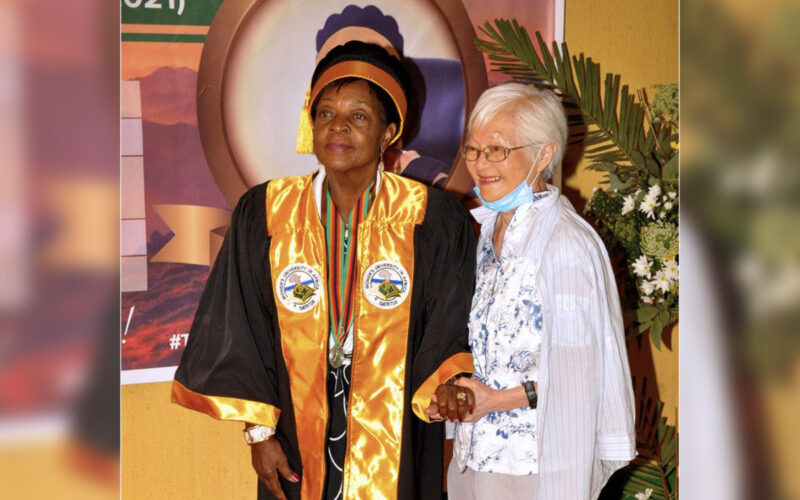
ALOIS VINGA, BIRD STORY AGENCY AT 81, when many, if not all, are past their prime, Dr Fay Chung is still going strong. Her determination to provide women with tertiary education is her driving force. When we meet her at the Great Wall Restaurant in Belgravia, Harare, her excitement is contagious, and we can't start the interview fast enough. She immediately starts talking about the university she co-founded with professor Hope Sazda. "I served as the country's education minister from 1980 to 1988, and I knew where the gap existed. One of my main goals was to ensure access to…
Read More
In 1986 Wits University did a survey about its relevance to South Africa: another is needed

In 1986 Wits University did a survey about its relevance to South Africa: another is needed

AS the number of black students increased at the University of the Witwatersrand (Wits) in South Africa in the 1980s, township struggles spread onto the campus and management came under increasing grassroots pressure to implement change within the university. In response, social scientists in the Faculty of Humanities, with the financial support of the university’s research office, undertook an extensive survey of perceptions of Wits. It included organisations in black communities as well as of international academics, students and staff at Wits. They even had a meeting with the then-banned African National Congress (ANC) in Lusaka. Authors EDWARD WEBSTER, Distinguished…
Read More
Decolonising education in South Africa – a reflection on a learning-teaching approach

Decolonising education in South Africa – a reflection on a learning-teaching approach

IT has been seven years since students in South Africa began protesting in a bid to “Africanise” the country’s university curricula. They viewed what they were learning as too neoliberal – characterised by Western values pushing the marketisation of education. They wanted universities to become more relevant to students in an African country and more connected to their own lives. The students’ calls propelled “decolonisation” to the forefront of national (and even international) debate. Decolonisation in the university context involves dismantling the institutional practices and policies that uphold white supremacist, Western values. Since then there have been various initiatives at…
Read More
Mobile school offers hope to nomad children in Chad

Mobile school offers hope to nomad children in Chad

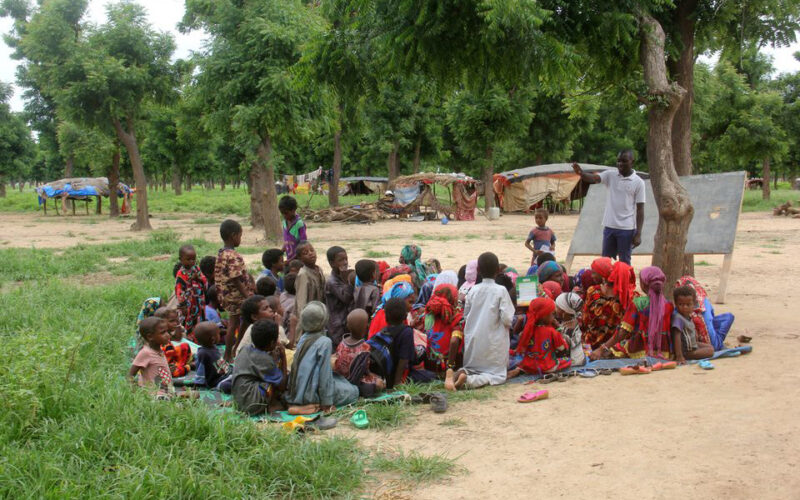
MAHAMAT RAMADANE IN a makeshift open-air classroom, dozens of children sat squeezed together on a mat and watched as their teacher chalked simple sums on a blackboard - a rare chance of education for their nomadic community in Chad. Around 7% of the central African nation's population of about 16 million are nomads, who move hundreds of kilometres from the south with their herds every year when seasonal rains turn the semi-arid central regions green with fresh pasture. This way of life is centuries-old but incompatible with Chad's formal education system. According to the Copenhagen-based International Work Group for Indigenous…
Read More
New universities in Nigeria? Absolutely not

New universities in Nigeria? Absolutely not

PUBLIC university lecturers in Nigeria have been on strike since 14 February 2022. One of their biggest issues is that the institutions they work for are poorly funded. Despite this, Nigeria’s National Assembly recently raised the idea of establishing 63 new universities. Nigeria already has more than 200 universities. In this interview, Dr Jerome Isuku, an educational management expert who works at the University of Ibadan, sets out his views on the government’s thinking. Author ERAGBAI JEROME ISUKU, Lecturer, University of Ibadan Does Nigeria need 63 new universities? The proliferation of universities in the face of dwindling financial input from…
Read More
Academic freedom and democracy in African countries: the first study to track the connection

Academic freedom and democracy in African countries: the first study to track the connection

THERE is growing interest in the state of academic freedom worldwide. A 1997 Unesco document defines it as the right of scholars to teach, discuss, research, publish, express opinions about systems and participate in academic bodies. Academic freedom is a cornerstone of education and knowledge. Yet there is surprisingly little empirical research on the actual impact of academic freedom. Comparable measurements have also been scarce. It was only in 2020 that a worldwide index of academic freedom was launched by the Varieties of Democracy database, V-Dem, in collaboration with the Scholars at Risk Network. Author LIISA LAAKSO, Senior Researcher, The…
Read More
Universities shouldn’t use software to monitor online exams: here’s why

Universities shouldn’t use software to monitor online exams: here’s why

PROCTORING software monitors a student’s computer or phone while they write exams. These programs have been around for some time but became ubiquitous during online learning during the pandemic. Proctoria, Respondus and Proctor U, the most popular programs, have enjoyed a 500% increase in usage since the start of COVID-19 and proctoring software is now a US$19 billion global market. Author SIOUX MCKENNA, Director of Centre for Postgraduate Studies, Rhodes University & Visiting Research Professor in Center for International Higher Education, Boston College, Rhodes University Some proctoring programs work by checking that the student has only the test software and…
Read More
Bilingual education can work in South African schools: here’s how

Bilingual education can work in South African schools: here’s how

FROM the fourth year of schooling, the majority of South African schools teach all subjects in English only. The devastating learning consequences of this for children who speak African languages at home have been compellingly captured in the documentary film Sink or Swim. These consequences include a lack of conceptual understanding and little identification with the content. In South Africa, there are 12 official languages, including South African sign language. The constitution allows that any of these languages may be used as a medium of instruction in schools. But only English, and in a minority of schools Afrikaans, is used…
Read More
School feeding programmes are great value for money

School feeding programmes are great value for money

HUNDREDS of millions of children worldwide attend class every day. With such a wide reach, schools can effectively deliver a vast array of interventions such as immunisations and hygiene education. They can greatly improve the health of the students, who will learn better as a result. School feeding programmes are among these interventions. They take a variety of forms, either targeting the poorest and most marginalised communities or universally covering all public schools in a given country. They are deployed daily, often within broader school health and nutrition programmes, and reach hundreds of millions of children every day. STÉPHANE VERGUET,…
Read More
Why the hijab controversy persists in Nigeria’s public schools

Why the hijab controversy persists in Nigeria’s public schools

HIJAB use in Nigeria’s public schools has become highly controversial, in some cases leading to riots, fatalities, the destruction of school property and the closure of schools. Adeyemi Balogun, a PhD holder in the history of religion with research interests in Muslim culture and Muslim/ Christian relations, sets out why the issue is so contentious, and what can be done to ease tensions. What is the hijab? The hijab has become a term used for all types of veiling among Muslim women. Some take it to mean a scarf or any piece of clothing that covers the woman’s head, face…
Read More