Our website use cookies to improve and personalize your experience and to display advertisements (if any). Our website may also include cookies from third parties like Google Adsense, Google Analytics, and Youtube. By using the website, you consent to the use of cookies.

Schools can be a great resource for mental health in South Africa

Schools can be a great resource for mental health in South Africa

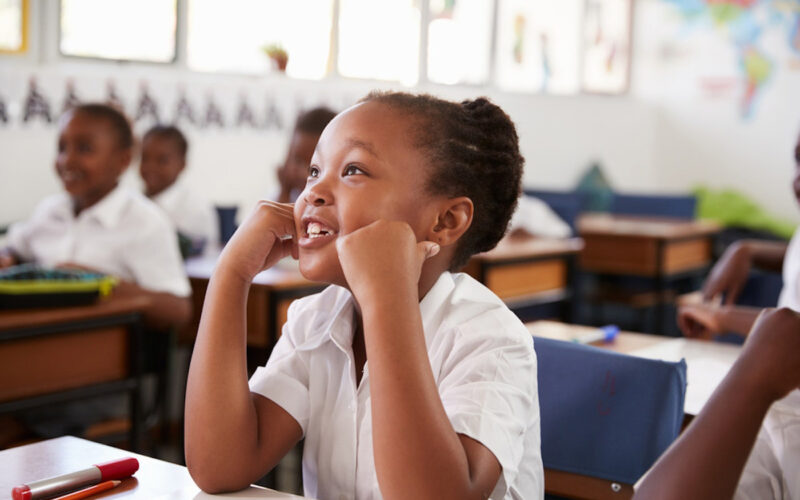
IN the face of deep inequality, unemployment, high rates of crime and violence, and the social and economic fallout from the COVID-19 pandemic, the mental health trajectory for young South Africans looks bleak. Mental health is multi-faceted. It enables people to cope with the stresses of life, realise their abilities, learn well and work well, and contribute to their community. When people face social and economic adversity, their risk of developing mental illness increases if they don’t have support that could protect them. Author SARAH SKEEN, Associate Professor, Global Health, Stellenbosch University Data on the exact burden of child and…
Read More
Mobile phones can enable learning during school disruptions. Here’s how

Mobile phones can enable learning during school disruptions. Here’s how

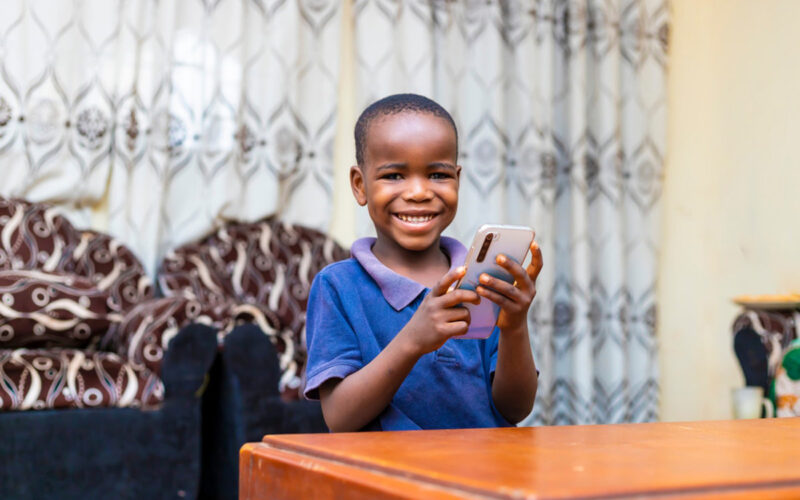
THE COVID-19 pandemic placed enormous pressure on education systems worldwide. At the peak of the crisis, school closures forced over 1.6 billion learners out of classrooms. This exacerbated a learning crisis that existed before the pandemic, with many children in school but learning very little. Widespread school closures are not unique to COVID-19. Teacher strikes, natural disasters, other disease outbreaks and extreme weather conditions all result in lengthy school closures. The cost of school closures has proved to be substantial, in particular for lower socioeconomic status households. When schools are closed, remote learning is rarely as effective as in-school instruction,…
Read More
What the 100-year-old Makerere University in Uganda reveals about culture

What the 100-year-old Makerere University in Uganda reveals about culture

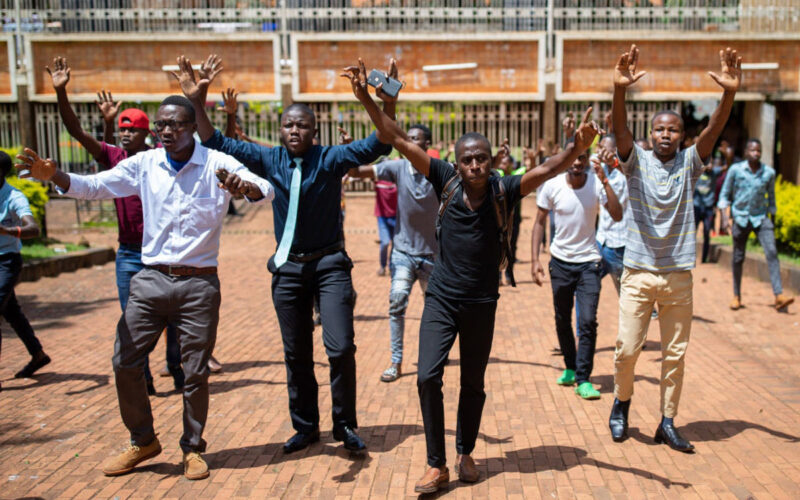
MAKERERE UNIVERSITY, which marks its centenary this year, is well-known as the oldest university in East Africa and as a cradle of political elites. Its alumni include presidents and prime ministers – among them Joseph Kabila (Democratic Republic of Congo), Julius Nyerere and Benjamin Mkapa (Tanzania), Mwai Kibaki (Kenya), and Milton Obote and Ruhakana Rugunda (Uganda). Author JOAN RICART-HUGUET, Assistant Professor, Loyola University Maryland and Postdoctoral Associate and Lecturer, Yale University Writers such as Ngugi wa Thiong'o from Kenya and David Rubadiri from Tanzania, scholars and political activists such as Stella Nyanzi and Bobi Wine are also Makerere alumni. Less…
Read More
Rwandan researchers are finally being centred in scholarship about their own country

Rwandan researchers are finally being centred in scholarship about their own country

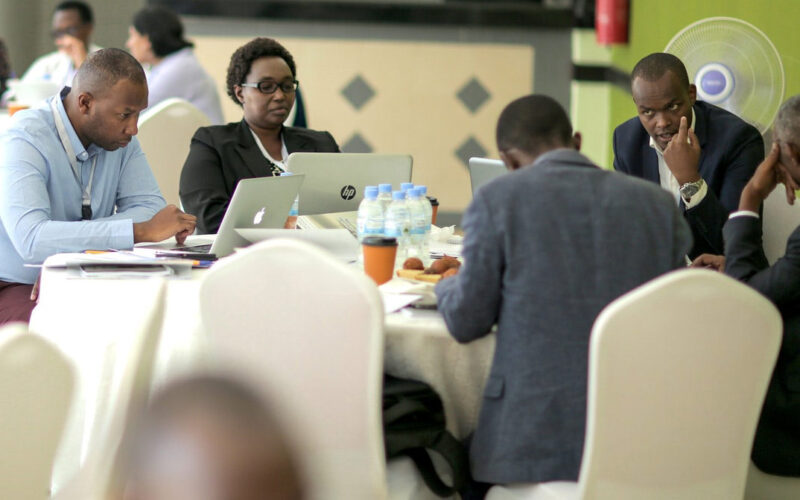
IT is widely known that African researchers are dramatically underrepresented in academic journals. But it’s still astonishing to see this reality starkly represented in numbers. Authors FELIX MUKWIZA NDAHINDA, Honorary Associate Professor, College of Arts and Social Sciences, University of Rwanda JASON MOSLEY, Research Associate, African Studies Centre, University of Oxford NICOLA PALMER, Reader in Law, King's College London PHIL CLARK, Professor of International Politics, SOAS, University of London SANDRA SHENGE, Director of Programs, Aegis Trust For the past eight years we have run the Research, Policy and Higher Education (RPHE) programme, a research and peer-support scheme with Rwandan scholars,…
Read More
Climate change isn’t a priority for Kenyan universities. It should be

Climate change isn’t a priority for Kenyan universities. It should be

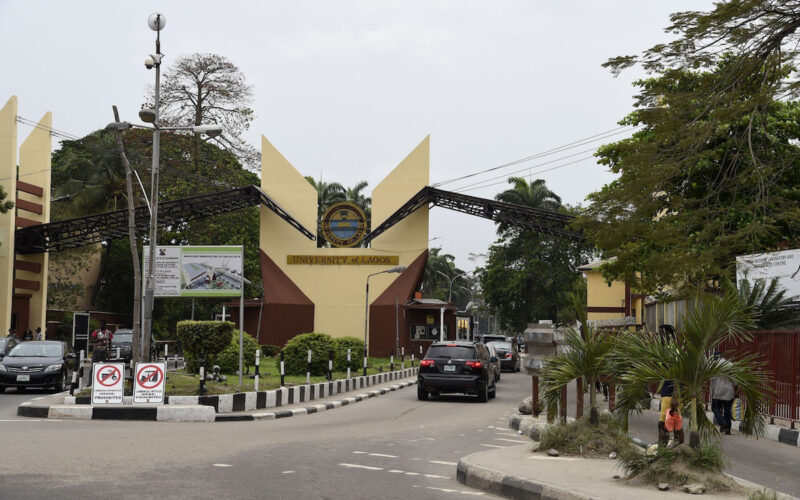
UNIVERSITIES can play a vital role in shaping change in societies. They produce knowledge through research, train future decision-makers, and contribute to public awareness of issues. But not all universities are rising to challenges like this. Studies have established that efforts to integrate sustainable development into African universities’ curricula and their community engagement processes leave something to be desired. Teaching and research don’t always reflect society’s real problems. Author JACKLINE NYERERE, Senior Lecturer of Educational Leadership and Policy, Kenyatta University Climate change is another area where universities should be identifying and providing solutions. It’s a complex, politicised and global issue…
Read More
Ghana’s high school system sets many students up for failure: it needs a rethink

Ghana’s high school system sets many students up for failure: it needs a rethink

AROUND the world, educational research has found that students’ achievement and experiences largely depend on which school they attend and the resources available to support learning. Educational policies mostly determine the distribution of resources to schools and a student’s choice of school could be limited by these policies. Authors DAVID BAIDOO-ANU, PhD Candidate, Queen's University, Ontario KENNETH GYAMERAH, PhD Candidate, Queen's University, Ontario TIMOTHY CHANIMBE, PhD Candidate, Hong Kong Baptist University In Ghana, secondary schools are grouped into categories based on their performance in the West Africa Secondary School Certificate Examination. This is a school-leaving exam that grade 12 students…
Read More
What school textbooks in South Africa say about the Cold War – and why it matters

What school textbooks in South Africa say about the Cold War – and why it matters

SOUTH AFRICA’S stance on Russia’s invasion of Ukraine isn’t that surprising in light of its treatment of the Cold War in the school history curriculum and textbooks. In these it’s reflected as having had a negative impact on Africa. The Cold War (1945-1990) ranged the United States and its allies against their rival nuclear superpower, the Soviet Union. What textbooks contain is significant for being the officially approved representation of the nation’s history. This “official knowledge” usually embeds social controversies in ways that favour ruling groups. Authors LINDA CHISHOLM, Professor of Education, University of Johannesburg DAVID FIG, Honorary Research Associate,…
Read More
Why award honorary doctorates, and what do the choices say about our universities?

Why award honorary doctorates, and what do the choices say about our universities?

UNIVERSITIES like to associate themselves with exceptional individuals through the awarding of honorary doctorates, but this practice has often attracted controversy, creating headaches for university administrators. Honorary doctorates highlight uncomfortable but important questions about the purpose of the university and its role in reinforcing and perpetuating social inequality. Author KATE MURPHY, Senior Lecturer in Contemporary History, Monash University The tradition and purpose of honorary doctorates Honorary degrees (usually, though not always, doctorates) are awarded by universities to recognise outstanding achievement in a particular field, or service to the broader community. While some universities have established separate honorary degrees, such as…
Read More
Kibaki’s Kenya education legacy: well-intentioned, with disastrous consequences

Kibaki’s Kenya education legacy: well-intentioned, with disastrous consequences

KENYA’S former president Mwai Kibaki, who died last week, was widely praised for his economic transformation of Kenya, first as finance minister from 1969 to 1982 and then as the third president of Kenya from 2002 to 2013. But Kibaki also left an enduring legacy on Kenya’s education sector. Kibaki left his mark on education in two areas: the widening of access to education and the embrace of a business-style model for universities. When Kibaki came to office, there was an education access crisis in both basic and higher education. Author ANJANA SUSARLA, Professor of Information Systems, Michigan State University…
Read More
South Africa’s no-fee school system can’t undo inequality

South Africa’s no-fee school system can’t undo inequality

A defining feature of South Africa is the level of inequality in almost all spheres of society. Nowhere is this more observable than in the schooling sector. It’s not unusual to find wealthy schools, comparable to the best anywhere in the world, within 5km of poor schools. Some blame for this inequality can be attributed to the lingering effects of racially biased funding that favoured white people during apartheid. But it does raise the question of why, after more than two and a half decades of democracy, poor children of South Africa continue to sit in overcrowded classrooms with crumbling…
Read More