Our website use cookies to improve and personalize your experience and to display advertisements (if any). Our website may also include cookies from third parties like Google Adsense, Google Analytics, and Youtube. By using the website, you consent to the use of cookies.

Ugandan children drop out of school as fees soar post-COVID

Ugandan children drop out of school as fees soar post-COVID

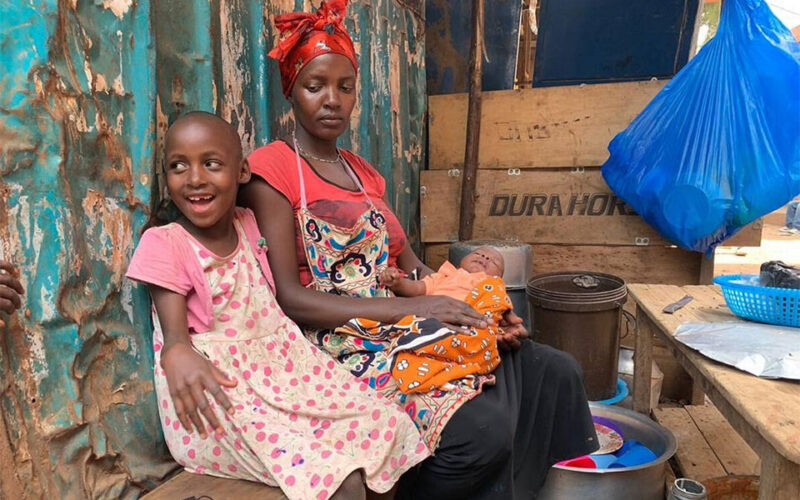
HEDWIG ARINAITWE and EMMA BATHA LIKE many children in Uganda, Bridget Nabawanuka was excited about seeing her friends again after the world's longest pandemic school closure, but a steep hike in fees meant she never made it back to the classroom. The seven-year old, who now works at her mother's food stall in the capital, Kampala, is among a rising number of children who are dropping out because cash-strapped parents are unable to pay soaring bills from state and private schools. "She asks me every morning when she will go back to school," said Bridget's mother, Agnes Nangabi, who hopes…
Read More
Bilingual schooling can boost literacy – but in Côte d’Ivoire it’s not as clear cut

Bilingual schooling can boost literacy – but in Côte d’Ivoire it’s not as clear cut

IN countries where more than one language is spoken, education systems are challenged with choosing which language to use in schools. Learning in a new language is an especially difficult task for a child. Instead, learning in a language a child already speaks may better support schooling and literacy outcomes. A common approach in multilingual communities is bilingual education, where instruction occurs in both a mother tongue and an official language. There is abundant evidence that early experience with two languages, be it at home with bilingual family members or at school in a bilingual education programme, may benefit children’s…
Read More
South African universities are training their gaze on the United States. Why it matters

South African universities are training their gaze on the United States. Why it matters

THREE academic institutions in Africa have established units dedicated to the study of the United States. They are the University of the Witwatersrand’s African Centre for the Study of the United States, the American Language Centre in Morocco, and most recently, the University of Pretoria’s African Centre for the Study of the United States. University of Pretoria Principal Tawana Kupe and Christopher Isike, the new Centre’s Director, explain why Africans need a better understanding of America. Authors TAWANA KUPE, Vice-Chancellor and Principal of the University, University of Pretoria CHRISTOPHER ISIKE, Professor of African Politics and International Relations, University of Pretoria…
Read More
How to connect social science research to policy in Nigeria

How to connect social science research to policy in Nigeria

RESEARCH is a means to an end. It produces new knowledge that helps to improve welfare. Social science research in particular connects directly to the challenges of less developed countries like Nigeria. It is generally aimed at strengthening policies and practices for economic growth, development and societal welfare. Good social science research has ultimate social relevance. In Nigeria, however, our study shows that research evidence and policies are disconnected. This is due to two main problems. It is evident from past research and our findings too corroborate this. Authors ADEDAYO OLOFINYEHUN, Researcher, National Centre for Technology Management (NACETEM) ABIODUN EGBETOKUN,…
Read More
For 25 cents a day, poor Nigerians get a shot at science education

For 25 cents a day, poor Nigerians get a shot at science education

ABRAHAM ACHIRGA A Nigerian school is targeting students from poor families to give them a chance to excel at science, maths and engineering for a fee of 100 naira (25 cents) a day, hoping they can hone skills to help their families escape poverty. One student, 12-year-old Faridat Bakare who enrolled at Knosk Secondary School in Abuja in 2020, a year after it opened, has set her sights on becoming an engineer. In a technical laboratory at the school, she shows off a prototype for a solar-powered car made from cardboard, which she developed with her classmates. "I want to…
Read More
Uganda recognizes pregnant teens’ right to education, but religion, stigma lock out most

Uganda recognizes pregnant teens’ right to education, but religion, stigma lock out most

WAMBI MICHAEL WHEN schools reopened in Uganda in January, Atim’s baby was 3 months old. The 17-year-old wished to go back to classes but she faced a dilemma—whether to disclose to her teachers that she was a lactating mother. Atim chose to open up to some of the teachers who offered to help her return. The school made a provision to allow her to secretly breastfeed the baby within its premises. The first two weeks were challenging for the young mother. “It wasn’t easy but I’m now getting used to the students and teachers. The teachers have really been helpful,”…
Read More
Black women in South African academia struggle to get ahead: what needs to change

Black women in South African academia struggle to get ahead: what needs to change

IN South Africa, the number of black women who acquire undergraduate degrees has increased more than any other population group. Yet they remain underrepresented in senior academic and management positions in the country’s higher education institutions. Author JEAN LEE FARMER, Advisor: Higher Education Professional Development, Stellenbosch University Historically, black South African pupils received separate schooling and less funding for education from the apartheid government than white pupils. Mixed-race, Indian and Asian learners received slightly more than black learners. Separate higher education institutions were also established for the different race groups. Very few black students could apply for special permission to…
Read More
‘Lost generation’ feared as COVID school closures fuel inequality

‘Lost generation’ feared as COVID school closures fuel inequality

ANNIE BANERJI and HEDWIG ARINAITWE STANDING in front of India's Taj Mahal, tour guide Raju Usmani fears for his daughter's future. With COVID-19 decimating his income, he may have to pull her out of school just as she is catching up after nearly two years stuck at home. Areeba, 10, is among 1.6 billion children globally - more than 90% of all school students - who have been affected by pandemic school closures, which threaten to widen wealth inequalities both within and between countries. "We're running the risk of a lost generation," U.N. education expert Robert Jenkins told the Thomson…
Read More
Elitism affects schools across the globe: it needs to be kept in check

Elitism affects schools across the globe: it needs to be kept in check

THERE is no shortage of themes to address in schools and universities: wellbeing; climate change; diversity; equity and social justice; assessment; 21st century learning; the list goes on. Author CONRAD HUGHES, Campus and Secondary Principal at the International School of Geneva's La Grande Boissière, Research Associate at the University of Geneva's department of Education and Psychology, Université de Genève But, are there some challenges that stand out above the others? The answer is yes, but yes on two fronts. The first relates to the teacher – the most important human influence on student learning. This has been shown through multiple…
Read More
Child care centres in South Africa need more support: principals tell of pandemic impact

Child care centres in South Africa need more support: principals tell of pandemic impact

SOUTH Africa’s early childhood development sector plays a critical role in providing early care and education, catering generally for children aged three to five in their pre-primary school years. Though it’s an essential service, this sector remains mostly informal. Government has not supported it well with the funding needed to provide quality early care and early learning services. Author CATHERINE DRAPER, Associate Professor, University of the Witwatersrand The majority of early childhood development centres therefore rely on fees paid by children’s caregivers. Services are out of reach for caregivers who cannot afford these fees. The sector employs mostly black African…
Read More