Our website use cookies to improve and personalize your experience and to display advertisements (if any). Our website may also include cookies from third parties like Google Adsense, Google Analytics, and Youtube. By using the website, you consent to the use of cookies.

Student well-being comes from care, but is caring enough? Academics reflect on 3 stumbling blocks

Student well-being comes from care, but is caring enough? Academics reflect on 3 stumbling blocks

STUDENTS’ well-being in higher education has been a growing concern globally since the coronavirus pandemic, which disrupted learning and lives generally. Well-being has been described as “the combination of feeling good and functioning well; experiencing positive emotions such as happiness and contentment as well as the development of one’s potential, having some control over one’s life, having a sense of purpose, and experiencing positive relationships”. Well-being is important for student engagement, achievement and belonging, which all make for a more positive learning and teaching experience. We teach in an academic literacy module at a historically disadvantaged university in South Africa.…
Read More
Measures of academic value overlook African scholars who make a local impact – study

Measures of academic value overlook African scholars who make a local impact – study

ACADEMICS today, around the world, are confined by the way their research output is measured. Indicators that count the number of times their work is cited by other academics, and the relative prestige of journals that publish their papers, determine everything: from career development to research funding. What does this international system mean for African scholars like ourselves? Our work has found that metrics for measuring excellence are instead acting as a disadvantage for academics who seek to generate knowledge relevant to their communities. The higher the traditional indicators, like citation counts and impact factors, are for African scholars, the…
Read More
Nigeria’s low-cost private schools are the only option for millions: is closing them a good idea?

Nigeria’s low-cost private schools are the only option for millions: is closing them a good idea?

NIGERIA’S basic education landscape consists of public (government) schools and a diverse private sector. Private schools in Nigeria refer to educational institutions that are run by private individuals, religious organisations, foundations or business enterprises. These schools are diverse in terms of size, cost, ownership models and target populations, ranging from low-fee neighbourhood schools to faith-based schools and “premium” schools. The number of private schools isn’t captured in official statistics. Over the past year, many private schools have been closed across the country. Ebonyi State sealed more than 280 unapproved schools. Cross River officials shut down 69, and Akwa Ibom, Kogi…
Read More
School violence doesn’t happen in isolation: what research from southern Africa is telling us

School violence doesn’t happen in isolation: what research from southern Africa is telling us

SCHOOL violence is a global public health phenomenon. This is when learners and teachers are the victims of physical and psychological abuse, cyber threats and bullying, fights, gangsterism, and the use of weapons at school. The consequences of school violence are dire. There are implications for learners, teachers, the school and the community. Violence undermines the learners’ and teachers’ safety. It causes stress, academic decline and behavioural problems. It can contribute to a broader cycle of violence in communities. School violence is a problem across southern Africa. This includes South Africa, Zimbabwe, Mozambique and Namibia. In 2008, the regional body,…
Read More
Hilary Savi pushes climate literacy into Africa’s classrooms “before it’s too late”

Hilary Savi pushes climate literacy into Africa’s classrooms “before it’s too late”

HILARY SAVI has been shuttling from one meeting room to the next at COP30 in Belém, Brazil, her notebook filling quickly with ideas gleaned from panels on gender, education, youth, and climate adaptation. When she finally pauses beside a colleague from Argentina to catch her breath, the talk quickly turns to what unites them: teaching the next generation how to live with a changing planet. For Savi, a soft-spoken climate educator from Benin, the fight against climate change doesn’t begin in government halls or conference rooms. It begins in classrooms and churches, with children who still see the world as…
Read More
Social work is a serious profession – why not youth work? What South Africa needs to get right

Social work is a serious profession – why not youth work? What South Africa needs to get right

ABOUT 3.5 million South Africans aged 15-24 are disengaged from the formal economy and education system. In the first quarter of 2025, 37.1% of young people were not in employment, education, or training. These alarming figures highlight an urgent need for youth development. Interventions such as skills and entrepreneurship development are needed to expertly guide young people towards participating in the mainstream economy. Designing and running those interventions requires professional youth workers. Youth work is an emerging profession within the social services sector. It aims to promote positive youth development through young people’s voluntary participation. The expertise needed in this…
Read More
How Zambia tackles school absenteeism

How Zambia tackles school absenteeism

AT 5:30 a.m. in Lusaka’s Matero township, 13-year-old Christine Zimba was already awake, putting on her school uniform in the dim morning light. Her mother, Judith Sichone, quietly swept around their home. There was no breakfast that morning, just a cup of warm water to fill the belly. At 6:00 a.m., Christine slung her school bag over her shoulder, waved goodbye to her mother, and stepped into the streets of Matero. She walked for thirty minutes to Mambilima Primary School. When she arrived on campus, she was a bit tired and hungry, but she was happy. The smell of porridge…
Read More
What do Nigerian children think about computers? Our study found out

What do Nigerian children think about computers? Our study found out

DIGITAL literacy is the ability to use digital tools and technologies effectively, safely and responsibly. This includes the use of smartphones and devices, navigating the internet and exploring coding basics. In an era where digital literacy is more important than ever, it’s essential to understand how young children perceive computing concepts. As a computer science education researcher, I led a team of researchers to study young children’s ideas about computing in an African setting. Our recent study sheds light on how children aged five to eight in Nigeria think about computing, including computers, the internet, coding and artificial intelligence (AI).…
Read More
Universities can turn AI from a threat to an opportunity by teaching critical thinking

Universities can turn AI from a threat to an opportunity by teaching critical thinking

ACROSS universities worldwide, a quiet revolution is underway. Generative artificial intelligence (AI) tools such as ChatGPT, Copilot, DeepSeek and Gemini are being used to produce essays, summarise readings, and even conduct complex assignments. Generative artificial intelligence is a kind of AI that can handle a variety of creative tasks in diverse domains, such as arts, music and education. For many university teachers, this raises alarm bells about plagiarism and integrity. While some institutions have rushed to restrict or support AI use, others are still unsure how to respond. But focusing only on policing misses a bigger issue: whether students are…
Read More
South African students still don’t feel safe on campus: how protection can be stepped up

South African students still don’t feel safe on campus: how protection can be stepped up

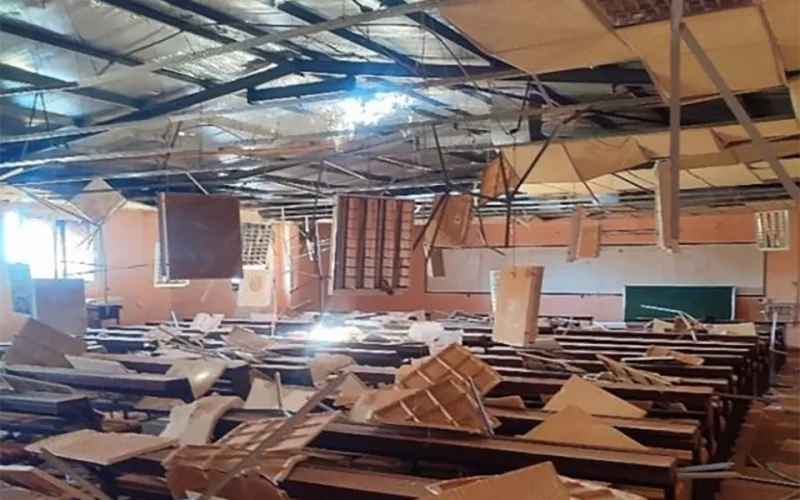
STUDENTS at South African universities have to deal with a disturbing reality. They face the threat of violent crime, in particular gender-based violence. They also battle with substandard infrastructure – some of it life-threatening. And institutions aren’t ready to respond. We are academics in environmental health and public health. Our work examines occupational health and safety in educational environments. We recently completed a review of health and safety challenges in South African universities. We looked at public records, police reports, campus press statements, and national media coverage of violent incidents. We also noted infrastructure hazards reported at South African universities…
Read More