Our website use cookies to improve and personalize your experience and to display advertisements (if any). Our website may also include cookies from third parties like Google Adsense, Google Analytics, and Youtube. By using the website, you consent to the use of cookies.

Online learning is an opportunity to meet the needs of struggling students

Online learning is an opportunity to meet the needs of struggling students

AS many have observed, the COVID-19 pandemic has laid bare many challenges that students face at school and higher education institutions. In South Africa, these relate particularly to inequalities arising from students’ diverse socioeconomic backgrounds. These inequalities account for the learning barriers and inability to learn effectively. DR THELMA DE JAGER, HOD Education, Tshwane University of Technology MASHUPYE HERBERT MASERUMULE, Professor of Public Affairs, Tshwane University of Technology Contributing to ineffective learning, research conducted in South Africa showed that a total of 97% of educators never or seldom use a flexible curriculum and extra time to accommodate the diverse learning…
Read More
How school maths could better prepare South Africans for the world of work

How school maths could better prepare South Africans for the world of work

IN the modern world of work, most computations are done using technology. In contrast, in South Africa, school maths computations and other kinds of mathematical work such as graph sketching and construction of geometric figures are done with pencil and paper despite the availability of computer software to perform these tasks. CYRIL JULIE, NRF/FrF Professor of Mathematics, University of the Western Cape What’s taught in schools – and how it’s taught – is at odds with equipping pupils with skills needed in the post-school world. Our research explored what maths education should aim for in preparing students for the digital…
Read More
Disasters interrupt schooling regularly in parts of Africa: here’s a solution

Disasters interrupt schooling regularly in parts of Africa: here’s a solution

SCHOOLS are among the worst institutional casualties of complex disasters. This has been the obvious case with the ongoing COVID-19 pandemic, the Boko Haram insurgency and other violent conflicts in Africa, which have caused the suspension and destruction of schools. MARGEE ENSIGN, President, Dickinson College JACOB UDO-UDO JACOB, Visiting International Scholar in International Studies & Political Science, Dickinson College Countless schools have been damaged, closed or destroyed. Untold millions of students have been forced to suspend or to abandon their education because of violence or the pandemic. These disruptions have further blighted the already precarious educational foundation of the continent.…
Read More
Why community participation in schooling is struggling in Nigeria: a view from the ground

Why community participation in schooling is struggling in Nigeria: a view from the ground

NIGERIA has more out-of-school children than any other country in the world. Around 10.5 million children between the ages of 5 and 14 are not in school. MÁIRÉAD DUNNE, Professor of Sociology of Education, University of Sussex SARA HUMPHREYS, Visiting Research Fellow, University of Sussex A key government strategy to get more children into school, and improve school quality, is to increase parental and community participation. Parental and community involvement in various aspects of schooling – ensuring that children go to school, contributing cash or labour to construct classrooms, and participating in school management –- is part of a more…
Read More
Securing the education of Kenya’s girls during COVID-19

Securing the education of Kenya’s girls during COVID-19

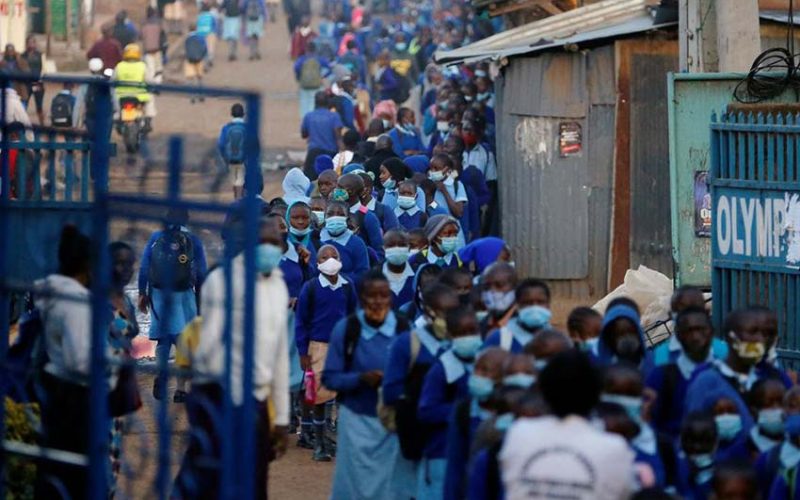
THE COVID-19 pandemic has disrupted education in many countries. Similar to other epidemics – such as the Ebola crisis in West Africa which pushed about five million children out of school in 2013 – the COVID-19 pandemic resulted in the closure of schools in about 194 countries. BENTA A. ABUYA, Research Scientist, African Population and Health Research Center In Kenya there was a nationwide closure of schools between March 2020 and January 2021. This disrupted the education of about 18 million learners, with a total of about 15 million children in primary and secondary schools. Evidence suggests that the disruptions…
Read More
Better school quality encourages parents in Ghana to invest more in children

Better school quality encourages parents in Ghana to invest more in children

PRIMARY school enrolment is now almost complete in developing countries and child labour is illegal in almost all countries. But the quality of education – especially in reading and mathematics – has not shown parallel improvement. GHADIR ASADI, Adjunct Professor, Department of Economics , Radford University Low education quality reduces the probability that children stay in school and attain any educational qualification. It also decreases the future return of any qualifications. In other words, low quality of education decreases the years of education and the returns to education. The outcome is inefficient education systems and less incentive for parents to…
Read More
Education needs a refocus so that all learners reach their full potential

Education needs a refocus so that all learners reach their full potential

ONE of the sectors that the COVID-19 pandemic has disrupted massively is education. CONRAD HUGHES, Research Associate at the University of Geneva's department of Education and Psychology; Campus and Secondary Principal at the International School of Geneva's La Grande Boissière, Université de Genève ABDELJALIL AKKARI, Professor, Université de Genève The COVID-19 pandemic has widened gaps between countries, systems, institutions and learners. The divide has become more pronounced when it comes to wealthy vs poor; private vs state; technology proficient vs technology deficient; academically inclined and predisposed vs academically fragile and in need of support. In a recent paper, we argue…
Read More
In Burkina Faso, violence and COVID-19 push children out of school and into harm’s way

In Burkina Faso, violence and COVID-19 push children out of school and into harm’s way

SAM MEDNICK WHEN 13-year-old Martine left her village in northern Burkina Faso for a safer town last year, she hoped to restart an education disrupted by jihadist violence. But, alone without her parents — who stayed behind — new risks soon arose: in December she was dragged from a wedding party and raped by a man three times her age. “If I was living at home, my parents never would have allowed me to go to the wedding alone and this would never have happened,” said Martine, whose surname is being withheld to protect her identity. As jihadist-linked violence surges…
Read More
With schools closed, child labour on the rise in lockdown Uganda

With schools closed, child labour on the rise in lockdown Uganda

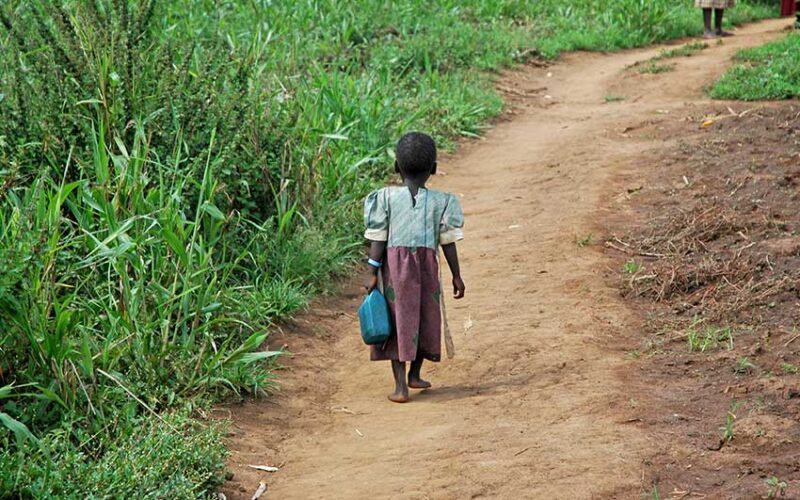
SALLY HAYDEN EVERY morning soon after dawn, 10-year-old Moses leaves home carrying trays of hard-boiled eggs and walks for half an hour to sell them outside a petrol station in the Ugandan city of Gulu. With schools closed indefinitely since the nation went into a strict lockdown to fight COVID-19 in March, Moses is among some 15 million Ugandan children at risk of being forced to work as families are pushed towards extreme poverty, charities say. After seven hours hawking his eggs, which sell for 500 Ugandan shillings($0.13) apiece, and doing his best to avoid police enforcing the lockdown, Moses…
Read More
Why Kenya’s decision to appoint ‘corporate’ chancellors won’t fix universities

Why Kenya’s decision to appoint ‘corporate’ chancellors won’t fix universities

ISHMAEL MUNENE, Professor of Research, Foundations & Higher Education, Northern Arizona University THE choice of chancellors appointed to head universities is a good indicator of the direction in which the state seeks to steer its institutions. It can foster or erode autonomy and shared decision-making. This has been a big issue in Kenya for decades. But the country isn’t alone. The balance between university autonomy and politicisation is relevant everywhere. In the British tradition, which Kenya generally applies, the university chancellor is a ceremonial head of a university. This titular head is usually a prominent citizen, a business or political…
Read More