Our website use cookies to improve and personalize your experience and to display advertisements (if any). Our website may also include cookies from third parties like Google Adsense, Google Analytics, and Youtube. By using the website, you consent to the use of cookies.

Kenya’s decision to make maths optional in high school is a bad idea – what should happen instead

Kenya’s decision to make maths optional in high school is a bad idea – what should happen instead

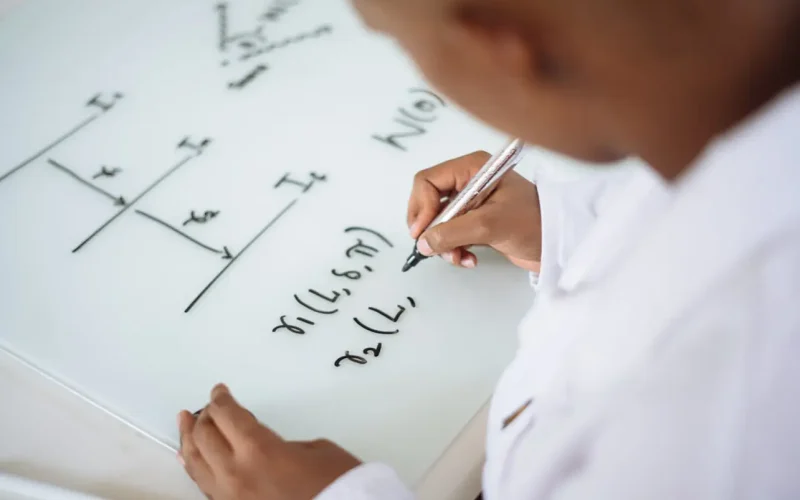
KENYA’S education ministry announced in March 2025 that mathematics would be an optional subject in senior secondary school, which begins in grade 10. Most students in this grade are aged 15 years. The education minister said the mathematics taught from grade 4 to grade 9 was sufficient for foundational “numeracy literacy”. The change, in January 2026, is part of a shift to a new education system styled as the competence-based curriculum. The decision is not to scrap maths altogether but rather to make it optional. However, given the poor performance in this subject, it is expected there will be few…
Read More
How good are South African kids at maths? Trends from a global study

How good are South African kids at maths? Trends from a global study

SCHOOL mathematics in South Africa is often seen as a sign of the health of the education system more generally. Under the racial laws of apartheid, until 1994, African people were severely restricted from learning maths. Tracking the changes in maths performance is a measure of how far the country has travelled in overcoming past injustices. Maths is also an essential foundation for meeting the challenges of the future, like artificial intelligence, climate change, energy and sustainable development. Here, education researcher Vijay Reddy takes stock of South Africa’s mathematical capabilities. She reports on South African maths performance in grades 5…
Read More
Life after school for young South Africans: six insights into what lies ahead

Life after school for young South Africans: six insights into what lies ahead

AT the dawn of democracy in 1994, South Africa faced a sobering reality. Fewer than a third of 25- to 34-year-olds had achieved at least a matric (12 years of schooling completed) or equivalent qualification. Thirty years on, the proportion of individuals in this age group that had completed their schooling had almost doubled to 57%. This figure will be further bolstered by the record-breaking results in the National Senior Certificate (matric) examinations in recent years. South Africa’s school completion rates are now high and comparable to other middle-income countries. But this good news is tempered by very high youth…
Read More
How can you help your child make friends?

How can you help your child make friends?

ONE of the things children (and parents) may worry about at the start of the new school year is whether will have friends. This could be true for children starting or changing schools or simply going back to a new year with different class arrangements. How can parents talk to their kids about making friends? Why is it important to have friends? We research young people’s well-being and provide programs to schools on how to talk about mental health. Having lasting, meaningful friendships is extremely important for children’s health, development and wellbeing. They can validate young people’s aspirations and interests…
Read More
Education in Zimbabwe has lost its value: study asks young people how they feel about that

Education in Zimbabwe has lost its value: study asks young people how they feel about that

EDUCATION, especially higher education, is a step towards adulthood and a foundation for the future. But what happens when education loses its value as a way to climb the social ladder? What if a degree is no guarantee of getting stable work, being able to provide for one’s family, or owning a house or car? This devaluing of higher education as a path to social mobility is a grim reality for young Zimbabweans. Over the past two decades, the southern African country has been beset by economic, financial, political and social challenges. These crises have severely undermined the premises and…
Read More
9 million Ethiopian children have been forced out of school: what the government must do

9 million Ethiopian children have been forced out of school: what the government must do

MORE than nine million Ethiopian children are currently out of school. They are caught in the crossfire of armed conflicts, natural disasters, tribal tensions and economic hardships. In 2023, Ethiopia had a total school-aged population of 35,444,482 children, about 52% of them primary school-aged. In the same year, only 22,949,597 children were enrolled in schools, leaving over 35% of school-aged children out of school. In the past year, the ongoing humanitarian crisis has worsened the situation, forcing even more children out of school. Armed conflict erupted in 2020 between the federal government and Tigray regional government. The crisis was compounded…
Read More
AI in education: what those buzzwords mean

AI in education: what those buzzwords mean

YOU’LL be hearing a great deal about artificial intelligence (AI) and education in 2025. The UK government unveiled its “AI opportunities action plan” in mid-January. As part of the plan it has awarded funding of £1 million (about US$1.2 million) to 16 educational technology companies to “build teacher AI tools for feedback and marking, driving high and rising education standards”. Schools in some US states are testing AI tools in their classrooms. A Moroccan university has become the first in Africa to introduce an AI-powered learning system across the institution. And the theme for this year’s United Nations International Day…
Read More
African countries need more PhD graduates but students are held back by a lack of money and support

African countries need more PhD graduates but students are held back by a lack of money and support

OVER the past 15 years there’s been an increasing demand from within and outside the higher education sector for African countries to produce more PhD graduates. For this to happen, it’s important to know what’s holding people back from pursuing or completing their doctoral degrees. The authors of a new review article did just that, with a focus on South Africa, Kenya, Ethiopia, Uganda and Nigeria. Five themes emerged from their work: PhD candidates’ sociodemographic profiles, access to funding, the availability of resources and training, experiences with PhD supervisors, and personal coping mechanisms. The Conversation Africa spoke with the paper’s…
Read More
Technology is supposed to decrease teacher burnout – but we found it can sometimes make it worse

Technology is supposed to decrease teacher burnout – but we found it can sometimes make it worse

WHEN we set out to study pandemic-related changes in schools, we thought we’d find that learning management systems that rely on technology to improve teaching would make educators’ jobs easier. Instead, we found that teachers whose schools were using learning management systems had higher rates of burnout. Our findings were based on a survey of 779 U.S. teachers conducted in May 2022, along with subsequent focus groups that took place in the fall of that year. Our study was peer-reviewed and published in April 2024. During the COVID-19 pandemic, when schools across the country were under lockdown orders, schools adopted…
Read More
What one university’s 30-year transformation reveals about Afrikaans and language planning in South Africa

What one university’s 30-year transformation reveals about Afrikaans and language planning in South Africa

WHEN South Africa became a democracy in 1994, five of the country’s universities used Afrikaans as a medium of instruction. There were also two bilingual universities teaching in Afrikaans and English. Stellenbosch University, about 50km from Cape Town, is the oldest historically Afrikaans university. Over the past three decades, English has gradually replaced Afrikaans in the core functions of teaching and research. The status of Afrikaans at formerly Afrikaans or bilingual universities remains the subject of considerable debate. This has led to litigation and three judgments in South Africa’s apex court, the Constitutional Court. Afrikaans is commonly categorised as an…
Read More