Our website use cookies to improve and personalize your experience and to display advertisements (if any). Our website may also include cookies from third parties like Google Adsense, Google Analytics, and Youtube. By using the website, you consent to the use of cookies.

Fun with fossils: South African kids learn a whole lot more about human evolution from museum workshops

Fun with fossils: South African kids learn a whole lot more about human evolution from museum workshops

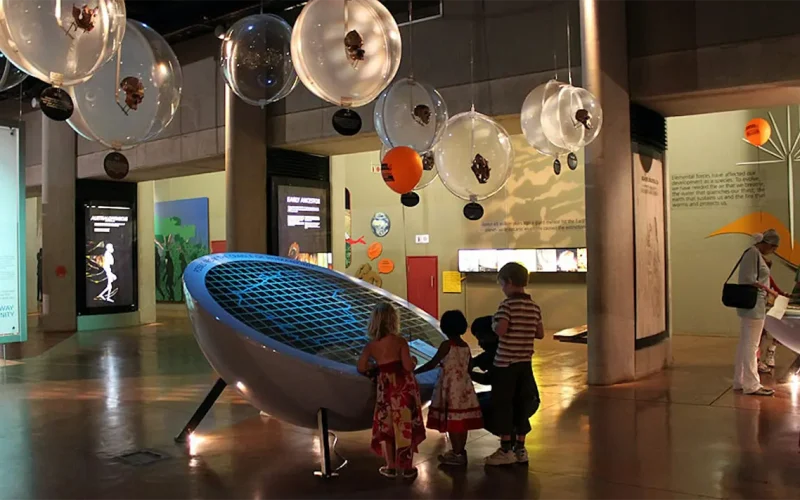
SOUTH Africa has one of the world’s richest fossil records of hominins (humans and their fossil ancestors). But many misconceptions still exist regarding human evolution, and school textbooks contain inaccuracies. South Africans still have some of the lowest rates of acceptance of human evolution, mostly due to conflicting religious views. Religion and the non-acceptance of evolution hinder the understanding of evolution by teachers and learners. It doesn’t help that school subjects (evolution being one of them) are often taught in unengaging ways, rather than interactive methods. Many studies have shown that collaborations between schools and informal science learning centres, such…
Read More
Can academics use AI to write journal papers? What the guidelines say

Can academics use AI to write journal papers? What the guidelines say

ARTIFICIAL intelligence (AI) refers to “intelligent machines and algorithms that can reason and adapt based on sets of rules and environments which mimic human intelligence”. This field is evolving rapidly, and the education sector, for one, is abuzz with discussion on AI use for writing. This matters not just for academics, but for anyone relying on trustworthy information, from journalists and policymakers to educators and the public. Ensuring transparency in how AI is used protects the credibility of all published knowledge. In education and research, AI can generate text, improve writing style, and even analyse data. It saves time and…
Read More
What keeps girls from school in Malawi? We asked them and it’s not just pregnancy

What keeps girls from school in Malawi? We asked them and it’s not just pregnancy

COVERAGE of the impact of the COVID-19 pandemic shutdowns on girls in Malawi emphasised the risks they faced as a result of not attending school. In particular, concerns about pregnancy garnered significant media attention. The United Nations Children’s Fund, for example, published an article in March 2021 entitled “Schoolgirl shakes off COVID-19 regret: Lucy’s return to school”. Under a glossy photograph of a smiling girl, readers learn about 16-year-old Lucy, one of 13,000 Malawian students who became pregnant during COVID-19 school closures. The story went on to detail the dire consequences of sexual activity to Lucy’s well-being, and the redemptive…
Read More
AI can be a danger to students – 3 things universities must do

AI can be a danger to students – 3 things universities must do

GENERATIVE artificial intelligence (AI) is trained on enormous bodies of text, video and images to identify patterns. It then creates new texts, videos and images on the basis of this pattern identification. Thanks to machine learning, it improves its ability to do so every time it is used. As AI becomes embedded in academic life, a troubling reality has emerged: students are extremely vulnerable to its use. They don’t know enough about what AI is to be alert to its shortcomings. And they don’t know enough about their subject content to make judgements on this anyway. Most importantly, they don’t…
Read More
We set out to improve literacy among struggling readers in Kenya – what we learnt

We set out to improve literacy among struggling readers in Kenya – what we learnt

LITERACY – being able to read, write and understand written or spoken language – is a cornerstone of educational achievement. Yet, for millions of children worldwide, acquiring basic literacy skills is a significant challenge. This is a result of systemic inequalities, poverty, conflict, displacement and gender disparities. A UNICEF report on global literacy levels in 2023 found that 89% of 10-year-olds in sub-Saharan Africa were unable to read or comprehend a basic story. In Kenya, the gap in foundational literacy is stark. A nationwide evaluation of over 44,000 children across 1,973 primary schools in 2023 found that three in 10…
Read More
Does free schooling give girls a better chance in life? Burundi study shows the poorest benefited most

Does free schooling give girls a better chance in life? Burundi study shows the poorest benefited most

TEENAGE pregnancy rates remain high across many parts of the developing world: In Africa, on average, about one in ten girls between the ages of 15 and 19 has already given birth. These early pregnancies often come with serious consequences for young mothers and their children. They are linked to lower education levels, poorer health outcomes, and reduced economic opportunities. Scientists, development agencies and NGOs have long heralded education as a powerful tool to reduce early childbearing. Education may directly influence women’s reproductive behaviour, but it can also improve their employment and income-generating opportunities, leading them to postpone pregnancy. But…
Read More
30 years of free basic education in Ghana: a report card

30 years of free basic education in Ghana: a report card

GHANA, like many sub-Saharan African countries, began investing substantially in free education three decades ago. This led to an increase in the number of children who attend primary school. But what has the impact been on learning outcomes? The Conversation Africa spoke to demographer Pearl Kyei, who, with economists Fred Dzanku and Samuel Annim, has researched population literacy and numeracy in Ghana after three decades of free education. How long has Ghana offered free basic education? Ghana introduced what it calls the Free Compulsory Universal Basic Education (FCUBE) programme in 1994. This meant that families could send children to public…
Read More
Teachers in South African schools may be slow to report rape of girls: study shows why

Teachers in South African schools may be slow to report rape of girls: study shows why

IN South Africa, the age of consent for sex is 16 years old. Engaging in sexual activity with someone under the age of 16 is considered statutory rape, even if the minor consents as defined under the law that applies to adults. In December 2021, South Africa’s Department of Basic Education introduced a policy aimed at reducing the country’s high rates of teenage pregnancy and sexual exploitation. It requires educators to report cases where older sexual partners impregnate learners under 16 years of age. We are researchers in sexual and reproductive health who have been working on a decade-long community…
Read More
Sexual predators at school: why South African law is failing to protect children from teachers

Sexual predators at school: why South African law is failing to protect children from teachers

SCHOOLS should be a safe environment, a place of learning where children can develop their potential. In South Africa, many public schools aren’t like this. Instead, they are hothouses for teachers’ poor performance, financial mismanagement, assault and sexual misconduct. When cases of misconduct in schools emerge, they tend to follow the same pattern: public outcry, media involvement and political promises. What often follows is inaction. Teachers are not always held accountable. One reason is a fragmented legislative framework applicable to teachers. This can be explained using sexual misconduct as an example. As a labour law researcher, I analysed legislation, statistics…
Read More
Global crises have hit education hard: 24 years of research offers a way forward for southern Africa

Global crises have hit education hard: 24 years of research offers a way forward for southern Africa

GLOBAL crises have shaped our world over the past two decades, affecting education systems everywhere. Higher education researcher Emmanuel Ojo has studied the impact of these disruptions on educational opportunities, particularly in southern Africa. He looked at 5,511 peer-reviewed articles published between 2000 and 2024 to explore what the research suggests about making education systems more resilient. Here, he answers some questions about his review. What are the global crises that have undermined education? In my review, I drew up a table documenting how multiple crises have disrupted education systems worldwide. The cycle began with the 2000-2002 dot-com bubble collapse,…
Read More