Our website use cookies to improve and personalize your experience and to display advertisements (if any). Our website may also include cookies from third parties like Google Adsense, Google Analytics, and Youtube. By using the website, you consent to the use of cookies.

Giving feedback is a skill: 3 tips on how to do it well for students

Giving feedback is a skill: 3 tips on how to do it well for students

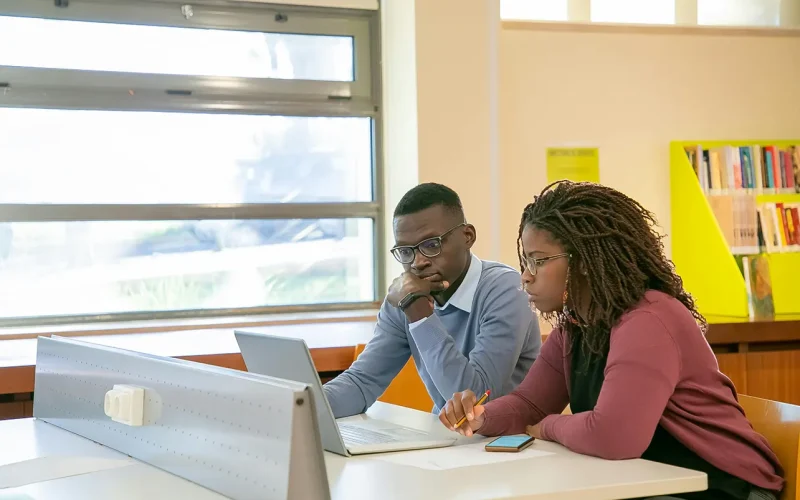
IT can be difficult to tell someone what you think of their work, even if you mean well and even if you think they’re doing a good job. Sometimes the person doesn’t understand what you mean or doesn’t respond the way you’d hoped. Feedback should contribute to learning, but you might sometimes wonder if it’s any use at all. South African university lecturer Martina van Heerden studied the art of giving feedback to students in higher education. Her insights and three top tips are useful for effective communication in many areas of life. Why did you decide to study feedback?…
Read More
Education and gender equality: focus on girls isn’t fair and isn’t enough – global study

Education and gender equality: focus on girls isn’t fair and isn’t enough – global study

FOR the past two decades, investing in girls’ schooling has been hailed as a cornerstone of promoting gender equality in sub-Saharan Africa. Between 2016 and 2018 the World Bank Group invested US$3.2 billion in education projects benefiting adolescent girls. The logic is straightforward. Girls face significant barriers to education, among them poverty, insufficient academic support, adolescent pregnancy, child marriage, and school-related gender-based violence. Reducing these barriers can substantially improve their educational outcomes. But is this approach – investing in girls’ education – fair to boys, and enough to make a meaningful impact on girls’ lives in the long term? Having…
Read More
Social media as a teaching tool: South African teachers talk about the new reality

Social media as a teaching tool: South African teachers talk about the new reality

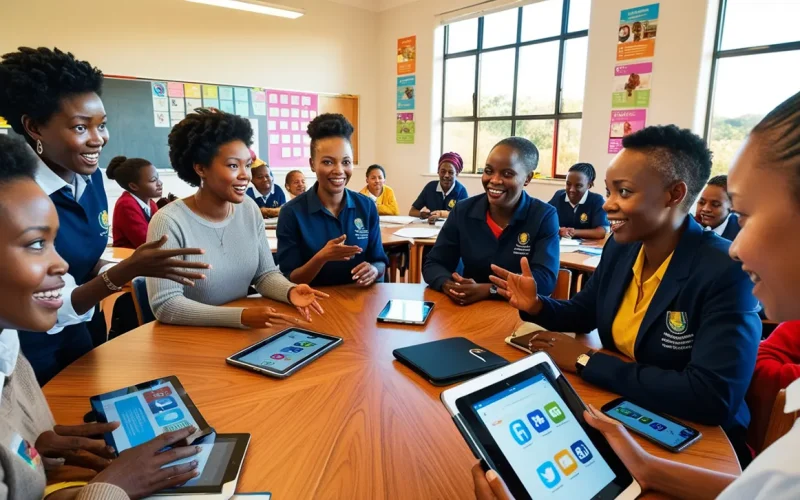
THE COVID-19 pandemic resulted in a shift towards the use of social media platforms in teaching. The South African Department of Basic Education, for one, instructed all schools to adopt online teaching and learning to save the 2020 school year, disrupted by the pandemic and the forced closure of schools. It is getting clearer that this shift towards technology use will continue. Some researchers have noted that it has also put the focus of the learning process more on students than on teachers. Young people aged between 15 and 24 usually attend secondary school or higher education institutions and use…
Read More
The rise of tech titans: SATNAC 2024 ignites a new era of innovation

The rise of tech titans: SATNAC 2024 ignites a new era of innovation

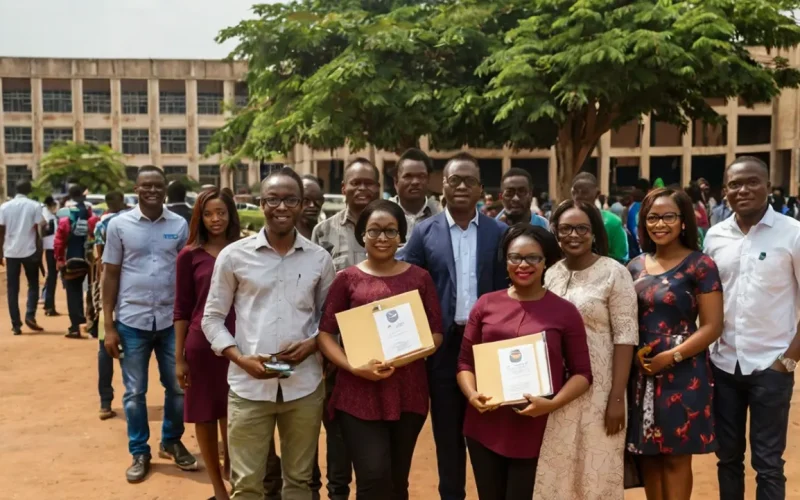
In the heart of South Africa's iconic Kruger National Park, a quiet revolution is taking place. The SATNAC 2024 Industry Solutions Challenge has just concluded, leaving in its wake a trail of groundbreaking ideas and a new generation of tech visionaries poised to reshape our world. This isn't just another student competition. It's a crucible of innovation, a platform where the brightest minds from across Southern Africa converge to tackle some of the most pressing challenges of our time. The theme, "The AI-driven hyperconnected future; Co-creating shared value," serves as a rallying cry for these young innovators, pushing them to…
Read More
‘School is boring’: what it means when your child says they’re bored in class, and how you can help

‘School is boring’: what it means when your child says they’re bored in class, and how you can help

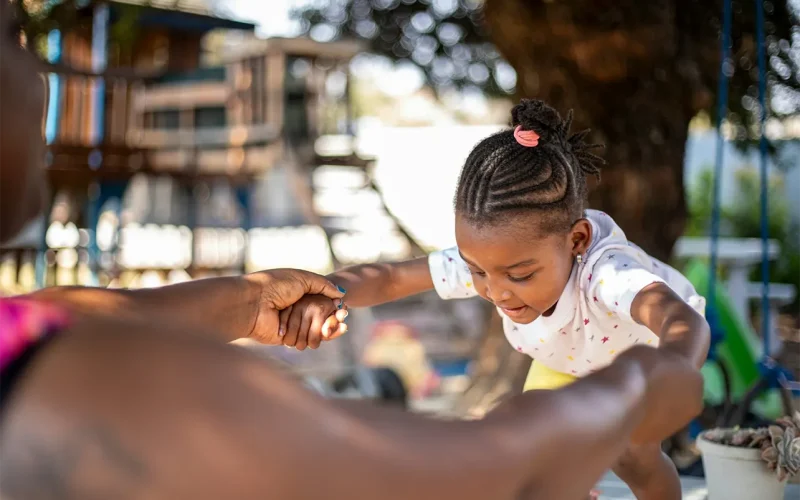
HAVE you ever asked your child how school was today, only to be told it was “boring”? It’s a conversation sadly all too familiar to a lot of parents. Many are left wondering why and what they can do to help. It’s important to understand why your child may be feeling bored at school. Here are some possibilities to consider. Not every aspect of school is engaging Boredom at school isn’t uncommon. Remember, a child’s learning journey is jagged, not linear. Their learning may progress quickly during some periods, and less so at other times. Sometimes they will be bored.…
Read More
South Africa needs more nautical scientists and maritime engineers – if you love the sea these may be the careers for you

South Africa needs more nautical scientists and maritime engineers – if you love the sea these may be the careers for you

WHEN most people are asked to picture an engineer at work, they probably imagine a civil engineer in a hard hat at a construction site, a chemical engineer in a laboratory or an electrical engineer examining a complex circuit board. Very few, I’m willing to bet, visualise someone aboard a ship. But, for those drawn both to engineering and seafaring life, marine engineering and nautical science are ideal careers – especially in a country like South Africa, uniquely positioned where the Atlantic and Indian Oceans converge. Over 90% of the world’s goods are transported by sea. That means both marine…
Read More
South Africa has a new education law: some love it, some hate it – education expert explains why

South Africa has a new education law: some love it, some hate it – education expert explains why

SOUTH Africa has a new law governing education. The Basic Education Laws Amendment (BELA) Act changes several aspects of how schools are managed. It was introduced to address inequalities in the school system by standardising rules on admissions, language policies, discipline, and even the operation of homeschooling. But it has sparked controversy. Education professor Wayne Hugo answers questions about the act. How does the act change the current school system? The act shifts some control such as language policy from local school governing bodies to provincial education officials, changes rules on how schools manage student admissions and on language of…
Read More
South African universities need to rethink how they evaluate research: social impact counts too

South African universities need to rethink how they evaluate research: social impact counts too

THERE are many ways university researchers can share their work. Some of these methods are well-established in academia: people write journal articles, book chapters and entire books; they present papers at academic conferences. Other approaches are less traditional – writing blogs and opinion pieces or producing creative works like theatre performances, documentaries and more. Earlier in my career, while working as a research librarian at the University of Cape Town (UCT) in South Africa, I noticed that researchers who preferred those less traditional methods were viewed by university administrators and other academics as “less productive” than their peers. That’s because…
Read More
Online classrooms where students run the show: we tested how this unconventional model can work

Online classrooms where students run the show: we tested how this unconventional model can work

THE Zoom meeting window opens, immediately revealing scores of smiling or anxious faces. Some people have quirky backgrounds; some are in the same room as friends and family, who appear occasionally on camera. The South African and Swedish students are running out of ambient light since it’s just gone 5 pm in their time zones. Their counterparts in Canada, meanwhile, are illuminated by the bright sun. Excited messages flood the chat box. This is a Global Classroom for Democracy Innovation meeting. The initiative was launched in 2020 as the COVID pandemic brought face-to-face learning to a grinding halt all over…
Read More
Despite progress, more to be done on unlocking power of refugee education

Despite progress, more to be done on unlocking power of refugee education

FIVE years on from the launch of UNHCR’s Refugee Education Strategy 2030, this year's refugee education report reveals that while remarkable progress has been achieved in global refugee education and enrolment, significant challenges remain, with nearly half of the world’s 14.8 million school-aged refugee children still out of school. Data from 65 refugee hosting countries analysed in the report shows that approximately 7.2 million refugee children are missing out on education due to a host of factors, including insecurity, a lack of inclusive education policies, capacity constraints, and language barriers, risking young people’s future prosperity and denying them the chance to fulfil their…
Read More