Our website use cookies to improve and personalize your experience and to display advertisements (if any). Our website may also include cookies from third parties like Google Adsense, Google Analytics, and Youtube. By using the website, you consent to the use of cookies.

Technology classes at school can also teach skills for business and life: South African teachers share ideas

Technology classes at school can also teach skills for business and life: South African teachers share ideas

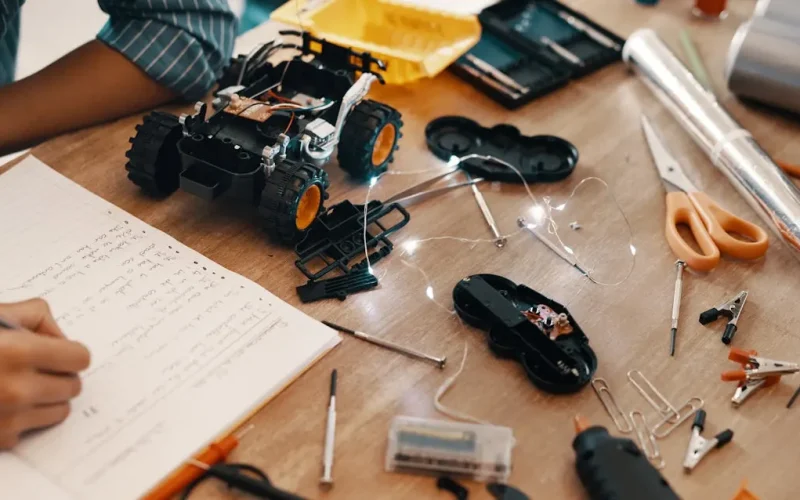
STARTING and running your own business takes hard work and a can-do attitude. Typically, entrepreneurs are the kinds of people who can identify and solve problems innovatively, are willing to take risks and learn from mistakes. But many entrepreneurs also have a set of skills that anyone can learn, and use in work and life. Examples include adaptability, problem-solving, collaboration, communication, creative thinking, innovation and resilience. South Africa’s Department of Basic Education sees these skills as an important part of the school curriculum, especially since about 60% of South Africans aged 16-24 don’t have work. The department’s 2016 Entrepreneurship in…
Read More
Children and the internet: helping kids navigate this modern minefield

Children and the internet: helping kids navigate this modern minefield

THE United States’ most senior public health official, surgeon-general Vivek Murthy, believes social media platforms should come with warning labels. The United Nations’ education, science and culture agency says smartphones should be banned in schools. Chinese regulators are pushing to limit children’s smartphone use to just two hours a day. These are just a few high-profile examples of growing global concerns about the risks young people face when using the internet. Those worries are backed by a large, global body of research. Social media use has been linked to feelings of envy, depression and anxiety among young people all over…
Read More
Ten African countries prioritising education

Ten African countries prioritising education

IN April 2024, the African Union (AU) declared this year the 'Year of Education,' urging governments to ramp up efforts to achieve the UN’s Sustainable Development Goal 4—to “ensure inclusive and equitable quality education and promote lifelong learning opportunities for all.” While countries require an additional US$77 billion annually to meet national education goals and deliver quality education, funding for education remains largely stagnant. Government spending on education as a percentage of GDP hovers at just 3.7% —a figure that has barely budged since 2012. According to a 2024 analysis by UNESCO, nine out of 49 African countries dedicate 20%…
Read More
Love for cats lures students into this course, which uses feline research to teach science

Love for cats lures students into this course, which uses feline research to teach science

UNCOMMON Courses is an occasional series from The Conversation U.S. highlighting unconventional approaches to teaching. Title of course: “The Science of Cats” What prompted the idea for the course? I’m an evolutionary biologist who has spent my career studying the evolution of small lizards in the Caribbean. I’m also a lifelong cat lover, but it never occurred to me to do anything scientific with house cats. They’re hard to study – ever tried to follow your cat around to see what they’re doing? And in contrast to amply studied lions, tigers and other wild felines, I was under the impression…
Read More
PhDs are important for South Africa’s growth: more support for doctoral candidates who work full-time is key

PhDs are important for South Africa’s growth: more support for doctoral candidates who work full-time is key

SOUTH Africa’s government and higher education sector have invested a lot of time and money over the past two decades to enhance the country’s research output and cultivate the next generation of researchers. Though there has been some progress, South Africa still isn’t close to its National Development Plan target of reaching 100 PhDs per one million people by 2030. By 2021 the rate stood at 59 PhDs per million people. A doctoral degree is the highest academic qualification awarded by universities. Obtaining a PhD means a researcher has advanced knowledge in their field and credibility in academia. These qualities…
Read More
Not all children read at the same pace – Namibia study shows how teachers can help those falling behind

Not all children read at the same pace – Namibia study shows how teachers can help those falling behind

READING is a powerful tool. It introduces children to new ideas. It shapes their academic journey and progress. It also equips them with skills to navigate the world, both at school and beyond. Sadly, it’s estimated that more than 202 million children and young people in sub-Saharan Africa do not have age-appropriate reading, writing and numeracy skills. The region’s youth literacy rate (for people aged between 15 and 24) stands at about 77%. The global rate is 95%. Namibia performs above the regional average, with a youth literacy rate of 91.5%. But challenges persist. Many children with language barriers and…
Read More
What can you do if you think your teen already has unhealthy social media habits?

What can you do if you think your teen already has unhealthy social media habits?

MANY parents are worried about how much their children use social media and what content they might encounter while using it. Amid proposals to ban teenagers under 16 years from social media and calls to better educate them about being safe online, how can you tell if your child’s social media use is already a problem? And what steps can take to help if there is an issue? It is easy to get hooked These platforms are designed in a way that releases dopamine (the “feel-good” hormone) for users. This can make it especially difficult for adolescents to resist. As…
Read More
Higher education faces many challenges in South Africa: 3 priorities for the new minister

Higher education faces many challenges in South Africa: 3 priorities for the new minister

WHEN South African president Cyril Ramaphosa named Nobuhle Nkabane as the minister of higher education on 3 July 2024, many people I know in the sector had to Google her name. Dr Nkabane had been deputy minister of mineral resources and energy since August 2021. Nkabane enters an arena that’s ready for new political leadership and has senior figures who are ready, willing and able to work with her. Universities South Africa, which represents the country’s 26 public universities and has a clear-eyed view of the sector’s priorities, has welcomed Nkabane’s appointment. She will need this kind of support: in…
Read More
Thinking aloud: what happens when children read for pleasure in classroom clubs

Thinking aloud: what happens when children read for pleasure in classroom clubs

EVERY five years, the International Progress in International Reading Literacy Study (PIRLS) provides an assessment of how well grade 4 learners around the world read for meaning. And every time South Africa participates, the results are shocking. In the 2021 survey, more than 80% of South African fourth-graders weren’t able to make sense of what they were reading in the test. Policymakers have focused attention on developing literacy in the foundation phase (grades 1-3) because the skills developed during these early years will form the basis for learning in the higher grades. But that’s not the only way to approach…
Read More
Ghana’s schools don’t teach enough about geoscience: why kids need to know how the planet works

Ghana’s schools don’t teach enough about geoscience: why kids need to know how the planet works

OVER the last few decades Ghana has seen a rise in environmental degradation such as pollution, deforestation and land degradation. These have been driven by urbanisation, industrialisation, carbon emissions and waste burning. Environmental problems have an impact on public health and the economy. One path to finding solutions is geoscience education, but it’s lacking in the curriculum of Ghana’s schools. Geoscientist Marian Selorm Sapah has published research on the subject. She explains that geoscience education is closely related to everyday experiences, and it can help develop the skills that people need to make wise decisions about the world we live…
Read More