Our website use cookies to improve and personalize your experience and to display advertisements (if any). Our website may also include cookies from third parties like Google Adsense, Google Analytics, and Youtube. By using the website, you consent to the use of cookies.

Khartoum before the war: the public spaces that held the city together

Khartoum before the war: the public spaces that held the city together

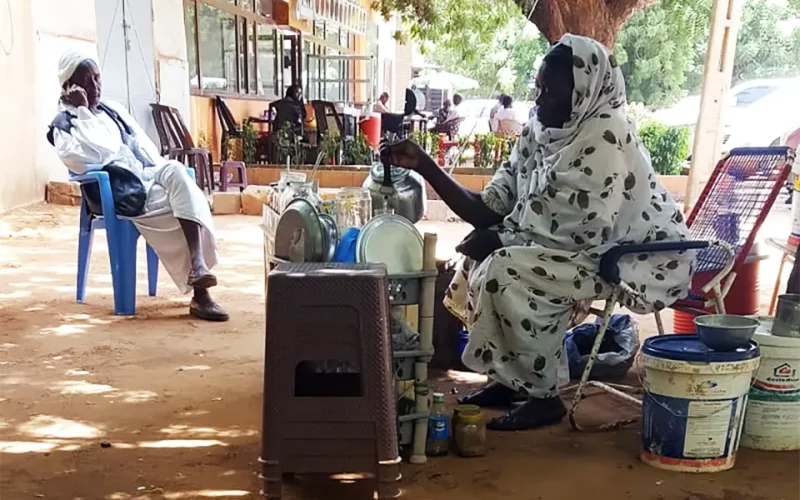
WHAT makes a public space truly public? In Khartoum, before the current conflict engulfed Sudan, the answer was not always a park, a plaza or a promenade. The city’s streets, tea stalls (sitat al-shai), protest sites and even burial spaces served as dynamic arenas of everyday life, political expression and informal resilience. In a recently published article, I studied 64 public spaces across pre-war Greater Khartoum, revealing a landscape far richer – and more contested – than standard urban classifications suggest. Specifically, I uncovered four classifications: formal, informal, privately owned and hybrid spaces – each alive with negotiation and everyday…
Read More
Johannesburg’s problems can be solved – but it’s a long journey to fix South Africa’s economic powerhouse

Johannesburg’s problems can be solved – but it’s a long journey to fix South Africa’s economic powerhouse

SOUTH African President Cyril Ramaphosa met senior leaders of Johannesburg and Gauteng, the province it’s located in, in March 2025 to discuss ways to arrest the steep decline in South Africa’s largest city. Ramaphosa announced a two-year-long presidential intervention to tackle some of the city’s most pressing issues. It is to be led by the Presidential Johannesburg Working Group with eight cross-governmental and multi-stakeholder workstreams. Johannesburg was established 130 years ago, where the world’s largest-ever gold deposits were discovered. It grew rapidly in the early 20th century and became the country’s economic heartland and largest population centre. Like all South…
Read More
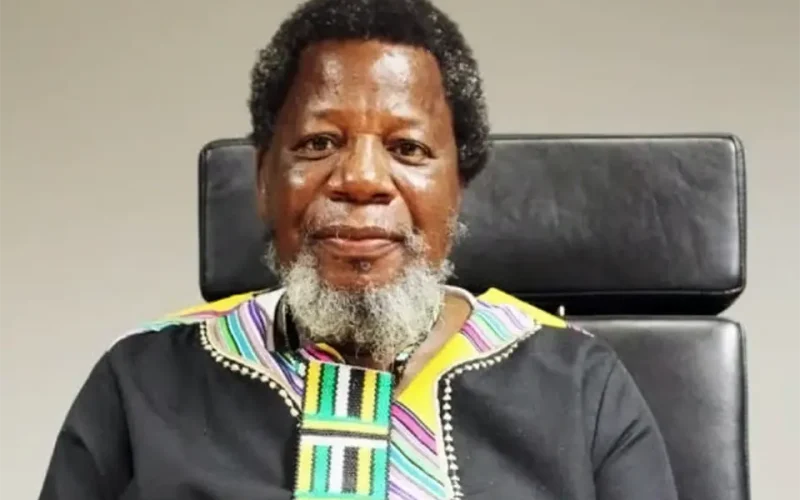
“Farisani was a courageous revolutionary who inspired a generation to reclaim their pride and stand up for their rights”

“Farisani was a courageous revolutionary who inspired a generation to reclaim their pride and stand up for their rights”

DEAN Tshenuwani Farisani’s life bears witness to the mission of Christ espoused in the Gospel of Luke Chapter 4. “The Spirit of the Lord is upon me, because he has chosen me to bring good news to the poor. He has sent me to proclaim liberty to the captives and recovery of sight to the blind; to set free the oppressed.” We have lost an extraordinary man who led an extraordinary life. He was born in 1948, a year that was a turning point in South Africa’s history. This was the year the National Party swept to power and ushered…
Read More
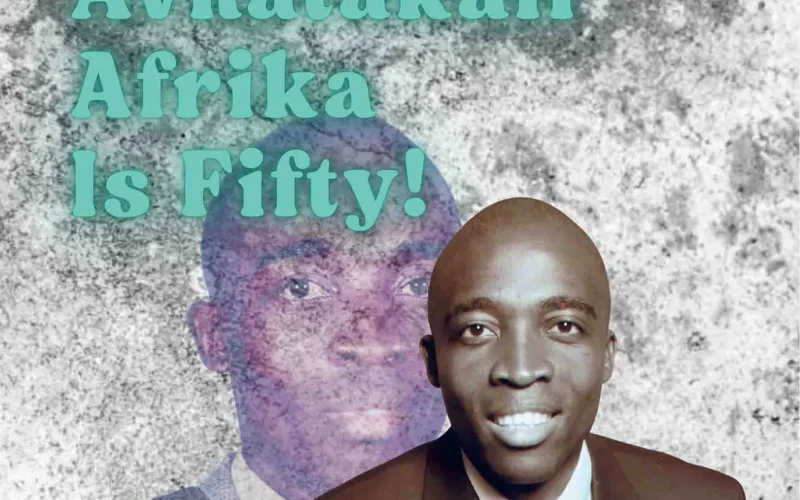
Avhatakali Afrika Is Fifty!

Avhatakali Afrika Is Fifty!

Avhatakali Netshisaulu was born on June 03, 1975. He grew up into a bubbly, intelligent, witty and focused individual. He was a goal driven young man, and in whatever he did, whether it was running the long distance races, his academic work, or his businesses, he excelled. When he was brutally taken away from us, the pain was immense. It was a pain shared by a shocked nation that rallied to assist and comfort us. What pained us even more was that in losing him, we also lost, at a public level, who he really was. He became the posterboy…
Read More
FROM TORTURE CHAMBER TO PARLIAMENT: The unbroken spirit of Dean Tshenuwani Farisani

FROM TORTURE CHAMBER TO PARLIAMENT: The unbroken spirit of Dean Tshenuwani Farisani

THE sarcasm of the security police captain was quite biting as Dean Tshenuwani Farisani sat handcuffed and manacled to an iron bar at the back of an open van. It was night, it was winter, and it was biting cold. The year was 1977, and he was being taken from Pietermaritzburg to Howick Police Station, which was the torture chamber. The white captain looked at him and said, "Dean, be comfortable. We apologise that the state cannot afford a canopy for this bakkie, as the money goes to combating terrorism. Keep the wind out of the bakkie with your prayers.…
Read More
Five things you should know about Ngũgĩ wa Thiong’o, one of Africa’s greatest writers of all time

Five things you should know about Ngũgĩ wa Thiong’o, one of Africa’s greatest writers of all time

ONE of Africa’s most celebrated authors, Ngugi wa Thiong'o, has passed away. The Kenyan writer and academic was 87 years old. Having published his first novel – Weep Not Child – in 1964, Ngugi pursued a rich and acclaimed career as a writer, teacher and decolonial thinker. His last creative effort was Kenda Muiyuru (The Perfect Nine), a Gikuyu epic that was longlisted for the 2021 International Man Booker Prize. Kenyan academic and writer Peter Kimani sets out five things you should know about a legendary African writer. He understood the politics of his time Ngugi wa Thiong'o is regarded…
Read More
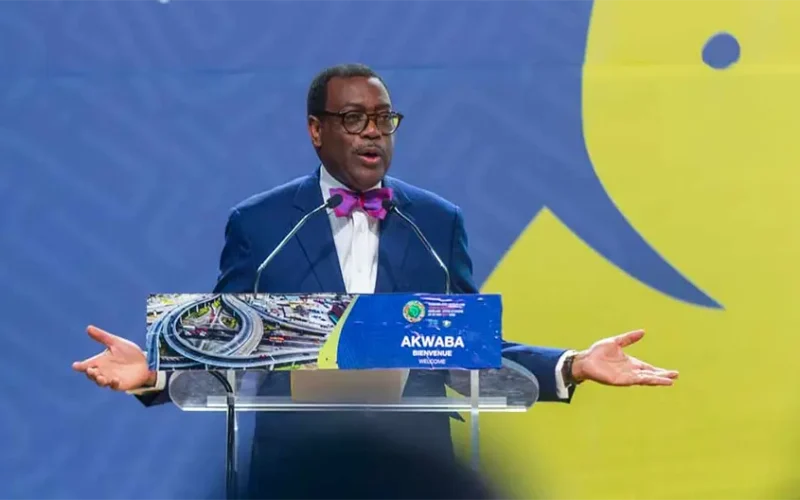
A Decade of Transformation: How the African Development Bank rewrote Africa’s future under visionary leadership

A Decade of Transformation: How the African Development Bank rewrote Africa’s future under visionary leadership

I AM immensely proud that over the past decade, the African Development Bank (AfDB) has served as an accelerator of Africa's development. The Bank's High 5s - to light up and power Africa, feed Africa, industrialise Africa, integrate Africa, and improve the quality of life for Africa's people - have been truly transformational for our continent. In the past ten years, the AfDB's work has directly impacted the lives of 565 million people. This extraordinary reach includes 28 million people gaining access to electricity, 104 million achieving food security, 121 million accessing improved transport, 128 million receiving enhanced health services,…
Read More
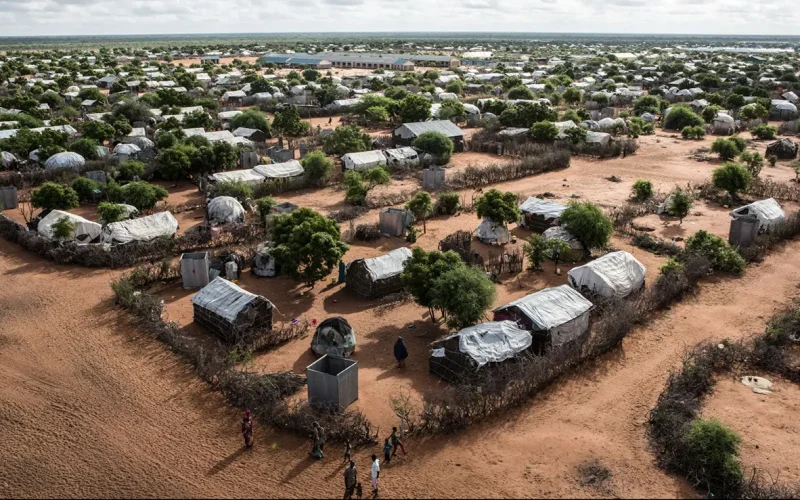
Dadaab Voices: What aid cuts mean for Kenya’s refugees

Dadaab Voices: What aid cuts mean for Kenya’s refugees

This story was originally published by The New Humanitarian. REFUGEE rights groups in Kenya’s sprawling Dadaab camp complex say they’re facing “one of the worst humanitarian crises in recent history” – the result of a sudden halt to food distribution as well as the longer-term impact of aid cuts by the United States. “Without immediate intervention, the risk of malnutrition, illness, and death increases daily,” warned a statement this week by Dadaab’s Refugee-Led Organisations Network (DARLON). “Refugees are losing hope.” Food distribution to the roughly 500,000 refugees in Dadaab’s three-camp complex lasted only a few days this month before being…
Read More
The forgotten heroes: A nation’s debt to its liberation veterans

The forgotten heroes: A nation’s debt to its liberation veterans

The autumn sun cast long shadows across the rural village of Dinokana as hundreds gathered under a white marquee, their voices rising in songs of struggle and liberation. But this was not a celebration - it was a funeral that would expose the cruel irony of post-apartheid South Africa. Inside the coffin lay Tax Rantao, who had left his homeland at eighteen to join the armed struggle against apartheid. Around him stood the living ghosts of that same struggle—men and women who had sacrificed their youth, their families, and their futures for a freedom they would barely taste. Tex Rantao…
Read More
Trump’s Afrikaners are South African opportunists, not refugees: what’s behind the US move

Trump’s Afrikaners are South African opportunists, not refugees: what’s behind the US move

SOUTH Africans are wearily attuned to governments’ Orwellian misuse of language. After all, South Africa is a country where a one-time government passed a law (the Natives Abolition of Passes and Coordination of Documents Act of 1952) which extended rather than abolishing the notorious pass system. This made it compulsory for black South Africans over the age of 16 to carry a passbook. And the same government passed the Extension of University Education Act of 1959, which made it more, not less, difficult for black students to register at “open” (or white) universities. So, perhaps they should not be unduly…
Read More