Our website use cookies to improve and personalize your experience and to display advertisements (if any). Our website may also include cookies from third parties like Google Adsense, Google Analytics, and Youtube. By using the website, you consent to the use of cookies.

New technologies mean states must reconsider what ‘reproductive rights’ are

New technologies mean states must reconsider what ‘reproductive rights’ are

BONGINKOSI SHOZI, Doctoral Fellow with the UKZN African Health Research Flagship, University of KwaZulu-Natal A number of technological advances have revolutionised human reproduction in the past few decades. One example is in vitro fertilisation (IVF), the process of fertilising a woman’s eggs with a man’s sperm in the laboratory. This can be a solution when men and women have problems conceiving. It also allows infertile couples to use donor sperm or eggs. Other examples include embryo transfer and pre-implantation genetic testing. The first means embryos created outside the body can be frozen, stored and later transferred into a womb. The…
Read More
Technology and planning help museums manage outdated exhibitions

Technology and planning help museums manage outdated exhibitions

CLAIRE BROWNING, Curator of Karoo Palaeontology, Iziko Museums of South Africa HEINZ RUTHER, Professor (em) of Geomatics , Principal Investigator of the Zamani Research Group , UCT, University of Cape Town STEPHEN WESSELS, PhD candidate, University of Cape Town WENDY BLACK, Curator of Archaeology, Iziko Museums of South Africa MUSEUM exhibitions are all about the “Wow!”, “What?” and “Why?” as they showcase beauty and wonder, spark curiosity, and share some of the important lessons museum scientists have learnt through detailed study of these objects. But what happens when exhibitions no longer reflect our current understanding of how life on Earth…
Read More
Nigerian scientists have identified seven lineages of SARS-CoV-2: why it matters

Nigerian scientists have identified seven lineages of SARS-CoV-2: why it matters

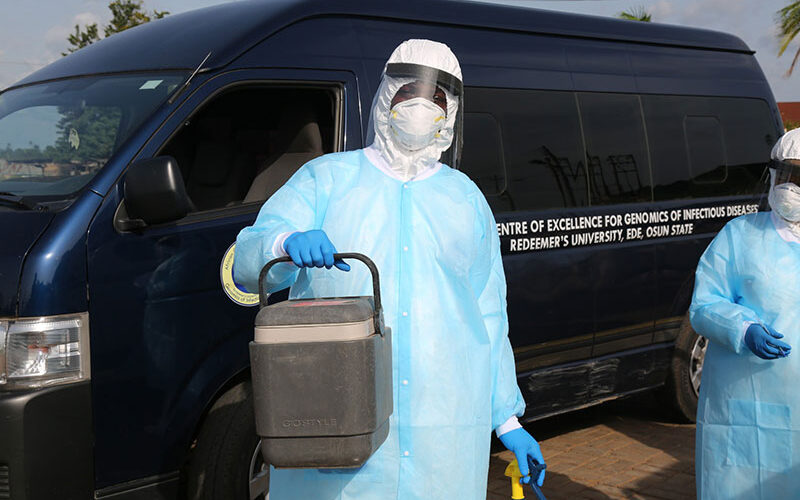
CHRISTIAN HAPPI, Professor of Molecular Biology and Genomics, Redeemer's University BY the first week of August 2020 the COVID-19 pandemic had caused about 654,000 deaths worldwide. In Nigeria, as of July 28, there were 38,945 confirmed cases recorded with 813 deaths. The pandemic hit the African continent last, and the numbers remain comparatively low for most countries. But there is a strong view among scientists that data recorded on the continent are an underestimate as countries struggle with testing. As frantic work continues to find a vaccine, countries like Nigeria continue to do all they can to curb the spread…
Read More
Land hunters: App matches Zimbabwe’s farmers with vacant plots

Land hunters: App matches Zimbabwe’s farmers with vacant plots

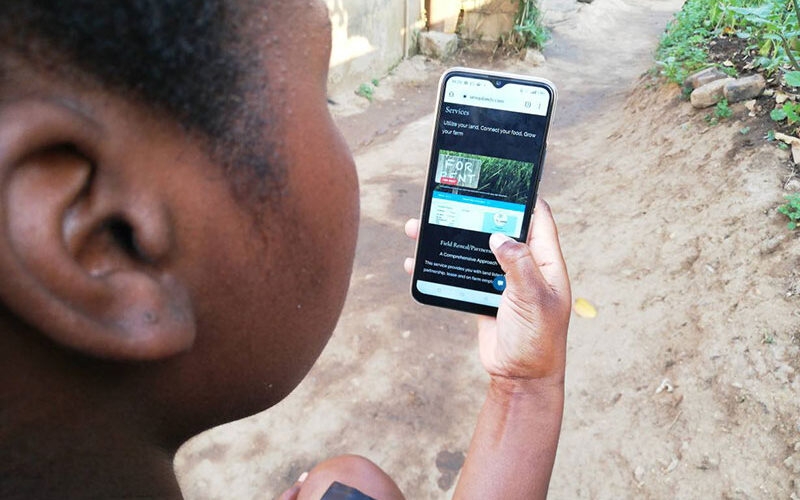
FARAI SHAWN MATIASHE FOR more than a year, Lionda Mhonda searched for a plot of land to buy in northeastern Zimbabwe but struggled to find anything that was both affordable and came with a legitimate title deed. Then the 33-year-old farmer found out about a new app that listed not only land that was available for sale and lease, but also vital information such as legal documentation, crop history and average soil temperatures. Two months later, Mhonda became a first-time landowner with an 80-hectare (198-acre) plot - quadruple the size she was originally looking for - near Marondera, about 70km…
Read More
What can be done to better support women pursuing their PhDs in Africa

What can be done to better support women pursuing their PhDs in Africa

ANNE M. KHISA, PhD, Post- Doctoral Research Fellow, African Population and Health Research Center A Doctor of Philosophy – commonly known as a PhD – is the highest level of academic training. It allows the degree holder to teach the chosen subject at university, conduct research or practise in the specialised area. However, in many African countries like Kenya, there are gender gaps when it comes to women enrolling in, and completing, their PhD studies. This subsequently affects their recruitment into university teaching and research positions. Women make up just 30% of Africa’s researchers. There are various reasons for this.…
Read More
Questions swirl about possible racial bias in Twitter image function

Questions swirl about possible racial bias in Twitter image function

AVI ASHER-SCHAPIRO SOCIAL media giant Twitter said on Monday it would investigate its image-cropping function that users complained favored white faces over black. The image preview function of Twitter's mobile app automatically crops pictures that are too big to fit on the screen and selects which parts of the image to display and cut off. Prompted by a graduate student who found an image he was posting cropped out the face of a Black colleague, a San Francisco-based programmer found Twitter's system would crop out images of President Barack Obama when posted alongside Republican Senate Leader Mitch McConnell. "Twitter is…
Read More
Locals must lead the way to African scientific capacity and solutions

Locals must lead the way to African scientific capacity and solutions

VICTORIA KASPROWICZ, University of KwaZulu-Natal DENIS CHOPERA, University of KwaZulu-Natal AFRICA bears a disproportionately high burden of globally significant diseases. But the continent has lagged in knowledge production to address its health challenges. There are a number of factors that contribute to this. These include the absence of a critical mass of researchers even where pockets of excellence exist. Progression pathways for those in scientific careers are very weak. Scientists have limited access to scientific publications and research support services. And legacies of colonialism – such as funding and publishing structures – continue to favour Northern-based researchers. The problems facing…
Read More
New website by Senegalese AI expert spotlights Africans in STEM

New website by Senegalese AI expert spotlights Africans in STEM

GROWING up in a trading town in Senegal, Adji Bousso Dieng loved school and had a particular talent for maths. But with a dearth of career role models, she had no idea which path to follow. Some two decades later and a research scientist working on artificial intelligence at Google, Dieng wants to give young Africans the inspiring examples she missed out on. "I didn't have a career role model to look up to and say, 'oh I want to be this'," said Dieng, who recently earned a PhD in statistics and will next year become the first Black female…
Read More
Oxford scientists: these are final steps we’re taking to get our coronavirus vaccine approved

Oxford scientists: these are final steps we’re taking to get our coronavirus vaccine approved

REBECCA ASHFIELD, Senior Project Manager, Jenner Institute, University of Oxford PEDRO FOLEGATTI, Clinical Research Fellow at the Centre for Clinical Vaccinology and Tropical Medicine, Jenner Institute, and PhD Candidate in Clinical Medicine, University of Oxford OF the hundreds of potential COVID-19 vaccines in development, six are in the final stages of testing, known as phase 3 clinical trials. One of these – ChAdOx1 nCoV-19 – is the vaccine we’re developing at the University of Oxford. To be approved, vaccines need to go through multiple rounds of testing to show that they’re safe and effective. A combined phase 1 and phase…
Read More
What archaeology tells us about the music and sounds made by Africa’s ancestors

What archaeology tells us about the music and sounds made by Africa’s ancestors

JOSHUA KUMBANI, PhD Candidate, University of the Witwatersrand MUSIC has been part and parcel of humanity for a long time. Not every sound is musical, but sound has meaning and sometimes the meaning of sound is specific to its context. But when it comes to archaeology there is scant evidence of music or sound producing artefacts from southern Africa. This is because of poor preservation of the mostly organic materials that were used to manufacture musical instruments. Rock art offers depictions of musical instruments as well as scenes of dancing that can be linked with music performance, but here only…
Read More