Our website use cookies to improve and personalize your experience and to display advertisements (if any). Our website may also include cookies from third parties like Google Adsense, Google Analytics, and Youtube. By using the website, you consent to the use of cookies.

Madagascar’s mysterious Teniky rock architecture: study suggests a link to ancient Persia

Madagascar’s mysterious Teniky rock architecture: study suggests a link to ancient Persia

IN the heart of Isalo National Park in central-southern Madagascar, at least 200km from the sea in any direction, is a remote valley with a mysterious past. This place, Teniky, can only be reached on foot, by hiking through a mountainous region dissected by steep canyons. Part of the Teniky site has been known for well over 100 years, as we know from names and dates scratched on the rocks there. Various visitors in the 1950s and 1960s with an interest in archaeology described an amphitheatre-shaped location with man-made terraces, a rock shelter with neatly constructed sandstone walls, a chamber…
Read More
Ancient humans were so good at surviving the last ice age they didn’t have to migrate like other species – new study

Ancient humans were so good at surviving the last ice age they didn’t have to migrate like other species – new study

HUMANS seem to have been adapted to the last ice age in similar ways to wolves and bears, according to our recent study, challenging longstanding theories about how and where our ancestors lived during this glacial period. Previous studies have supported the view of most archaeologists that modern humans retreated into southern Europe during the height of the last ice age and expanded during the later increase in global temperatures. But our study is the first to use genetic data to show that at least some humans stayed in central Europe, unlike many other animals and despite our species having…
Read More
New discoveries: three tiny species added to South Africa’s spectacular marine life

New discoveries: three tiny species added to South Africa’s spectacular marine life

SOUTH Africa’s marine realm is globally unique because of the two major ocean currents that meet here. The cold, slow-moving Benguela and the warm, fast-flowing Agulhas currents create a special environment that supports high levels of biodiversity. Over 13,000 marine species are currently known to live in these waters. About 30% of these are endemic, meaning they occur nowhere else. Biodiversity metrics (the number or abundance of species) are dominated by invertebrates such as sponges, bivalves and crustaceans. These are usually small, which makes them adaptable and versatile. In terms of numbers, invertebrates make up a vast majority of marine…
Read More
Ancient human DNA from a South African rock-shelter sheds light on 10,000 years of history

Ancient human DNA from a South African rock-shelter sheds light on 10,000 years of history

OAKHURST rock-shelter is an archaeological site near the town of George on the southern coast of South Africa. It is set into a sandstone cliff above a stream in a valley forested by towering old yellowwood trees. Archaeologists first started excavating Oakhurst in the 1930s. What makes the site special is the record of human occupation there, which spans 12,000 years. Not only have rock art, stone tools and ceramic fragments been found there, but also the remains of 46 people. That’s rare: most very old burials found in South Africa (from the last 40,000 years) have been of single…
Read More
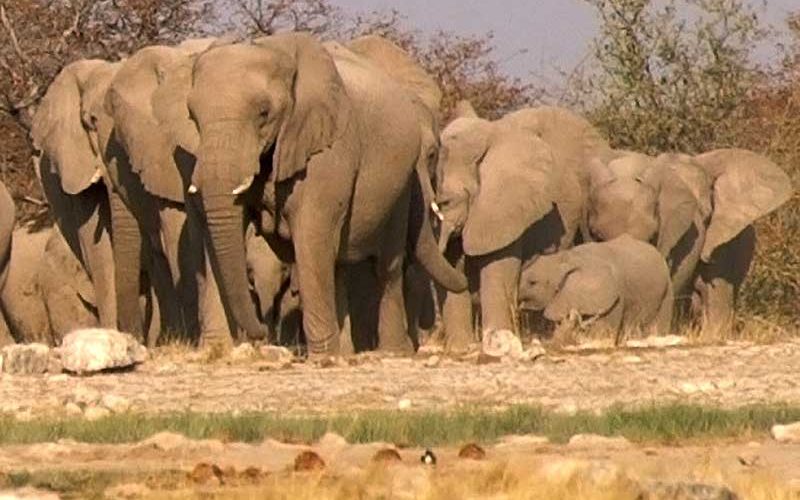
Female elephants rumble to say ‘let’s go!’ New study in Namibia shows males do too, a sign of unexpected social bonds

Female elephants rumble to say ‘let’s go!’ New study in Namibia shows males do too, a sign of unexpected social bonds

IN elephant family groups made up of related females and their young, it is clear that the animals produce vocal sounds to coordinate action. This happens when it’s time to leave a waterhole, for example. The matriarch or dominant female steps away from the waterhole and turns to the direction she intends to move in. Then she flaps her ears as she makes a short call referred to as the “let’s go” rumble. What follows is a highly coordinated “conversation” of sorts. The female elephants in the group add their own rumbles, each waiting for the previous individual to finish…
Read More
Aluminium foil that can clean water: we’ve developed a coating which attracts and traps dangerous microbes

Aluminium foil that can clean water: we’ve developed a coating which attracts and traps dangerous microbes

MORE than 2 billion people around the world do not have access to safe, uncontaminated drinking water. Around 418 million of them live in African countries. The problem is most acute in rural communities, where people’s primary water sources are rivers, lakes and hand-dug wells, which are often contaminated with harmful pathogens. This contamination is caused by inadequate sanitation facilities, open defecation practices, and agricultural runoff, and it has dire consequences. Waterborne diseases such as cholera, typhoid and diarrhoea claim hundreds of thousands of African lives each year. Children are especially vulnerable to these diseases because of their developing immune…
Read More
Meta just closed a vital online research tool. It’s bad news for the fight against misinformation

Meta just closed a vital online research tool. It’s bad news for the fight against misinformation

FOR more than a decade, researchers and journalists have relied on a digital tool called CrowdTangle to track and fight the spread of viral falsehoods online. But earlier this week, the owner of CrowdTangle, Meta, shut the tool down. The tech giant has replaced it with its new Content Library, which it says will serve the same purpose and be “more user friendly”. As long-time users of CrowdTangle to track and analyse online misinformation campaigns, we are sceptical of this claim. We are also very concerned by the fact that CrowdTangle’s closure comes at a time when misinformation on social…
Read More
GirlCode launches Pan-African Hackathon to empower women in tech

GirlCode launches Pan-African Hackathon to empower women in tech

GIRLCODE, a leading organization dedicated to empowering women in technology, is excited to announce its upcoming Pan-African Hackathon, taking place from August 31st to September 1st. This groundbreaking event aims to bring together talented female technologists from across the continent to develop innovative solutions that address the United Nations Sustainable Development Goals. The hackathon is made possible through the generous support of our Gold Sponsors: Vumatel, Chenosis, NinetyOne, BET Software, iKhokha, VML, and Boxfusion. This hackathon would not be possible without their commitment. For the third consecutive year, TakeALot Group is our dedicated prize sponsor, providing laptops and tech gadgets…
Read More
Astronomy ‘Olympics’ is being hosted in Africa for the first time: 4 big talking points

Astronomy ‘Olympics’ is being hosted in Africa for the first time: 4 big talking points

CUTTING-EDGE telescopes, gravitational waves, black holes and our solar system’s central star, the Sun, are just a few of the topics that will be on the table in Cape Town, South Africa, for an event that’s a scientific version of the Olympic Games – though the world’s leading astronomy researchers in attendance will be showcasing their brains rather than their brawn. The International Astronomical Union (IAU) was established in 1919 and held its first General Assembly in Rome, Italy, in 1922. These assemblies, held every four years, are a chance for the organisation’s members and affiliates to meet in person,…
Read More
Fossil algae show a lake once existed on Lesotho’s Mafadi summit but it vanished about 150 years ago

Fossil algae show a lake once existed on Lesotho’s Mafadi summit but it vanished about 150 years ago

LESOTHO is a small, land-locked, mountainous country located in the middle of South Africa. Its Eastern Lesotho Highlands are often referred to as the region’s “water tower” because they receive some of the highest rainfall amounts in southern Africa, providing water to South Africa and electricity to Lesotho through the Lesotho Highlands Water Project. Despite this abundance of rainfall, and although the country has many wetland habitats, there are surprisingly few natural lakes. Researchers aren’t sure why – and our newly published study provides evidence that this may not always have been the case. The research took place in a…
Read More