Our website use cookies to improve and personalize your experience and to display advertisements (if any). Our website may also include cookies from third parties like Google Adsense, Google Analytics, and Youtube. By using the website, you consent to the use of cookies.

Southern Africa’s rangelands do many jobs, from feeding cattle to storing carbon: a review of 60 years of research

Southern Africa’s rangelands do many jobs, from feeding cattle to storing carbon: a review of 60 years of research

SOUTH Africa’s rangelands have always had great value for the country. These areas offer more than just grazing for livestock. They provide services like purifying water, storing carbon and conserving biodiversity. The grassland biome (28%), along with the savanna (32.5%) and the Nama-Karoo (19.5%), are collectively referred to as rangelands. They make up almost 80% of the land area of South Africa. Their ecological services haven’t always been fully appreciated. Research into rangelands has evolved in response to environmental changes, human needs and scientific discoveries. Commercial livestock production was the main concern when academics, researchers and practitioners met for the…
Read More
Humanitarian aid depends on good data: what’s wrong with the way it’s collected

Humanitarian aid depends on good data: what’s wrong with the way it’s collected

THE defunding of the US Agency for International Development (USAID), along with reductions in aid from the UK and elsewhere, raises questions about the continued collection of data that helps inform humanitarian efforts. Humanitarian response plans rely on accurate, accessible and up-to-date data. Aid organisations use this to review needs, monitor health and famine risks, and ensure security and access for humanitarian operations. The reliance on data – and in particular large-scale digitalised data – has intensified in the humanitarian sector over the past few decades. Major donors all proclaim a commitment to evidence-based decision making. The International Organisation for…
Read More
How to resolve Tigray’s dangerous demobilisation deadlock

How to resolve Tigray’s dangerous demobilisation deadlock

This story was originally published by The New Humanitarian.By Daniel Berhane OVER the last few weeks, more than 12,000 Tigrayan ex-combatants have demobilised and transitioned to the next phase of their lives – but they are the lucky ones. Some 250,000 former fighters have been left behind, their futures on hold, despite the war in Ethiopia’s northern region coming to an end more than two years ago. These delays and setbacks to the demobilisation programme represent a serious security risk. The socio-economic toll of keeping a large, productive force idle has yet to be fully assessed, but disillusionment is reflected…
Read More
Somalia’s exports are threatened by climate change and conflict: what 30 years of data tell us

Somalia’s exports are threatened by climate change and conflict: what 30 years of data tell us

IN the sun-scorched lands of Somalia, farmers and livestock keepers have grown accustomed to the extremes of the climate. In 2022, for example, the country suffered the longest drought in 40 years. This affected nearly half the national population of 18 million people. The following year, heavy and widespread flooding devastated the country’s farmlands and infrastructure. For a country whose economy breathes through its agriculture and livestock sectors, these extremes have adverse implications. Over 70% of the population relies on farming, herding and pastoral activities for their livelihoods. Despite these climatic shocks, agriculture contributes about 60% of Somalia’s GDP. This…
Read More
How to stop Nigeria’s worsening farmer-pastoralist violence

How to stop Nigeria’s worsening farmer-pastoralist violence

This story was originally published by The New Humanitarian.By Sarli Sardou Nana PRESIDENT Bola Tinubu has big dreams for Nigeria’s new Federal Ministry of Livestock Development. In a speech announcing the ministry, Tinubu shared his hope that it would “enable Nigeria to finally take advantage of livestock farming” and overcome “this adversity that has plagued us”. The adversity he is alluding to is farmer-herder conflict: the violent disputes between farmers and pastoralists over land and land access that are estimated to have killed 2,600 people in 2021 alone. Created last year, the Ministry of Livestock is tasked with mending relations…
Read More
Investing in agriculture reduces poverty and inequality: economic model finds the best funding mix for 10 African countries

Investing in agriculture reduces poverty and inequality: economic model finds the best funding mix for 10 African countries

AFRICA faces challenges in reducing extreme poverty and inequality. In 2024, 8.5% of the global population was living in extreme poverty (that is, on less than US$2.15 a day). Nearly 67% of these people were living in sub-Saharan Africa. To tackle these significant issues of poverty and inequality, it is essential to identify the locations of the most impoverished individuals. This enables investments to focus on generating growth and productivity that are both inclusive of poor people and sustainable. About 70% of the poor in sub-Saharan Africa live in rural areas. Most (65% to 70%) are employed in agriculture. Agriculture…
Read More
Reform or retreat? The Catholic church in Africa after Pope Francis

Reform or retreat? The Catholic church in Africa after Pope Francis

THE Catholic church faces a fundamental question as it prepares to elect a new pope. That is, whether to go back to a monarchical papacy with its pomp and pageantry, or to build on the momentum begun by Pope Francis. He focused on the poor and proffered a humble lifestyle and message of hope. I am a theologian who has studied the development of Catholicism in Africa, especially under the leadership of Pope Francis. In my view, the church after him will be defined by two forces, which will be at play during the process of choosing a new pope.…
Read More
As Sudan army gains drive mass returns, mutual aid groups begin to rebuild

As Sudan army gains drive mass returns, mutual aid groups begin to rebuild

This story was originally published by The New Humanitarian.By Malaz Emad MUTUAL aid groups in Sudan are responding to the mass return of hundreds of thousands of people to major cities that have been reclaimed by the army after a long and brutal occupation by the paramilitary-turned-rebel Rapid Support Forces (RSF). But their efforts – from organising transport for returnees to running communal kitchens – are being complicated by the scale of the destruction and humanitarian need, and because of attacks against them by the army and allied militias. “The army is present, and the situation is better than when…
Read More
Ghana’s citizens have a right to protest: what does the law say about restricting it?

Ghana’s citizens have a right to protest: what does the law say about restricting it?

GHANA’S attorney general and minister of justice dropped charges against members of Democracy Hub, a civil society group, in February 2025, after four months of prosecution. The group had organised a protest in September 2024 against the widespread destruction and contamination of the country’s water bodies by persons and gangs engaged in illegal artisanal mining. Media reports alleged police harassment and the use of excessive force during the three-day protest. The actions of the police and the courts were the latest in a history of suppression of the exercise of the right to protest. They are based on a military-era…
Read More
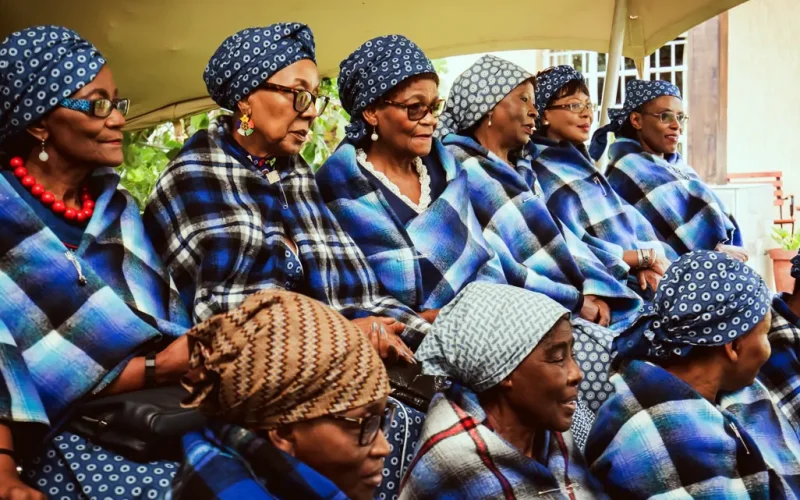
Winning hearts and power: how Mali’s military regime gained popular support

Winning hearts and power: how Mali’s military regime gained popular support

MALI’S interim president, Colonel d’Armée Assimi Goïta, who came to power in a coup on 18 August 2020, enjoys remarkably strong public support. Survey data from the pan-African research network Afrobarometer and the Mali-Métre survey, run by Germany’s Friedrich-Ebert-Stiftung since 2012, indicate high levels of satisfaction with junta rule. In the 2024 Mali-Métre, nine out of ten respondents considered the country to be moving in the right direction. Yet economic conditions are worsening for Malians. In a recent analysis, the World Bank pointed out that the junta was finding it difficult to deliver services amid sluggish growth, high inflation and…
Read More