Our website use cookies to improve and personalize your experience and to display advertisements (if any). Our website may also include cookies from third parties like Google Adsense, Google Analytics, and Youtube. By using the website, you consent to the use of cookies.

Nigeria’s killer fuel tankers: accidents and explosions are common – how to stop them

Nigeria’s killer fuel tankers: accidents and explosions are common – how to stop them

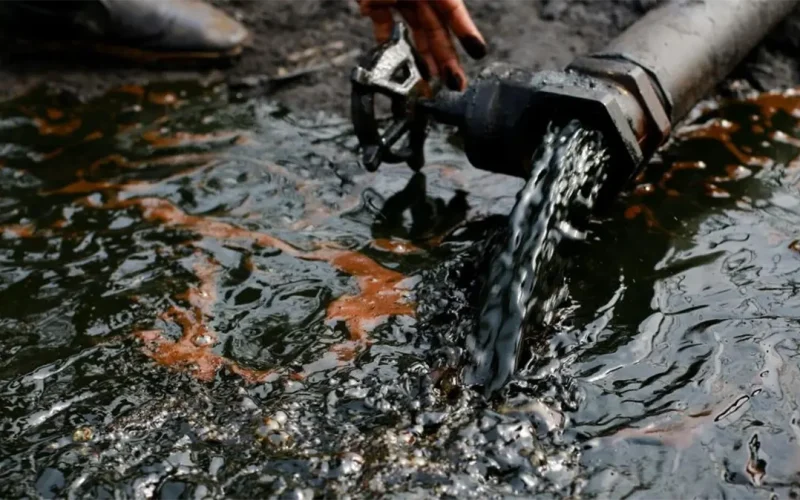
FUEL tanker explosions and accidents are common in Nigeria, often caused by the poor state of roads and badly maintained vehicles. A government spokesperson said in February 2025 that 300 people had died from fuel tanker explosions in the four months from October 2024 to January 2025. But nobody is ever held accountable. Gladys Chukwurah, an urban planner with research on explosions, shares insights into the causes, consequences and possible solutions. How frequent are fuel tanker accidents on Nigerian roads? Official figures are hard to come by. Research, however, showed that from January 2009 to October 2024, there were 169…
Read More
Ali Kony and the twilight of the Lord’s Resistance Army

Ali Kony and the twilight of the Lord’s Resistance Army

This story was originally published by The New Humanitarian.By Kristof Titeca Not long ago, Ali Kony, a neatly dressed Ugandan man in his early 30s, was primed to take over from his father as the head of an infamous armed group that had spent the best part of four decades sowing fear across swathes of central and east Africa. Yet one morning last year, he sat reclined on a worn beige leather sofa in a small house in a peaceful Ugandan town. Pink, purple, and green Christmas tinsel hung off the walls as Ali’s children darted in and out, showing…
Read More
What does the Bible say about who belongs in the ‘promised land’? A biblical scholar explains

What does the Bible say about who belongs in the ‘promised land’? A biblical scholar explains

IN current US politics, a “biblical” view of the Middle East informs foreign policy – perhaps more than it has for decades. This makes it very important to understand what the Bible actually says, particularly about the idea of a “promised land”. Biblical scholars and historians like me often observe that the Bible does not provide a full, holistic history. It shines the torch on certain events and memories, for particular purposes. It tells of origins, laws, ethics, divine revelations and a nation’s relationship with God. It does not speak with one voice but with many voices from different times…
Read More
South Africa has failed to deliver access to enough water for millions – a new approach is needed

South Africa has failed to deliver access to enough water for millions – a new approach is needed

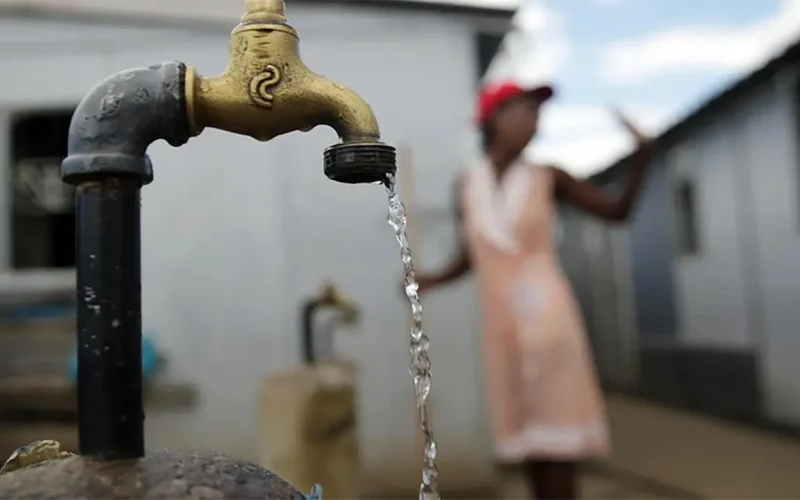
SOUTH Africa is one of only 52 countries that guarantee access to water as a human right. “Access” from a human rights perspective means that water is physically accessible, clean and safe for consumption, and affordable. Section 27 of the country’s constitution stipulates that everyone has the right to access sufficient water. But South Africa is not doing well in meeting the standards of a full human rights approach to water access. In a recent paper, I and my colleagues at the Public Affairs Research Institute’s Just Transition Programme set out the extent of this failure and mapped out what…
Read More
Naming and shaming rape suspects: South African court ruling challenges current thinking

Naming and shaming rape suspects: South African court ruling challenges current thinking

VICTIMS and survivors of gender-based violence have increasingly started naming perpetrators in public. This phenomenon has gained traction through movements such as #MeToo, the #RUReferenceList and #AmINext. However, there has been a significant backlash. Men identified as perpetrators are turning to the courts to silence those who accuse them of rape and abuse, usually by bringing defamation cases. In South Africa, in addition to defamation cases, men accused of rape are applying for protection orders under the Protection from Harassment Act. In a recent paper, I analyse a high court ruling which deals with whether publicly naming someone as a…
Read More
Deeply religious African countries (surprisingly) provide little state support to religion – unlike countries in Europe

Deeply religious African countries (surprisingly) provide little state support to religion – unlike countries in Europe

IN most of the world, countries with religious populations are more likely to have governments that support religion through laws and policies. These laws might include religious education, funding for religious institutions, and laws based on religious values. Not so in sub-Saharan Africa. In a recently published research paper, David Jeffery-Schwikkard, who studies secularism, argues that sub-Saharan African countries provide little state support for religion, even though their populations are among the most devout globally. These findings unsettle many common misconceptions about the role of religion in politics. The Conversation Africa asked him a few questions. How prevalent is religion…
Read More
Goma is threatened by conflict and a volcano: we’ve created a handbook to help hotspots like these

Goma is threatened by conflict and a volcano: we’ve created a handbook to help hotspots like these

THE city of Goma in the Democratic Republic of Congo (DRC) was taken over by the M23 rebel group in January 2025. This was a tragic escalation of a decades-long conflict that led to mass displacement and deaths. Goma, a city of two million, hasn’t just been overtaken by rebels. It’s also just 12 miles (19km) from one of the most dangerous active volcanoes in the world: Mount Nyiragongo. Mount Nyiragongo can have lava flows of more than 60 miles (96km) per hour. This is far faster than any human can run. When it last erupted in 2021, thousands of…
Read More
Fourth industrial revolution in South Africa: inequality stands in the way of true progress

Fourth industrial revolution in South Africa: inequality stands in the way of true progress

IN his 2019 State of the Nation address, South Africa’s President Cyril Ramaphosa announced that he was creating a commission on the fourth industrial revolution (4IR). The term refers to the integration of advanced digital technologies like AI and robotics, as well as automation, into various economic and social domains. The first (1760s to early 1800s), second (1870s to early 1900s) and third (1950s to late 20th century) industrial revolutions were mechanical and electronic in nature. The 4IR is characterised by the fusion of physical, digital and biological systems. It is fundamentally reshaping industries, work and societies. Ramaphosa acknowledged at…
Read More
Kenya relies on USAid famine warning system – what happens now that it’s gone?

Kenya relies on USAid famine warning system – what happens now that it’s gone?

FAMINE Early Warning Systems Network (Fews Net), a web-based platform for predicting famine, went offline on 30 January 2025. The system had provided up-to-date data to predict and track food insecurity in nearly 30 countries in Africa, Central America and Asia for 40 years. It was funded by the US Agency for International Development (USAID). It went offline following USAID’s shutdown by the new US administration. In Kenya, Fews Net worked with the National Drought Management Agency and the Kenya Food Security Steering Group to develop regular outlook reports at national and county levels. Timothy Njagi Njeru, an agricultural economist…
Read More
Donald Trump’s war on global governance: lessons from the past on how to fight back

Donald Trump’s war on global governance: lessons from the past on how to fight back

US President Donald Trump’s recent actions seem designed to reassert American power and demonstrate that it is still the dominant global power and is capable of bullying weaker nations into following America’s lead. He has shown contempt for international collaboration by withdrawing from the UN climate negotiations and the World Health Organization. His officials have also indicated that they will not participate in upcoming G20 meetings because he does not like the policies of South Africa, the G20 president for 2025. In addition, he’s shown a lack of concern for international solidarity by halting US aid programmes and by undermining…
Read More