Our website use cookies to improve and personalize your experience and to display advertisements (if any). Our website may also include cookies from third parties like Google Adsense, Google Analytics, and Youtube. By using the website, you consent to the use of cookies.

The just energy transition ignores labour outside the formal economy. So is it just?

The just energy transition ignores labour outside the formal economy. So is it just?

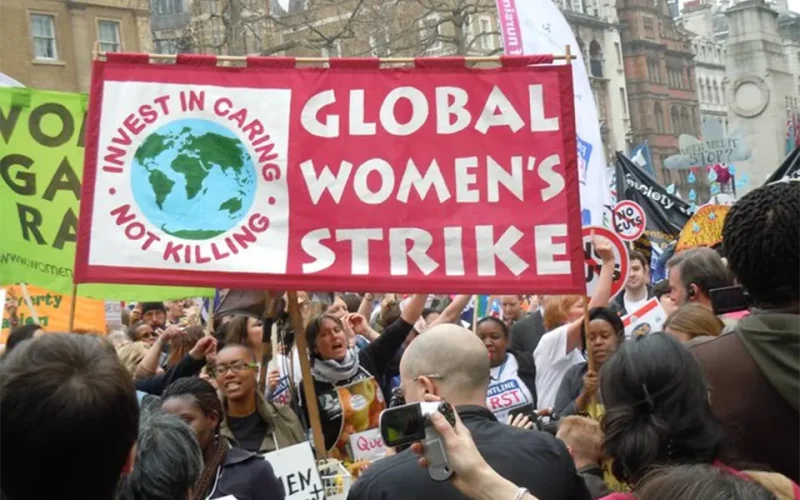
THE just transition debate centres on how to move away from fossil fuels towards renewable energy systems while safeguarding working conditions, livelihoods, and economic and social rights of workers in industrial sectors. This debate has mainly focused on paid labour and job security in carbon-intensive sectors. But it overlooks hundreds of millions of people involved in unrecognised work that subsidises these transitions. This “unseen” labour is called “reproductive labour”. It’s work that happens outside the market or formal industrial system but sustains the living conditions of workers in formal labour. Reproductive labour is primarily associated with the maintenance of the…
Read More
Electric vehicles in Africa: what’s needed to grow the sector

Electric vehicles in Africa: what’s needed to grow the sector

IN sub-Saharan Africa, high levels of particulate matter (PM2.5) pollution from vehicle tailpipe emissions cause poor health, developmental stunting, and even death. Vehicle emissions also contribute to global warming. Electric vehicles could help solve these problems but they’ve been slow to take off in the region. Its biggest economy, South Africa, had only about 1,000 electric vehicles by 2022. We are specialist transport engineers whose research has focused on electric vehicles and road freight transport in sub-Saharan Africa. In our work, we look at how electric vehicles could contribute to reducing emissions in the region, and what is standing in…
Read More
Can a superstar hippo help save Africa’s rainforests?

Can a superstar hippo help save Africa’s rainforests?

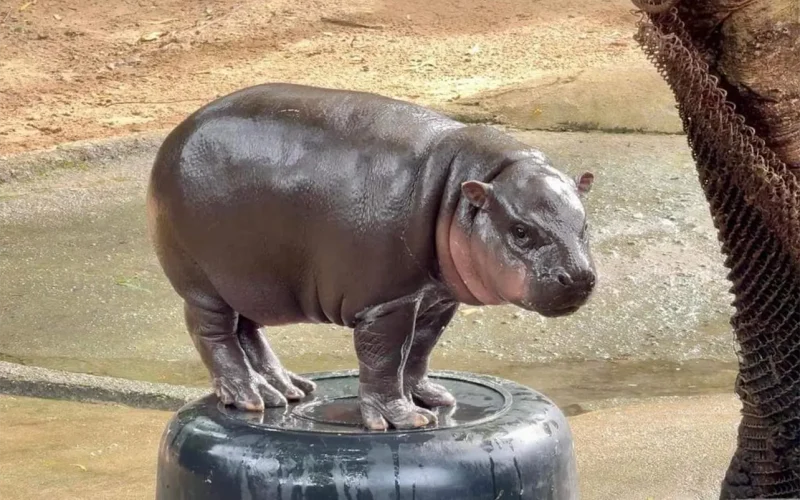
THE world’s first superstar hippo lives in a zoo in Thailand. Moo Deng shot to fame soon after she was born in July this year, thanks to viral videos that showed off her cute expressions and chirpy demeanour. Yet the story of her species is less happy and reveals the close links between the extinction and climate change crises. Moo Deng is a pygmy hippo, a species native to the forests of West Africa. Unlike their bigger and significantly scarier cousins (regular hippos), the pygmies are secretive creatures, who like to conceal themselves in swamps and dense vegetation. Today, pygmy…
Read More
Nigeria at COP29: Five items to put on the climate agenda

Nigeria at COP29: Five items to put on the climate agenda

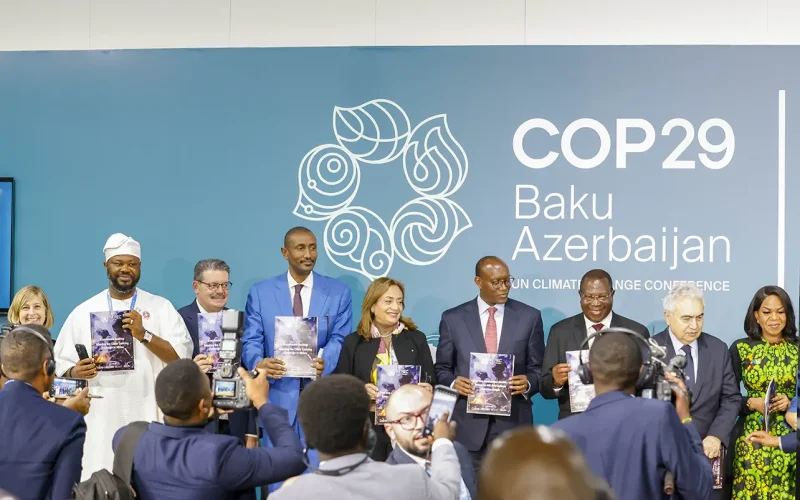
THE world’s efforts to address climate change and its effects have been the subject of discussion for almost three decades at the annual Conference of Parties (COP) of the United Nations Framework Convention on Climate Change. This year’s COP, at Baku, Azerbaijan, is the 29th edition of the conference. Nigeria will be there to advance its climate change agenda and related issues – and will have high expectations. Nigeria’s Long-Term Low Emissions Development Strategy and carbon market programme have already been commended by the conference parties. The country has committed to starting efforts towards achieving net-zero emissions by 2060, as…
Read More
Polluters must pay: how COP29 can make this a reality

Polluters must pay: how COP29 can make this a reality

THE 29th Conference of the Parties (COP29) takes place in Azerbaijan in November 2024. The annual climate change conference must focus on holding corporations and countries accountable for greenhouse gas emissions. The “polluter pays” principle has been a key part of climate discussions for years. It says a polluter should bear the costs of managing its pollution, to prevent damage to human health and the environment. Although the principle is widely accepted in theory, it hasn’t been put into practice consistently, or enforced. Many of the largest polluters continue to operate with little or no financial consequence for the damage…
Read More
South Africa’s massive Sasol petrochemical plant faces serious challenges – new report

South Africa’s massive Sasol petrochemical plant faces serious challenges – new report

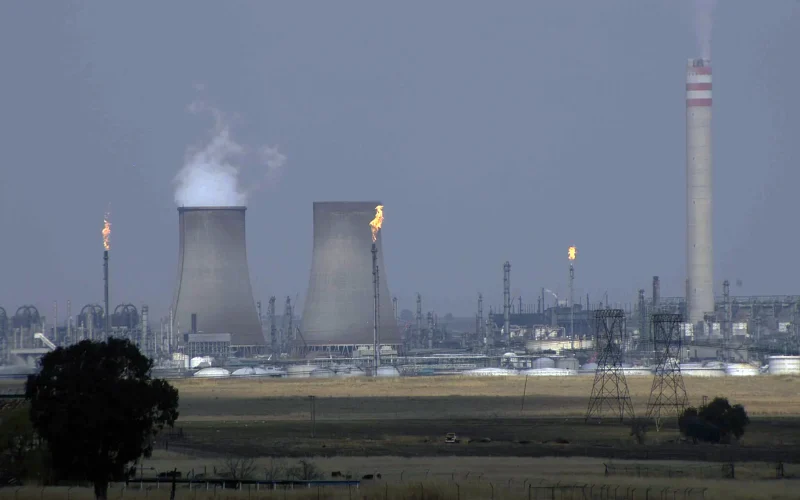
THE giant Secunda complex of Sasol, South Africa’s biggest chemicals and energy company, provides the fundamental ingredients to South Africa’s petrochemical sector. It produces petrochemicals, plastics, chemicals essential to key industries such as agriculture (fertilisers) and mining (explosives), and 30% of the country’s liquid fuels. These value chains are very important to the economy. In 2021, this output accounted for 2.6% of GDP directly and 5.2% indirectly. Sasol also employs more than 28,000 South Africans. It makes significant contributions to corporate taxes, wages, and social investment. It sustains a whole town built specifically for its Secunda workforce. Sasol’s Secunda facilities…
Read More
Wildlife loss is taking ecosystems nearer to collapse – new report

Wildlife loss is taking ecosystems nearer to collapse – new report

EVEN for a conservation biologist numbed to bad news about nature, the biennial Living Planet report from the World Wildlife Fund (WWF) is a stark reminder of our failure to arrest the loss of biodiversity – the variety of living things and the ecosystems they live in. The 2024 report uses an index that has tracked the fate of 35,000 populations of 5,495 species of wild vertebrates – that’s animals with a spinal column, so mammals, birds, reptiles, amphibians and fish – from 1970 to the present day. Over the past 50 years (1970–2020), the average size of these monitored…
Read More
Ghana needs to stop households from using firewood: what must be done

Ghana needs to stop households from using firewood: what must be done

COOKING on firewood and coal increases air pollution and ill health. Some of the dangers include stunted growth in children and undernutrition in children and adults. Babies who’ve been exposed to charcoal and firewood smoke while in the womb can have reduced birth weight. In Ghana, it’s mostly women who have the task of preparing household meals. Babies are often carried on women’s backs while they cook, and children play close to charcoal or wood fires. This exposes women and children to the indoor air pollution resulting from burning biomass fuel. We are economists who investigated whether environmental consciousness had…
Read More
Climate change: care for humans, other species and the natural environment is the key to a just transition

Climate change: care for humans, other species and the natural environment is the key to a just transition

COMMUNITIES across the world are facing two worsening crises: a climate crisis and a care crisis. The evidence and urgency on the climate crisis has been expertly illustrated by the Intergovernmental Panel on Climate Change (IPCC). The root cause of this crisis is the increase in greenhouse gases in the atmosphere. This is due to excessive exploitation of fossil fuels, deforestation and industrial processes. In short, it is a result of development processes that have not been based on caring for the environment. Less discussed is the care crisis. This refers to a society’s capacity to maintain livelihoods in households,…
Read More
Africa’s Great Green Wall will only combat desertification and poverty by harnessing local solutions

Africa’s Great Green Wall will only combat desertification and poverty by harnessing local solutions

IN the rural village of Téssékéré, the increasing number and intensity of droughts linked to climate change is making the lives and livelihoods of the local Fulani communities increasingly vulnerable. Here, in the northern Sahel desert region of Senegal (known as the Ferlo), the pastoral population walks over dry, dusty ground with their livestock in search of grazing areas and working borehole water pumps. In favourable years, these farmers can stay in the fields around their local boreholes, but climate change is forcing them to move further afield to find pasture to feed their cattle. In the small Ivory Coast…
Read More