Our website use cookies to improve and personalize your experience and to display advertisements (if any). Our website may also include cookies from third parties like Google Adsense, Google Analytics, and Youtube. By using the website, you consent to the use of cookies.

Jane Goodall lived her childhood dream

Jane Goodall lived her childhood dream

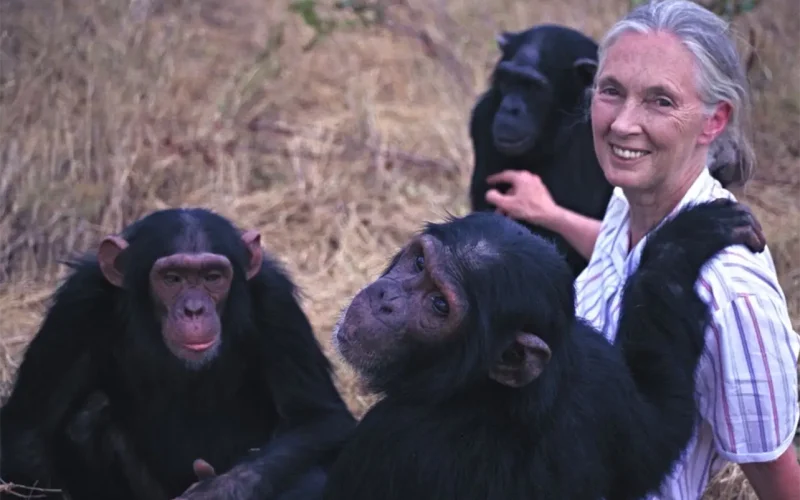
JANE Goodall, one of the most renowned woman scientists in the world, died at age 91 in Los Angeles, her namesake institute announced in a statement on Wednesday.  Goodall became famous for her work studying the behaviours of chimpanzees, capturing the attention of institutions like the National Geographic Society, which funded her research and featured an iconic cover image of Goodall observing a group of chimpanzees in the jungle. She would go on to earn a PhD despite never having received a bachelor's degree. It was a childhood dream fulfilled. As she told Time in 2018: “When I was a…
Read More
Traditional food systems nourish communities and protect the environment: lessons from South Africa’s Amadiba

Traditional food systems nourish communities and protect the environment: lessons from South Africa’s Amadiba

THE global food system contributes to multiple planetary crises – and is vulnerable to them. Climate change, other ecological degradation and socio-economic inequality are all linked to food. Malnutrition and rising levels of diet-related diseases are also related to this food system, in which transnational food corporations pursue profits at the expense of human health and the environment. In recent years, various groups, including small-scale food producers, social movements, scholars and international agencies, have campaigned for a more socially just and environmentally sustainable global food system. This drives the movement for food sovereignty – the right to healthy and culturally…
Read More
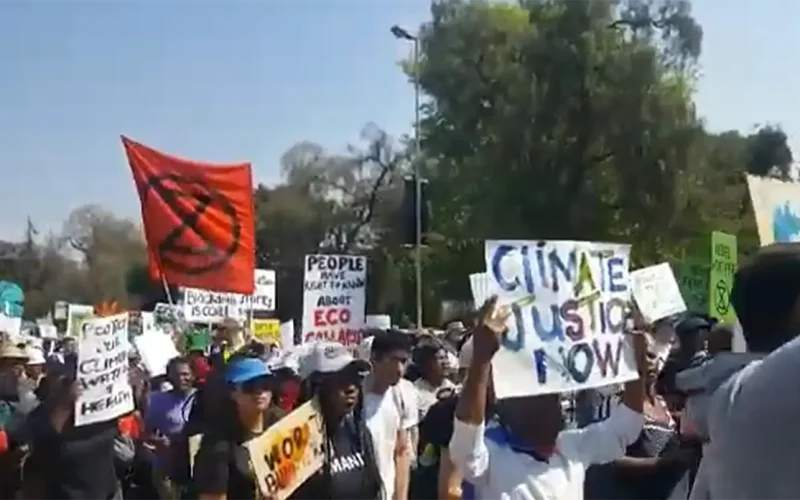
bird Interview: In Conversation with Mitchelle Mhaka on building a justice-centered climate movement

bird Interview: In Conversation with Mitchelle Mhaka on building a justice-centered climate movement

On the 4th of December 2024, the Pretoria High Court delivered a ruling that reverberated far beyond South Africa’s borders. In what became known as the ‘Cancel Coal case’, the court struck down the government’s plan to procure 1,500 megawatts of new coal-fired power, declaring it unconstitutional and unlawful. The judgment marked the first time a South African court had stopped coal expansion on constitutional grounds, setting a precedent that youth-led movements could hold governments to account not only for environmental harms but also for the health, social and generational rights threatened by fossil fuels. At the heart of that…
Read More
African cities aren’t doing enough to adapt to climate change: lessons from Durban and Harare

African cities aren’t doing enough to adapt to climate change: lessons from Durban and Harare

WHEN record-breaking rains swept through the coastal city of Durban in South Africa in April 2022, the resulting floods destroyed roads, bridges and homes. Durban’s low-lying, poor neighbourhoods were hardest hit, with residents losing their homes and their lives. The scene would have felt familiar to residents of many other fast-growing African cities. Some, including Lagos, Cairo, Cape Town and Durban, have already faced the need to adapt to a changing climate and its intensifying hazards such as floods, droughts or intense heat. Cities need new ways to adapt to climate change. The current system of social, economic and political…
Read More
South African environmental groups push to block Shell’s new wells – how world court opinion might help

South African environmental groups push to block Shell’s new wells – how world court opinion might help

THE International Court of Justice’s landmark advisory opinion on climate change has come in handy for South African communities that are trying to stop global oil company Shell from drilling for oil and gas off the coast. The opinion, handed down by the world’s highest court in July 2025, sets out what all governments are legally required to do to tackle climate change. It confirmed that: All states have a duty to prevent activities within their jurisdiction from causing significant climate harm. States must phase out fossil fuels to keep global temperatures below 1.5°C above pre-industrial times. This includes regulating…
Read More
Greenhouse farming changed his life

Greenhouse farming changed his life

IN the industrial sprawl of Douala, Cameroon’s economic capital, where concrete has taken over much of the greenery, one man has found a meaningful way to bring greenery into his everyday life through agriculture. Joel Kamgaing, a former welder whose dreams once pointed toward Dubai, now cultivates bell peppers in a self-built greenhouse — all from the seat of a wheelchair he engineered himself. “I was a farmer before being in this wheelchair,” Kamgaing said, wheeling between rows of vibrant crops. “I had a two-hectare pineapple plantation. I was farming at Awaé, near Yaoundé. During one of my regular supervision…
Read More
Woman-headed households in rural South Africa need water, sanitation and energy to fight hunger – G20 could help

Woman-headed households in rural South Africa need water, sanitation and energy to fight hunger – G20 could help

RURAL homes headed by women in South Africa have many problems getting water, sanitation and energy. Electricity from the grid, flush toilets and piped water aren’t always available. Without all of these essential services, families are likely to struggle to produce enough food to meet their daily needs for a healthy life. Water, energy and sanitation are all needed for growing food, cooking and storing it, and keeping it free from contamination. We are research specialists in food systems and public policy. Using statistics from the 2022 South African General Household Survey, we looked at how water and sanitation influence…
Read More
Why African nations are looking to unite on climate and conflict

Why African nations are looking to unite on climate and conflict

A few years ago, the link between climate change and conflict was a niche policy area. It has now begun to dominate UN climate summits. That recognition is about to be elevated a step higher as the Africa Climate Summit prepares to pass the Common African Position: a key policy document on climate, peace, and security. This story was originally published by The New Humanitarian.By Will Worley African diplomats like Ali Mohamed, Kenya’s special climate envoy, hope the summit – to be held 8-10 September in Ethiopia’s Addis Ababa – will be a “game changer” that will “spark a seismic…
Read More
A lioness caught on camera reignites hope for lion survival

A lioness caught on camera reignites hope for lion survival

ONCE written off as disappearing, lion prides in several African parks and conservancies are beginning to show signs of recovery, according to new surveys and conservation reports. The latest of these signs is from camera trap evidence of a lioness in the Central African Republic’s Bamingui-Bangoran National Park. The remote camera sighted the first female there in six years. Conservationists at the Wildlife Conservation Society (WCS) who released the photo evidence said the lactating state of the lioness suggests cubs are present, raising hopes of a breeding population returning to fragile ecosystems. “For years, we have recorded only male lions,…
Read More
How to harness the ocean for prosperity: funding African innovations can unlock the blue economy

How to harness the ocean for prosperity: funding African innovations can unlock the blue economy

AFRICA has an enormous ocean area at its disposal. There are almost 20 million square kilometres of ocean, seas and inland water that could be developed into environmentally sustainable blue economies. The G20 group of 19 of the world’s largest economies and the African Union also view the blue economy as key to developing the continent. Nomtha Hadi researches blue economies. She talks to The Conversation Africa about the main challenges in developing blue economies in Africa. What is the blue economy? The blue economy refers to using water and ocean resources to create economic growth, improved livelihoods, and jobs…
Read More