Our website use cookies to improve and personalize your experience and to display advertisements (if any). Our website may also include cookies from third parties like Google Adsense, Google Analytics, and Youtube. By using the website, you consent to the use of cookies.

Small towns are growing fast across Ghana – but environmental planning isn’t keeping up

Small towns are growing fast across Ghana – but environmental planning isn’t keeping up

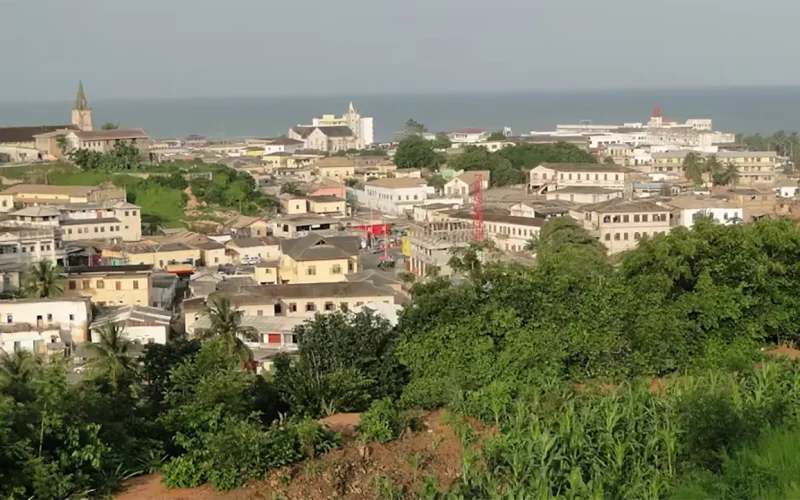
AFRICA’S urban future will be shaped not only by large cities and capitals but also by its many small and medium-sized towns. Large capital cities are no longer the hotspots of rapid urban growth. According to the United Nations Human Settlements Programme (UN-Habitat), small and medium-sized towns are growing faster than large cities. These smaller towns often start as rural settlements. Despite their rapid growth, many small towns lack infrastructure and planning capacity, leaving them vulnerable to environmental risks. Ghana offers a telling example. While the spotlight is often on the rapid growth of the two major cities, Accra and…
Read More
70 rhinos safely arrive in Rwanda in unprecedented wildlife translocation

70 rhinos safely arrive in Rwanda in unprecedented wildlife translocation

ON Tuesday, the tenth of June, Rwanda welcomed dozens of four-footed new residents to the country as dozens of metal crates holding 70 southern white rhinos touched down on Rwandan soil. Rwanda’s Akagera National Park is the new home for the transplanted rhinos. They will graze on the park’s shrubs and gradually acclimatise to the environment. The rhinos' journey took them over 4,000 kilometres via roads and sky, from South Africa’s Munywana Conservancy in KwaZulu-Natal. The unprecedented translocation marks the largest cross-continental movement of rhinos ever attempted in Africa, helping to flip the continent’s conservation script, which is often headlined…
Read More
Africa’s power pools: what the G20 can do to help countries share electricity

Africa’s power pools: what the G20 can do to help countries share electricity

SOUTH Africa holds the presidency of the G20 this year. The group is made up of 19 of the world’s largest economies, the European Union and the African Union. A priority of South Africa’s G20 presidency is African connectivity: promoting cross-border energy trade and regional power pools as a way to share electricity across borders on the continent. David Phaho and Steven Mathetsa of the African Energy Leadership Centre set out how South Africa could use its presidency of the G20 to drive regional renewable energy sharing. What is a regional power pool? A regional energy power pool is where…
Read More
Climate justice for Africa: 3 legal routes for countries that suffer the most harm

Climate justice for Africa: 3 legal routes for countries that suffer the most harm

Climate change lawsuits have become a new way for countries to assert their rights against actions that degrade the environment. But African countries have yet to fully exploit this route. In the Netherlands, the court found that greenhouse gas emissions breached the rights to life and private and family life that are protected by the European Convention on Human Rights. In Germany, the court found that the government had breached the Climate Protection Act by not setting out a plan to reduce greenhouse gas emissions after 2030. This meant that future generations would unfairly bear the burden of trying to…
Read More
Nigerian and Kenyan farmers can be first step to making rural mini-grids more profitable and affordable

Nigerian and Kenyan farmers can be first step to making rural mini-grids more profitable and affordable

IN Nigeria and Kenya, many small to medium farms and rural grain-milling businesses are not connected to the national electricity grid. They still use petrol or diesel generators for power. Energy, agriculture and development researchers Temilade Sesan, Lucy Baker and colleagues set out to discover how these agribusinesses could get electricity from renewable energy mini-grids at a price that would make the mini-grids commercially viable, affordable for the farmers, and able to provide an electricity supply for low-income rural households. What are mini-grids, and why are they important? Mini grids are small networks that generate and distribute electricity. They are…
Read More
Malawi’s response to Cyclone Freddy offers lessons in managing disasters: first up, don’t leave people in the lurch

Malawi’s response to Cyclone Freddy offers lessons in managing disasters: first up, don’t leave people in the lurch

MALAWI is one of the most disaster-prone countries in Africa. In the past 15 years, it has experienced 16 floods, one rainfall-related landslide, five storm-related disasters, and two severe droughts. Since 2019, Malawi has declared several national disasters. This creates a sense of a country in a permanent state of emergency. To make things worse, these climate-related disasters are increasing in frequency and severity. The damage to the economy, loss of life, and damage to health, transport systems and the environment are increasing. In February 2023, Cyclone Freddy struck Malawi, causing floods and mudslides that killed more than 1,200 people…
Read More
Satellite images reveal the dark side of household solar power – South Africa’s green transition is only for a few

Satellite images reveal the dark side of household solar power – South Africa’s green transition is only for a few

AS winter approaches, memories of the past haunt South Africans in more ways than one. The country has experienced years of rolling blackouts, known locally as load shedding. During the worst periods of these power cuts in 2022 and 2023, South Africans who did not own solar photovoltaic systems or generators would go without electricity for up to 12 hours a day. Due to the extent of the damaging power outages, solar power was adopted quickly in South Africa. For example, in 2020, smaller systems installed at homes or businesses made up just 38% of the country’s solar systems. At…
Read More
South Africa’s wattled cranes are no longer critically endangered: why the birds’ numbers are rising

South Africa’s wattled cranes are no longer critically endangered: why the birds’ numbers are rising

CRANES are some of the world’s most majestic birds, with 15 species found globally. Four of these are found in Africa. The wattled crane in South Africa was in decline, but seems to have turned a corner. Its numbers have increased from just 188 birds in 2000 to 304 today. Crane researcher Lara Fuller explains how the population’s recovery recently led to it being moved from Critically Endangered to Endangered on the International Union for the Conservation of Nature’s list of threatened species. What is so special about wattled cranes? Wattled cranes are the largest crane species in Africa. They…
Read More
Burkina Faso and Mali’s fabulous flora: new plant life record released

Burkina Faso and Mali’s fabulous flora: new plant life record released

THE Illustrated Flora of Burkina Faso and Mali is the first comprehensive documentation of the remarkable plant diversity in these two West African countries. Written in French, the book is the outcome of decades of botanical research and scientific collaboration between institutions and botanists from Burkina Faso, Mali, France, Switzerland and Germany. For the first time, it provides a complete inventory of ferns and flowering plants in Burkina Faso and Mali. It catalogues 2,631 species – both native and introduced – with 2,115 identified in Burkina Faso, 1,952 in Mali, and 1,453 shared between both countries. Featuring over 800 photographs,…
Read More
Heat extremes in southern Africa might continue even if net-zero emissions are achieved

Heat extremes in southern Africa might continue even if net-zero emissions are achieved

HUMAN emissions of greenhouse gases have caused rapid global warming. This has made high-impact, heat extreme events around the globe more and more intense over the past 70 years. Heat extremes, such as heat waves, can cause severe damage to infrastructure by damaging bridges and railways. They also harm ecosystems and can lead to loss of life. Greenhouse gas emissions reached new highs recently. Recent studies suggest that the world will miss the globally agreed target of keeping the global temperature increase to below 1.5°C more than it was in pre-industrial times. If the global temperature increase exceeds 1.5°C, scientists…
Read More