Our website use cookies to improve and personalize your experience and to display advertisements (if any). Our website may also include cookies from third parties like Google Adsense, Google Analytics, and Youtube. By using the website, you consent to the use of cookies.

South Africa’s shift from coal to renewables: how it’s going

South Africa’s shift from coal to renewables: how it’s going

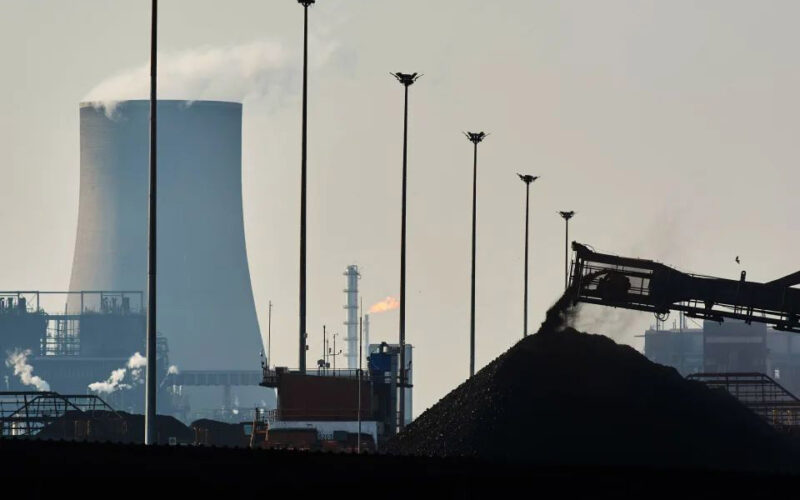
JUST over 74% of South Africa’s electricity still comes from burning coal. In 2021, the country negotiated the Just Energy Transition Partnership with Germany, the UK, France, the US and the European Union. They committed to providing South Africa with US$8.5 billion (R157 billion) to move away from coal to renewable energy. (In March 2025, US President Donald Trump withdrew the US and its share of the funding, about US$1.5 billion, or R27.7 billion, from the arrangement.) Researcher Nqobile Xaba talks to The Conversation Africa about how the partnership is going. What has the partnership done so far? After its…
Read More
Humans lived in African rainforests 150,000 years ago, far earlier than believed – new research

Humans lived in African rainforests 150,000 years ago, far earlier than believed – new research

OUR human species emerged in Africa around 300,000 years ago, but scientists don’t yet have a clear picture of what kind of natural environment we evolved in. Until recently, the dominant idea was that grasslands and savannahs were the ecological “cradle” of human beings. Environments like rainforests were considered to be barriers to human expansion, and inhabited only much later in human history. This view is out of step with research in Asia, however. There, more and more evidence has been found of sophisticated behaviours and advanced cognition in ancient rainforest contexts. Humans lived in a rainforest environment on Sumatra…
Read More
Flooding incidents in Ghana’s capital are on the rise. Researchers chase the cause

Flooding incidents in Ghana’s capital are on the rise. Researchers chase the cause

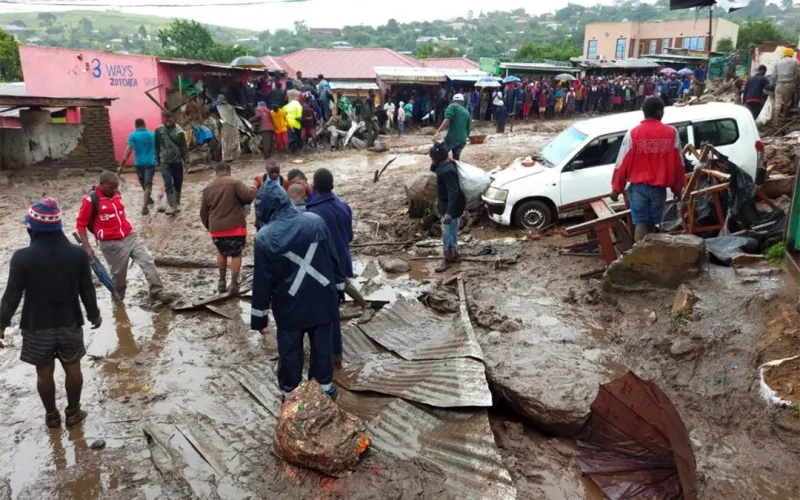
URBAN flooding is a major problem in the global south. In West and Central Africa, more than 4 million people were affected by flooding in 2024. In Ghana, cities suffer damage from flooding every year. Ghana’s president, John Dramani Mahama, has established a task force to find ways of improving flood resilience in the country. This is partly driven by an increase in flooding incidents in cities such as Accra and Kumasi in the last decade. We are urban planning and sustainability scholars. In a recent paper, we analysed whether flooding in Accra, Ghana’s capital, was caused by climate change…
Read More
Three ways Pope Francis influenced the global climate movement

Three ways Pope Francis influenced the global climate movement

THE death of Pope Francis has been announced by the Vatican. I first met the late Pope Francis at the Vatican after a conference called Saving Our Common Home and the Future of Life on Earth in July 2018. My colleagues and I sensed something momentous was happening at the heart of the church. At that time, I was helping to set up the new Laudato Si’ research institute at the Jesuit Hall at the University of Oxford. This institute is named after the Pope’s 2015 encyclical (a letter to bishops outlining church policy) on climate change. Its mission is…
Read More
South Africa finally has a masterplan for a renewable energy industry: here’s what it says

South Africa finally has a masterplan for a renewable energy industry: here’s what it says

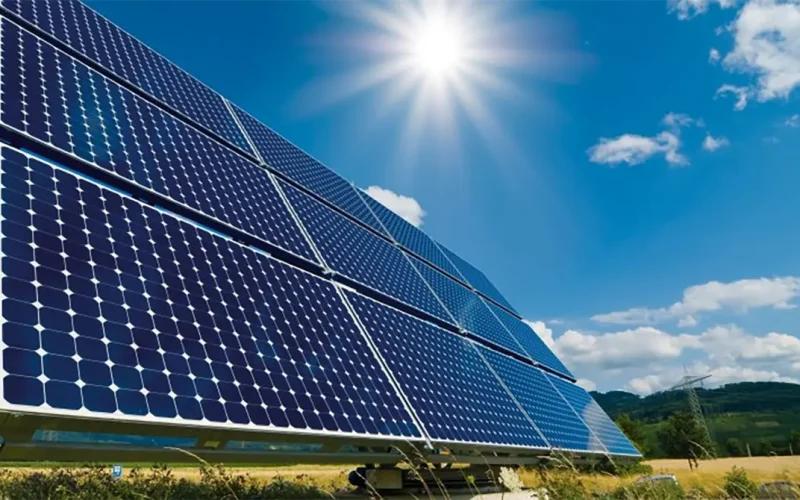
ABOUT 85% of South Africa’s electricity is produced by burning coal. The country’s move to renewable energy means that the coal industry will be phased out. To this end, the South African cabinet recently approved the country’s first renewable energy masterplan, which sets out what’s needed to establish new renewable energy industries. Ricardo Amansure of the Centre for Sustainability Transitions researches the move towards renewable energy and how communities can benefit from this. He explains what the masterplan aims to achieve, what problems it might face, and how it can succeed. What is the South African Renewable Energy Masterplan? It…
Read More
South African court said no to new coal-fired power: what’s behind the ruling

South African court said no to new coal-fired power: what’s behind the ruling

THREE South African environmental and climate justice organisations took the South African government to court in November 2021, to challenge the authorisation of new coal-fired power as part of the country’s energy mix. Three years later, the court ruled that the government’s new coal plans were unlawful, invalid, and against the country’s constitution. Therefore, these plans cannot go ahead. Environmental law specialist Melanie Murcott researches how courts consider the risks and impacts of climate change and environmental and human rights violations in their judgments. In this article, she discusses the #CancelCoal case. Why was the #CancelCoal case brought to court?…
Read More
Uganda’s boda boda bikes are deadly polluters: study models how going electric could save lives

Uganda’s boda boda bikes are deadly polluters: study models how going electric could save lives

IN Uganda, motorcycles known as boda bodas are a key part of the transport system. The country has over 1.5 million boda bodas on the road, amounting to roughly 70% of all vehicles. Boda bodas are crucial in providing last-mile transport for people and goods on short trips because they can nip through heavy traffic fast. But their exhaust fumes also pollute the air. Gabriel Okello researches air quality and air pollution in Africa and examines how life would improve if Uganda’s boda bodas all went electric. What public health problems do boda bodas cause? Most boda bodas run on…
Read More
Global warming of more than 3°C this century may wipe 40% off the world’s economy, new analysis reveals

Global warming of more than 3°C this century may wipe 40% off the world’s economy, new analysis reveals

THE damage climate change will inflict on the world’s economy is likely to have been massively underestimated, according to new research by my colleagues and I which accounts for the full global reach of extreme weather and its aftermath. To date, projections of how climate change will affect global gross domestic product (GDP) have broadly suggested mild to moderate harm. This in part has led to a lack of urgency in national efforts to reduce greenhouse gas emissions. However, these models often contain a fundamental flaw – they assume a national economy is affected only by the weather in that…
Read More
Only 15 countries have met the latest Paris agreement deadline. Is any nation serious about tackling climate change?

Only 15 countries have met the latest Paris agreement deadline. Is any nation serious about tackling climate change?

THE latest deadline for countries to submit plans for slashing the greenhouse gas emissions fuelling climate change has passed. Only 15 countries met it – less than 8% of the 194 parties currently signed up to the Paris Agreement, which obliges countries to submit new proposals for eliminating emissions every five years. Known as nationally determined contributions, or NDCs, these plans outline how each country intends to help limit average global temperature rise to 1.5°C above pre-industrial levels, or at most 2°C. This might include cutting emissions by generating more energy from wind and solar or adapting to a heating…
Read More
Wealthy nations owe climate debt to Africa – funds that could help cities grow

Wealthy nations owe climate debt to Africa – funds that could help cities grow

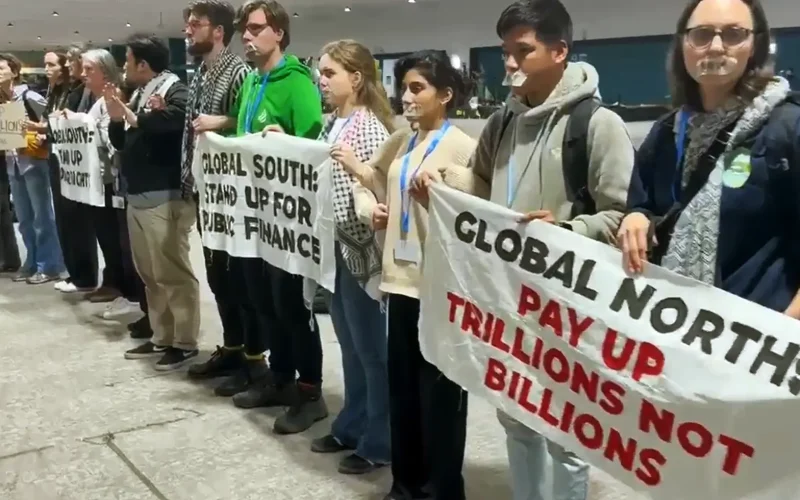
WEALTHY nations fuelled their industrial growth and urbanisation by burning fossil fuels. This was the biggest cause of climate change, which now affects every country in the world, even developing countries in sub-Saharan Africa which are responsible for less than 4% of global greenhouse gas emissions. Wealthy nations owe a climate debt. Africa is urbanising too and needs funds to house nearly a billion additional people by 2050 and to start adapting its cities to climate change. Urban economist Astrid Haas reviews a new report by the non-governmental organisation Action Aid on climate debt. She discusses the climate debt owed…
Read More