Our website use cookies to improve and personalize your experience and to display advertisements (if any). Our website may also include cookies from third parties like Google Adsense, Google Analytics, and Youtube. By using the website, you consent to the use of cookies.

African migration: focusing on Europe misses the point – most people move within the continent

African migration: focusing on Europe misses the point – most people move within the continent

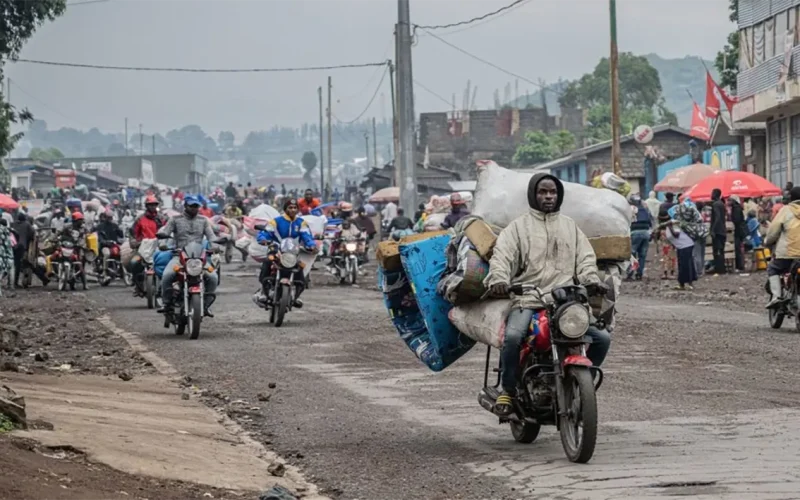
IMAGES of rubber dinghies overcrowded with refugees heading for Europe and narratives about mistreatment and exploitation of migrants on unsafe migration routes have come to dominate how African migration is perceived in European public and policy debates. They suggest a continent on the move, driven mainly by conflict and heading to the global north. These narratives are deeply misleading. Nevertheless, they shape public opinion and political decision-making. Fears of large-scale migration from Africa to Europe are exaggerated. Data shows migration from Africa has been growing, but more slowly compared to growth rates of migration worldwide – and largely takes place…
Read More
The Orlando Amstel Arena deal – a watershed moment for African sports commerce, place branding

The Orlando Amstel Arena deal – a watershed moment for African sports commerce, place branding

WHEN A football institution born in 1937 out of the dust and determination of Orlando East, Soweto in South Africa, announces a transformative naming rights partnership, it signals more than commercial evolution. The Orlando Pirates-Amstel deal, which rechristens Orlando Stadium as the Orlando Amstel Arena, represents a fundamental recalibration of how African cities, legacy sports brands, and global corporate entities collaborate to unlock economic value, forge emotional connections, and project continental ambition onto the world stage. This is South Africa's most significant football stadium branding moment - and it arrives at precisely the time when African sport must professionalise or…
Read More
South Africa’s new immigration policy takes a digital direction – will it succeed?

South Africa’s new immigration policy takes a digital direction – will it succeed?

SOUTH Africa has a new draft white paper on immigration, citizenship and refugees. This, the fourth in three decades, represents a step change from the previous efforts. It is a genuine attempt to develop an efficient but humane set of policies. Based on my work on migration over two decades, I am convinced that the policies in this new paper are far more ambitious than previous reforms. They represent a genuine attempt to address a complex and sensitive set of challenges in a comprehensive way, using state-of-the-art technological tools. The key question is: are the reforms practically and politically feasible?…
Read More
Edwin Mtei, Tanzania’s first Central Bank governor, left lessons on leadership

Edwin Mtei, Tanzania’s first Central Bank governor, left lessons on leadership

EDWIN Mtei, who passed away on 20 January 2026, was the first governor of Tanzania’s Central Bank after independence from Britain. He filled the post until 1974. Mtei was appointed by Julius Nyerere, who served as president from 1964 until his resignation in 1985. Nyerere once said of Mtei: “Once a governor, always a governor”, as quoted in Mtei’s autobiography, From Goatherd to Governor. He meant Mtei would always carry the title of governor, given his contribution to starting the Central Bank. Nyerere continued to call Mtei “Governor” even after he transferred him to other posts. The life and work…
Read More
Israel’s recognition of Somaliland: the strategic calculations at play

Israel’s recognition of Somaliland: the strategic calculations at play

SOMALILAND is not internationally recognised as a sovereign state, though it declared independence from Somalia in 1991. A territory becomes a sovereign state when its independence is recognised by the United Nations. For this reason, it has no seat at the UN and is considered, under international law, part of Somalia. Nevertheless, Somaliland holds elections and maintains relative internal stability. It is also attracting increasing informal diplomatic engagement – though not formal recognition – from Ethiopia, the United States and, most recently, Israel. This growing interest highlights a geopolitical paradox. An unrecognised polity has become strategically relevant in the Red…
Read More
For Sudanese refugee women in Uganda, a cup of coffee and a space to speak

For Sudanese refugee women in Uganda, a cup of coffee and a space to speak

IN a small room in Kampala, over cups of coffee and quiet conversation, Sudanese refugee women gather to speak about what they have endured. War, displacement, and loss hang in the air – but so does something else: relief at having a safe space to speak. These gatherings are part of Funjan Niswan, a grassroots initiative run by Aminat, a women-led organisation that offers psychological support to Sudanese refugees in the Ugandan capital. I have encountered many such initiatives since escaping the war in Sudan and living in South Sudan, Uganda, and now Rwanda – a testament to the organising…
Read More
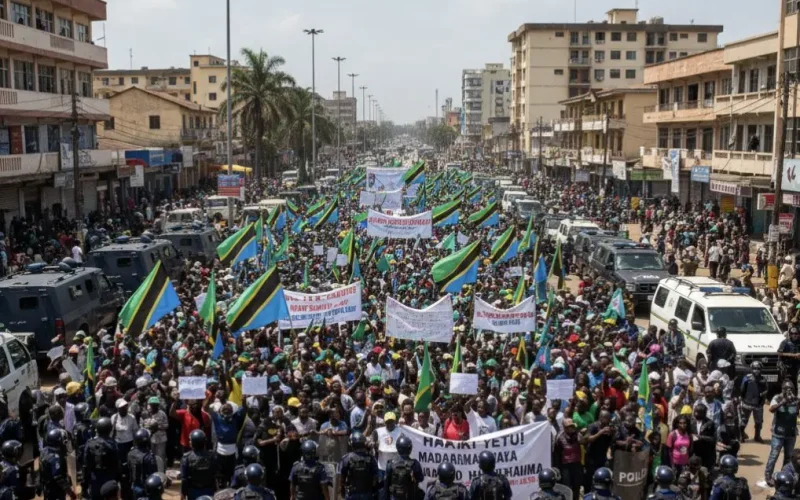
Tanzania’s president raised hopes for women’s political representation – the 2025 elections show much remains to be done

Tanzania’s president raised hopes for women’s political representation – the 2025 elections show much remains to be done

PRESIDENT Samia Suluhu Hassan’s historic rise as Tanzania’s first woman head of state broke a decades-old tradition of male dominance. In keeping with political precedent, she also became chairperson of the ruling Chama cha Mapinduzi (CCM) party. That made Hassan the first woman to hold this position. For decades, women’s representation in Tanzania’s parliament has relied heavily on reserved quota seats rather than direct electoral success. With a woman as president, women’s rights organisations held high expectations for reforms that would dismantle systemic barriers to women’s political participation. The reform priorities they championed included defined gender representation in party leadership.…
Read More
UN Resolution 2797 causes ANC to rethink strategy for Western Sahara

UN Resolution 2797 causes ANC to rethink strategy for Western Sahara

IN a frank conversation, renowned political analyst Professor Sipho Seepe offers interesting food for thought on the ANC's foreign policy stance regarding Western Sahara. "The ANC should not confuse sovereignty with self-determination. Nations have been able to create self-determining regions within one sovereign state," he says, before adding: "Canada, for instance, is composed of English and French-speaking regions. However, Canadians have been able to rise above regional identities to forge a spirit of patriotism in support of their nation." Prof Seepe's advice comes amid a globalised world of interconnected political discourse, characterised by old parties such as the ANC facing…
Read More
Nigeria’s former election umpire has been appointed an ambassador: why this is a red flag

Nigeria’s former election umpire has been appointed an ambassador: why this is a red flag

THE Nigerian Senate confirmed the appointment of the immediate past chairman of the Independent National Electoral Commission (INEC) as an ambassador in December 2025. This has resurfaced concerns about electoral integrity in the country. Mahmood Yakubu stepped down as head of the electoral commission just three months prior to the ambassadorial appointment. As a political scientist with published research on the electoral commission and electoral integrity in Nigeria, I argue that even though the president has a right to make the appointment under Section 171 of the constitution, it is still troubling. There are a number of reasons. Firstly, it…
Read More
Israel’s recognition of Somaliland is about political alliances, not legal principles

Israel’s recognition of Somaliland is about political alliances, not legal principles

ISRAEL’S decision to recognise Somaliland as an independent nation has been described as historic by Somaliland’s president, Abdirahman Mohamed Abdullahi. He framed the December 2025 declaration as the first decisive breach in the wall of diplomatic isolation that has surrounded Somaliland for more than three decades. Somaliland has operated as a fully functional de facto state with defined territory, population and government since declaring independence from Somalia in 1991. But it lacks international recognition. This would allow it full participation in the global community, such as membership in the United Nations, as well as boosting its economic opportunities. I am…
Read More