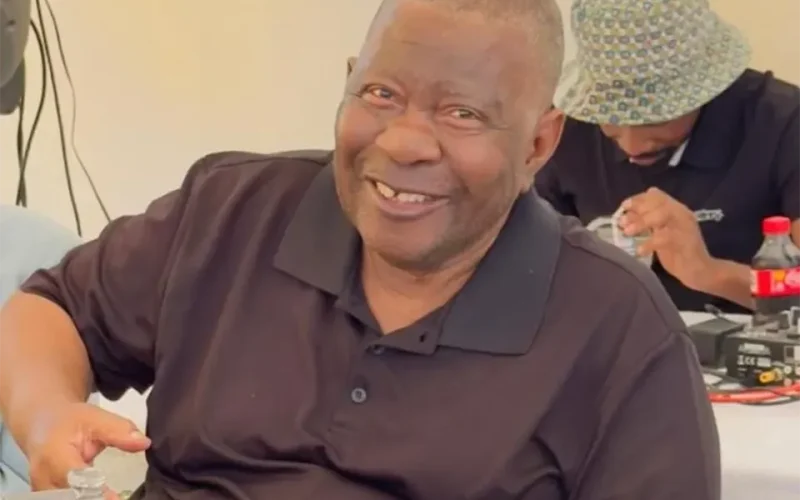
THERE is a particular kind of person who walks into a room and does not immediately demand that the room rearrange itself around them. They listen before they speak. They ask questions they do not already know the answer to. They give credit freely and absorb blame quietly. Joe Latakgomo was that person. And in a profession that can seduce even the most grounded souls into self-importance, he remained – to the very end – a man of rare and quiet power.
He was born in Pretoria on 13 January 1948, the same year the apartheid government codified racism into law and attempted to write the future of millions of Black South Africans in the ink of humiliation. But Attridgeville, the community that shaped him, had its own ink – and Latakgomo would spend a lifetime writing with it.
He began as so many great ones do: hungry, curious, and willing. A freelance reporter, learning the trade by doing it, before joining The World newspaper in 1967. What followed was not merely a career. It was a calling answered with everything he had. He rose through the ranks with the quiet determination of a man who understood that journalism was not about the journalist – it was about the truth, and about the people the truth belonged to.
It was at The World that he found himself standing alongside one of South Africa’s most towering figures in the press, Percy Qoboza. To serve as deputy to a legend requires a particular kind of strength – not the strength that competes, but the strength that complements. Latakgomo had that strength in abundance. His humility was not a limitation. It was his greatest editorial instrument. While Qoboza thundered with prophetic courage, Latakgomo held the ground, kept the ship steady, and ensured that the journalism they produced together was worthy of the dangerous times that demanded it. When the apartheid government banned The World in 1977 – threatened, as authoritarian regimes always are, by the simple act of telling the truth – it was a testament to the power of what that newsroom had built.
Out of that silencing came something extraordinary. In 1981, Latakgomo became the founding Editor of The Sowetan – and in doing so, proved that you cannot ban a people’s need to be heard. You can destroy a publication, but you cannot destroy the journalists who believed in it. He launched The Sowetan not with the arrogance of a man building a monument to himself, but with the quiet resolve of someone who understood that a free press is not a luxury for the comfortable. In South Africa, in 1981, it was an act of resistance. It was, in every meaningful sense, an act of love.
His career carried him far beyond those borders. He worked across the African continent with the Argus Africa News Service, and his footprints touched the United Kingdom, Japan, Hungary, and Canada – a man from Attridgeville, Pretoria, whose voice and vision crossed every boundary that apartheid had tried to make permanent. He served as Assistant Editor at The Star, where he was the lone face and voice when editorial management was lily white. Like a quiet force he was, he changed, for the better, the content of the paper. In the twilight of a remarkable career, he returned to the ethical heartbeat of the profession he loved — first as Public Editor at Avusa, then as ombudsman at Arena Holdings, and finally lending his wisdom and moral authority to the South African Press Council. Even then, even after decades of service, he did not coast. He showed up. He held the line. He cared.
But Latakgomo was never only a journalist. He was a community man, a builder of futures in the most practical and beautiful sense. On the fields of Attridgeville, alongside Jerome Sachane, Joe Dau, Elliot Makhaya, and others who shared his vision, he helped found the Pretoria Jets softball club – because he understood something that no editorial meeting could teach: that a young person with somewhere to be, something to belong to, and someone who believes in them, is a young person pulled back from the edge of a wasted life. Softball was his second language, spoken fluently and joyfully. It was no accident that he had begun his journalism journey as a sports writer – he understood sport the way he understood journalism, as a vehicle for human dignity, community, and truth.
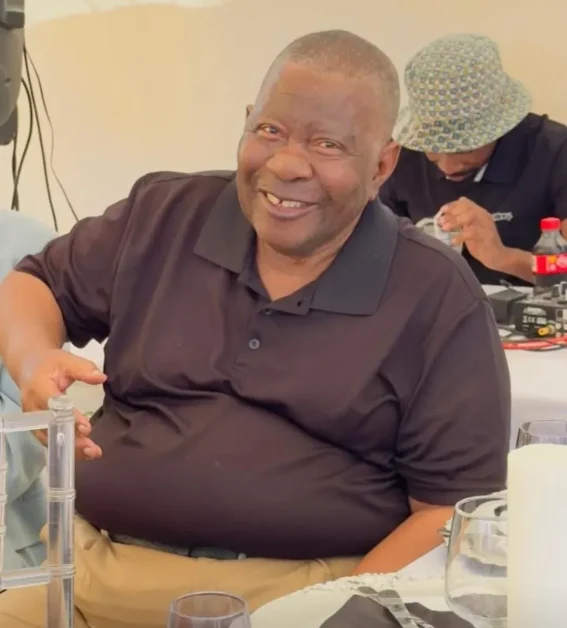
In 2009, he was inducted into the SAB Sports Journalists Hall of Fame. The South African Football Association awarded him a lifetime achievement award for his extraordinary contribution to the beautiful game. And in 2010, he gave South African football the gift of memory with his book Mzansi Magic, Struggle, Betrayal & Glory: The Story of South African Soccer – a work that ensured that those who played, suffered, and triumphed would not be forgotten.
He was warm. He was approachable. He mentored a generation of journalists who carry his fingerprints on their best work, even when they do not know it. He was, in the truest sense, a man who led by inspiration – who made the people around him feel that they, too, had something important to contribute. He never needed the glory. He was always more interested in the work than in being celebrated for it.
Latakgomo passed from this world on Sunday, 22 February 2026, at Kalafong Hospital – the hospital that serves the very community he gave so much of his life to. It is a poetic and painful symmetry.
He leaves behind a profession he elevated, a community he nurtured, a publication he brought into being against the will of an unjust government, and a generation of storytellers who are better because he walked this earth.
The bowed head is not a weakness. It is the posture of someone leaning in to listen, to learn, to lift. Joe Latakgomo bowed his head in service his entire life – and in doing so, stood taller than most.
Rest in power, Bra Joe. The press is freer because you lived. Attridgeville is stronger because you cared. And South African journalism will carry your name in its conscience for as long as it dares to tell the truth.