Our website use cookies to improve and personalize your experience and to display advertisements (if any). Our website may also include cookies from third parties like Google Adsense, Google Analytics, and Youtube. By using the website, you consent to the use of cookies.

Men still dominate Uganda’s party politics – women’s participation is mostly cosmetic

Men still dominate Uganda’s party politics – women’s participation is mostly cosmetic

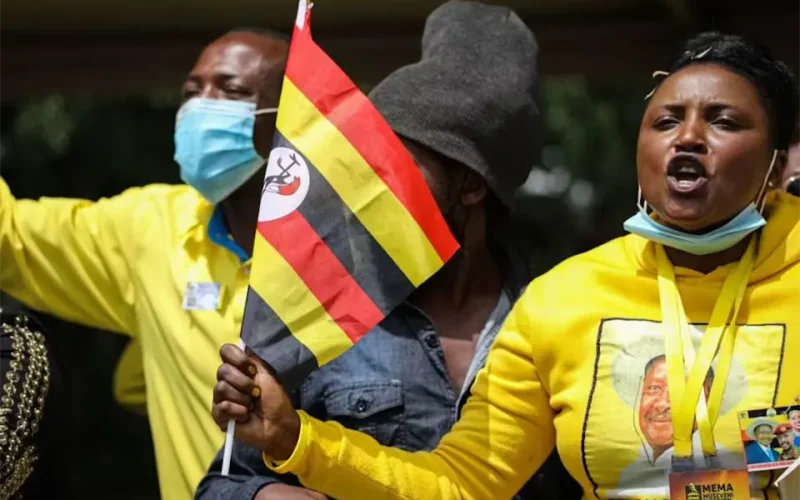
ELECTORAL gender quotas in Uganda – first introduced in 1989 – have increased women’s numbers in Uganda’s parliament to 34%. Today there are 189 women out of 557 members of parliament. But women politicians in Uganda continue to be restricted to minority representation. They are constantly battling stereotypes that seek to maintain the status quo of male dominance in political spaces. The electorate has additionally grown accustomed to believing that since women have seats reserved for them, they should stay out of the race for open seats. One of the reasons for this continued marginalisation is that the country’s political…
Read More
What is a secular state? How South Africa has tried to separate religion and politics

What is a secular state? How South Africa has tried to separate religion and politics

THE shifting relationship between state and religion has historically been a contested space and the focus of much scholarship. It is important for observers to understand this unstable boundary so that neither political nor religious actors undermine democratic freedoms. Calvin D. Ullrich, a theologian and philosopher of religion, examines the evolution of the state-religion context in South Africa. South Africa is often referred to as a ‘secular state’. What’s the background? The primary feature of a secular state is political secularism, which is the attempt to draw distinctions between state and religious institutions and their activities. According to this definition,…
Read More
South Africa bids farewell to trailblazing jurist and human rights champion Justice Yvonne Mokgoro

South Africa bids farewell to trailblazing jurist and human rights champion Justice Yvonne Mokgoro

WE gather here today to lay to rest a great South African, a champion of human rights, an outstanding jurist and an icon of gender justice.  Through her life and through her work, Imbokodo Justice Yvonne Mokgoro was a pioneer.   In so many respects, her legacy is a tribute to resilience, to principled activism and to steadfastness, no matter how great the obstacle or how difficult the climb.  In 1994, upon its inception, she became the first black woman to be appointed to the Constitutional Court.  Reaching that pinnacle was not a simple progression. It did not come easy.  It…
Read More
Drained but proud: how it felt to organise South Africa’s first democratic election in just 4 months

Drained but proud: how it felt to organise South Africa’s first democratic election in just 4 months

SOUTH Africa’s historic 27 April 1994 national election marked the end of more than three centuries of colonial and apartheid rule. The period leading to the election was one of heightened political tension, with opponents of change working hard to derail the process through deadly violence. Political scientist Kealeboga Maphunye asks Mandla Mchunu, first deputy secretary of the adjudication secretariat of the Independent Electoral Commission of South Africa, about that moment. How difficult was it to organise the 1994 elections? Imagine building an aircraft while flying it at an incredible speed over a short distance, towards a destination where multitudes…
Read More
Over 26 million South Africans get a social grant. Fear of losing the payment used to be a reason to vote for the ANC, but no longer – study

Over 26 million South Africans get a social grant. Fear of losing the payment used to be a reason to vote for the ANC, but no longer – study

SOCIAL grants to reduce poverty feature prominently in the campaign promises of political parties in South Africa’s 2024 national and provincial general elections, set for 29 May. The country’s social grants system is one of the largest in Africa in terms of number of beneficiaries. Research shows that this has helped reduce poverty. About 26 million to 28 million social grants have been paid every month to children, older persons, people with disabilities and the unemployed. The country’s population is 62 million. While some political parties propose expanding the grants system, others propose increasing the amounts. On the campaign trail,…
Read More
What are the key issues for investors in South Africa’s 2024 election?

What are the key issues for investors in South Africa’s 2024 election?

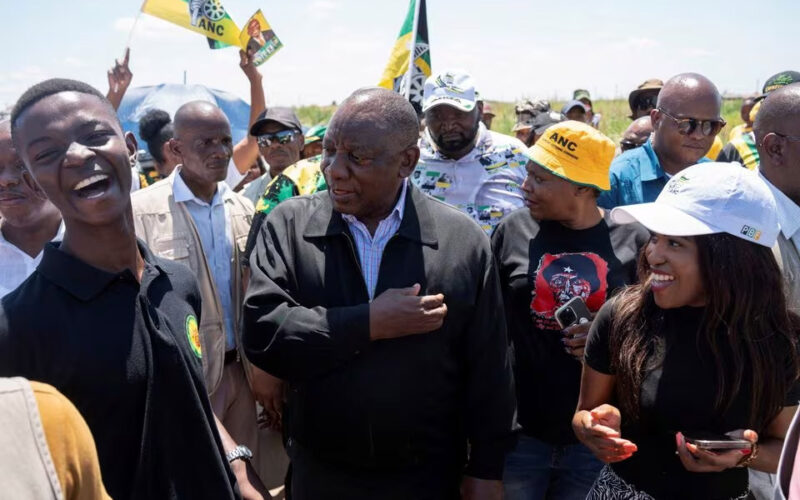
South Africans vote in a national election on May 29 and, for the first time since the end of apartheid 30 years ago, polls suggest the ruling African National Congress party (ANC) is at risk of losing its parliamentary majority. Investors are paying close attention. WHY IS A MAJORITY IMPORTANT? If the ANC gets less than 50% support it would have to seek one or more coalition partners to govern Africa's most industrialised economy. The new parliament will choose South Africa's next president. The new government will set fiscal and economic policy for the coming five years, and investors want to see if the…
Read More
Angola reflects the dangers of former liberation movements forgetting their roots

Angola reflects the dangers of former liberation movements forgetting their roots

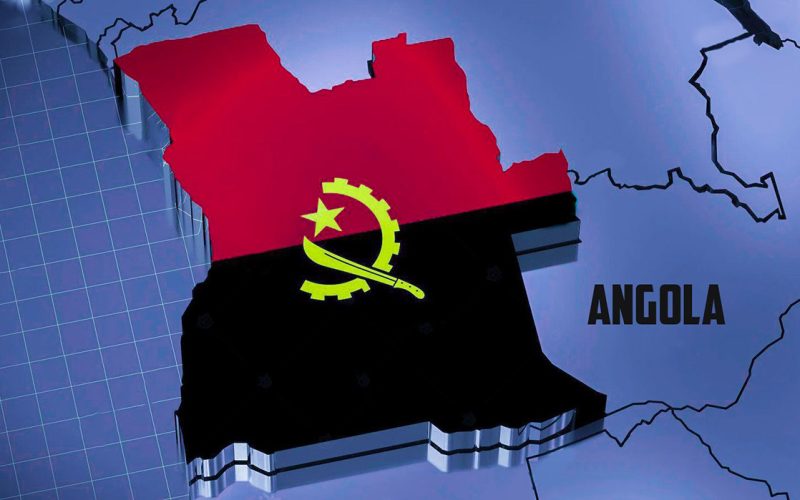
ABBEY MAKOE ANGOLA's Western-aligned foreign policy has gradually come under huge pressure from the country’s workforce, particularly the civil servants, or government employees. In March, and April, they took to the streets in protest over what they deem severe taxes and lower wages. The next nation-wide strike by the trade unions is scheduled to take place in the first week of June. The monotonous regularity with which workers are taking to the streets, often in spite of the “no-work no-pay rule”, reflects the extent to which the proletariat of the society has become displeased with the political elites. Angola is…
Read More
South African elections: research explores how disillusioned ANC supporters might use their vote

South African elections: research explores how disillusioned ANC supporters might use their vote

THE African National Congress (ANC) has been in power since South Africa became a democracy in 1994. The party has been electorally dominant since then, reaching a peak of 69.7% of national votes in 2004. However, support for the party has declined sharply since the 2014 national and provincial elections, reaching a low of 57.5% in 2019. Negative attitudes towards the ruling party have depressed its vote tallies, increased abstention, and widened potential support for opposition parties. Opinion polls have consistently shown that the ANC will not win the more than 50% of votes required to form a government by…
Read More
A letter from two leading African authors to the president of Senegal

A letter from two leading African authors to the president of Senegal

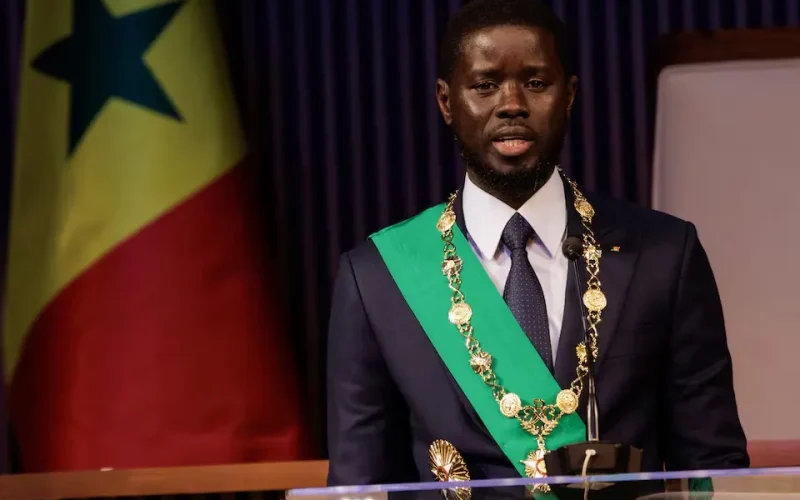
YOUR Excellency President Bassirou Diomaye Diakhar Faye Allow us to introduce ourselves to you before getting to the heart of whatwe have to say. We are Ngugi Wa Thiong’o from Kenya and BoubacarBoris Diop from Senegal. Both novelists and essayists, our best-knownbooks are respectively Decolonizing the Mind: The Politics of Language inAfrican Literature. (1986) and Murambi, le livre des ossements (2000), about thegenocide perpetrated in 1994 against the Tutsis in Rwanda. But the mostimportant thing to emphasize with regard to the motivations behind thisopen letter is that we have not exclusively published works in English andFrench – the languages of…
Read More
The international financial system is deepening inequality

The international financial system is deepening inequality

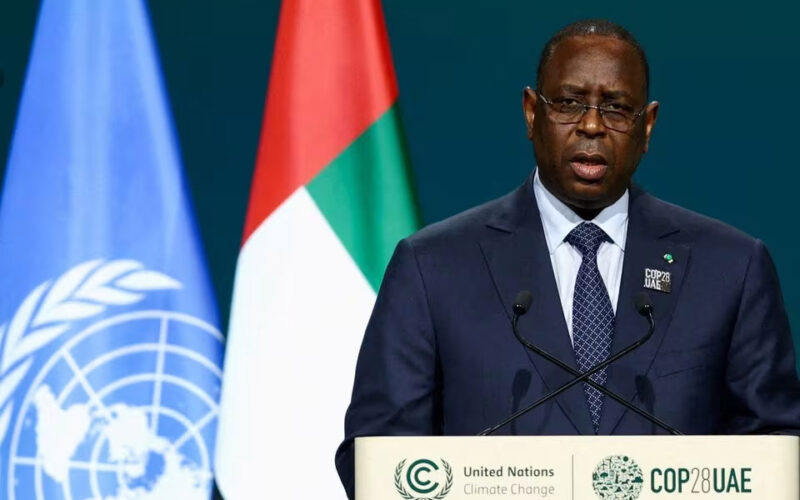
MACKY Sall is the former President of Senegal (2012-2024) and Special Envoy for the Paris Pact for People and the Planet. When I reflect on my 12 years as president of Senegal, one lesson stands out: how stacked the international financial system is against developing countries like my own.  No matter how sound our economic policies are, we are judged a risky bet. Our access to capital is both restricted and eye-wateringly expensive. Our fiscal and monetary policies are dictated, in effect, by far-away central banks. And when we try to protest, we discover that we have no voice. It…
Read More