Our website use cookies to improve and personalize your experience and to display advertisements (if any). Our website may also include cookies from third parties like Google Adsense, Google Analytics, and Youtube. By using the website, you consent to the use of cookies.

Inside the Presidency’s quiet anti-corruption machine

Inside the Presidency’s quiet anti-corruption machine

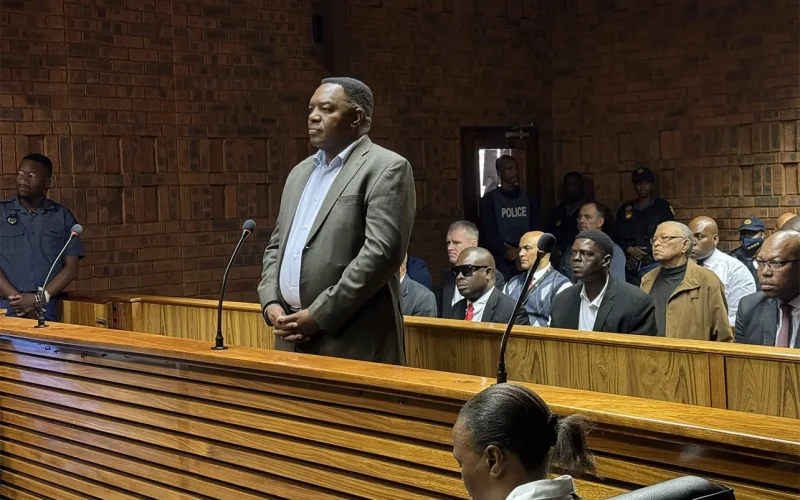
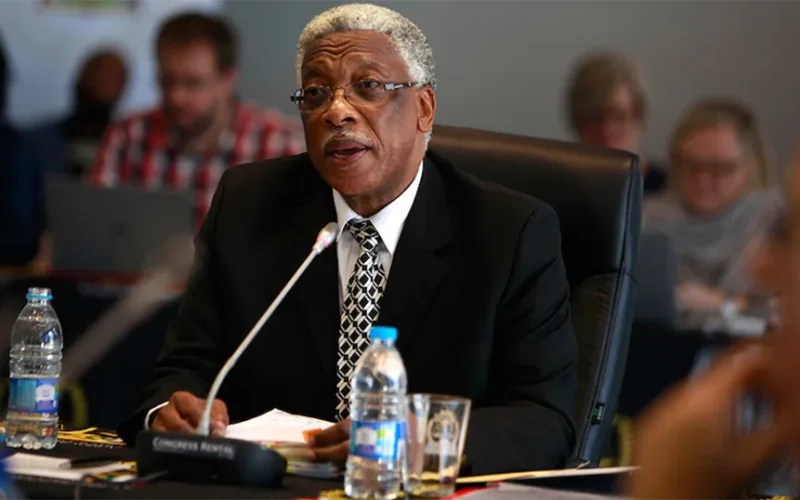
FAR from the glare of courtroom cameras and the political theatre that has come to define South Africa's anti-corruption conversation, a different kind of battle is being waged inside the Presidency. It is unglamorous, iterative, and largely invisible to the public - but those closest to it insist it is working. Jonathan Timm, a senior official in the South African Presidency's anti-corruption coordination function, laid out the architecture of this effort at an Institute for Security Studies seminar in Johannesburg, describing a set of interlocking mechanisms that together constitute what may be the most coherent systemic anti-corruption framework the country…
Read More
AI‑driven border surveillance is spreading across west Africa. What this means for migrants’ rights

AI‑driven border surveillance is spreading across west Africa. What this means for migrants’ rights

WEST Africa, as a region, has long had one of the most mobile populations in the world. Since 1979, the Economic Community of West African States (ECOWAS) has allowed citizens of its member states to travel freely across borders without visas. This freedom of movement has helped support regional trade, labour mobility and social ties. But a technological shift is changing how borders operate, with important implications for human rights. Across West Africa, governments are introducing biometric identification systems, facial recognition cameras and artificial intelligence tools at airports and land borders. As a researcher in international law, human rights and…
Read More
The transatlantic slave trade is the gravest crime against humanity – why the UN declaration matters

The transatlantic slave trade is the gravest crime against humanity – why the UN declaration matters

THE resolution passed by the United Nations General Assembly on 25 March 2026 seeking recognition of the transatlantic slave trade as the “gravest crime against humanity” potentially creates a broader definition of crimes against humanity in international law and allows for restitution claims against perpetrators. The resolution could elevate the legal and moral standard for what counts as the worst crimes against humanity, and compel more people to legally pursue reparations or compensation cases and thus deter such crimes. Proposed by Ghana, it was adopted with 123 votes. The United States, Israel and Argentina voted against it. Fifty-two countries abstained,…
Read More
A force forged in the crucible of African development

A force forged in the crucible of African development

IN the corridors of the , system, where ambition is plentiful but transformative action rare, Daphine Hazvibvi Muzawazi has become something of an institution in herself. Over a decade of tireless service to the continent's most consequential development architecture, she has evolved from an ambitious young technocrat into one of the AU family's most formidable — and quietly indispensable — strategic minds. Born in Zimbabwe, schooled in agribusiness at Solusi University in Bulawayo and later at the University of Pretoria, where she earned her Master of Science in Agricultural Extension and Rural Development, Muzawazi entered the development arena with a…
Read More
Returned – with dignity – to the land from which colonial butchers stole their bodies, their names and their very humanity

Returned – with dignity – to the land from which colonial butchers stole their bodies, their names and their very humanity

THE hills and granite-like boulders stand as sentries around the Kinderle area outside Steinkopf in the Northern Cape. The ground is sandy and loose, the shrubs are xerophytic, able to withstand the harsh environment and the heat. Below the boulders is the mass grave containing the remains of 32 Nama children killed in an intercommunal strife in the second half of the 1800s. It is a desolate area with no visible community in sight. The children’s graveyard is protected by a stone wall, stacked with no mortar, just like the Great Zimbabwe Monument outside Masvingo in Zimbabwe, and the Dzata…
Read More
“They were not slaves. They were human beings. The world must finally say so”.

“They were not slaves. They were human beings. The world must finally say so”.

TRUTH begins with language, with the power that words hold to shape consciousness, to shift perspective, to propel action. I therefore offer this truth as a starting point: There is no such thing as a slave.There were human beings who were trafficked and then enslaved by people who believed they could own those human beings as chattel, as their personal property. Some will hear this and think that I am splitting hairs.“Isn’t that the same thing?” they might ask. No. It’s not at all the same thing. Not if you acknowledge an individual’s humanity. Not if you respect an individual’s…
Read More
Namibia: the history of a country shaped from a rich and traumatic past

Namibia: the history of a country shaped from a rich and traumatic past

NAMIBIA might not be well known in many parts of the world. But the arid southern African country has an extraordinary history. Rich in indigenous cultural diversity, Namibians lived for more than a century under German and South African rule. Their anti-colonial resistance shaped the country from 1960 to independence on 21 March 1990 and beyond. Henning Melber is a political scientist who works with this history. In numerous books, he has tried to understand Namibia. His latest effort is a history for German-speaking readers. We asked him about it. What is the German connection? Namibian and German histories have…
Read More
The night they killed Lumumba

The night they killed Lumumba

THE man they most feared was already broken when they loaded him onto the plane. His face was swollen, his shirt torn, his wrists bound behind his back with rope that had cut into his skin during three weeks of beatings. Patrice Émery Lumumba - the thirty-five-year-old schoolteacher from État Indépendant du Congo-Belge who had become the continent’s most electrifying voice for liberation - was being flown not to safety but to slaughter. He knew it. Every man on that aircraft knew it. And that, perhaps, is the most unforgivable truth of all. It was the evening of 17 January…
Read More
Senegal stripped of title: Afcon ruling is lawful, but it puts Caf’s reputation at risk

Senegal stripped of title: Afcon ruling is lawful, but it puts Caf’s reputation at risk

THE appeals board of African football’s ruling body, the Confederation of African Football (Caf), on 17 March overturned the outcome of the 2025 Africa Cup of Nations (Afcon) final. Afcon is the continent’s biggest tournament. On 18 January, Senegal won 1-0 in extra time against Morocco in Rabat. But two months down the road, Caf declared a 3-0 score in favour of Morocco, citing violations of Articles 82 and 84 of its regulations. (Three points are the mandatory legal penalty.) Senegal has announced it will appeal to the Court of Arbitration for Sport. As a scholar of information and communication…
Read More
Zanele Muholi: queer South African visual activist cements their global influence

Zanele Muholi: queer South African visual activist cements their global influence

SOUTH African visual activist Zanele Muholi’s celebrated work centres the lives and experiences of Black lesbians and trans people. For more than two decades, Muholi has used photography to courageously open space for queer representation within and outside of art galleries in South Africa and across the world. Muholi uses the non-binary pronouns they/them/their and prefers the term “visual activist” over “artist” or “photographer”. This makes it clear that their work is explicitly political and is intended to bring about change through transforming how Black LGBTIQ+ people are portrayed and perceived. Together with the participants who feature in their portraits,…
Read More