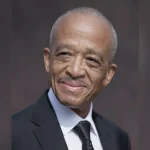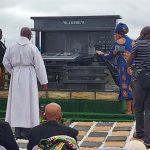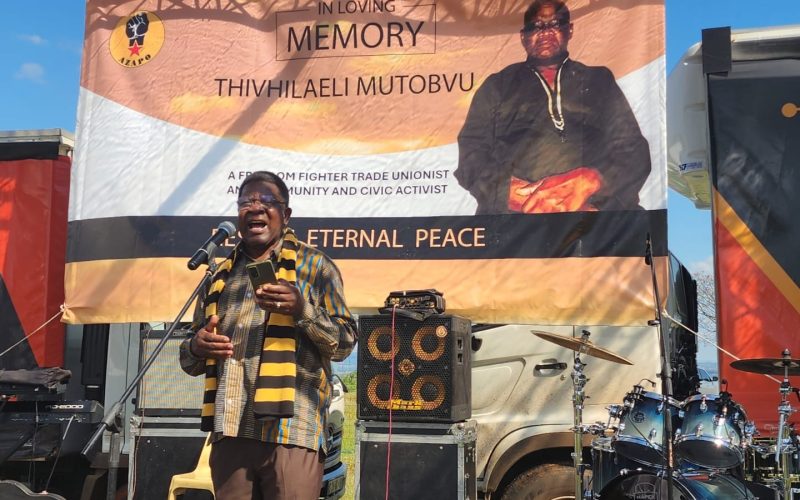
I met Comrade Thivhilaeli Mutobvu during the trying times of the struggle to free black people from the yoke of white oppression, and I came to work with him in many ways. We both belonged to the Azanian People’s Organisation (AZAPO). We were committed cadres of the Black Consciousness Movement (BCM).
During that period, AZAPO was engaged in implementing one of its fundamental pillars – the dismantling of all the then Bantustans, also called Homelands, which the Apartheid regime designated for what it termed the Bantu people. It is now history that, at the time of our meeting, Mutobvu and I had already been declared citizens of the so-called Republic of Venda, which we refused to recognise. We regarded the Bantustans as extensions of the white Apartheid oppressive regime.
Before turning to other aspects of Mutobvu’s struggle activities, allow me to explain what motivated him and his AZAPO comrades to embark on such a mammoth undertaking. At AZAPO’s founding meeting, delegates adopted the broad principles of Black Consciousness philosophy. Through this philosophical outlook, Mutobvu and other Black Consciousness members were able to identify and define oppression and exploitation in their historical and structural terms, which enabled them to recognise the Apartheid system of racism and capitalism as operating directly against the aspirations and interests of the black majority. AZAPO further adopted a policy of non-collaboration with the Apartheid government and non-cooperation with all government-created platforms and institutions – the Bantustans, Bantu Local Authorities, and the Tri-Cameral system designed to co-opt the so-called Indian and Coloured communities. Under this policy, individuals who consciously collaborated with these government-created structures could not be part of AZAPO.
For those who never understood why Mutobvu was arrested and tortured repeatedly by the Venda Bantustan police – why such a humble, caring man and devoted father was regarded as an enemy by the system – I hope that from today, even those who once wished him harm will understand the noble cause for which he stood.
Those who knew Mutobvu would have recognised in him a self-reliant person who depended on his own businesses for a livelihood. He lived here at Makwarela. After joining AZAPO in 1984, he devoted most of his time to mobilising people against the Apartheid regime and its Venda Bantustan. The dismantling of Bantustans was a central pillar of AZAPO’s programme against the balkanisation of our country, Azania. During this period, he also involved himself in poverty-eradication projects in villages in what we then called the far North region of the country. This strategy was designed to demonstrate that, without handouts, poor communities could develop themselves and become self-sufficient, to free black people from a dependency syndrome and to instill, psychologically, a sense of independence. Mutobvu and his AZAPO comrades were acutely aware that the white-controlled capitalist system was engineered to make black people permanent job-seekers. To that end, the Black Consciousness Movement held that total liberation could not occur until black people were able to stand on their own and become creators of wealth and employment.
Pursuing this fundamental goal of building self-reliant communities and restoring their dignity, Mutobvu understood that it was not enough to shout from the rooftops in the hope that the white oppressive regime would simply relinquish power. He therefore operated at multiple levels of political activism – organising the youth, trade unions, civic organisations, and community development projects, all under the AZAPO umbrella.
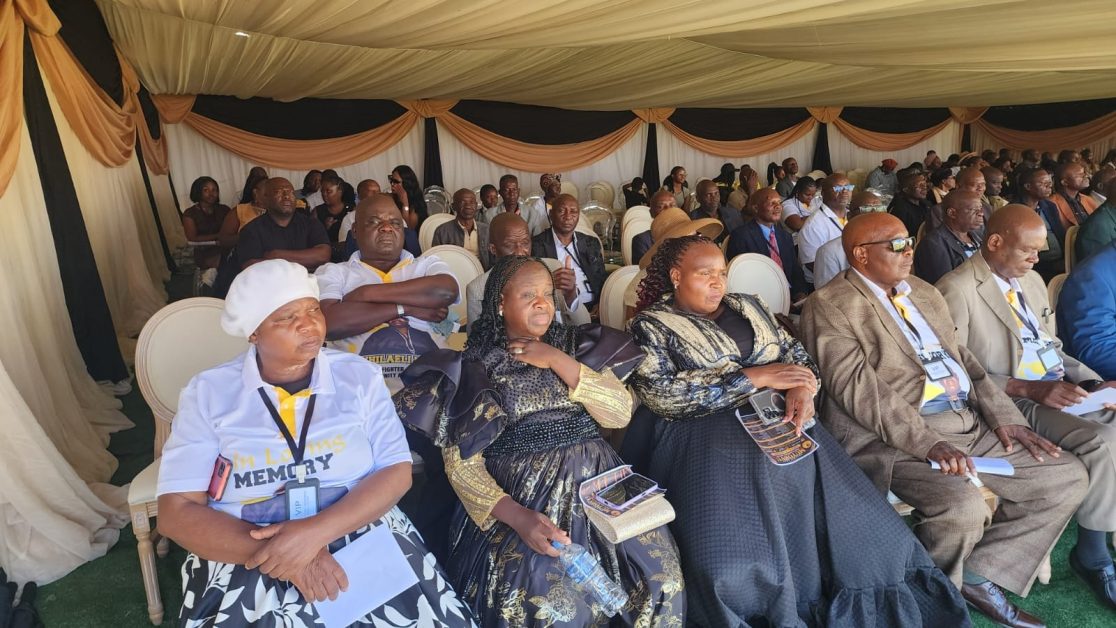
Mutobvu was also keenly aware that the regime would not relinquish power through verbal attacks, mobilisation, and marches alone. In his determination to press the regime, he came to the conclusion that armed revolution was another weapon the system would understand. He subsequently left the country for military training under the auspices of the Azanian National Liberation Army (,), the armed wing of the Black Consciousness Movement of Azania (BCMA) in exile.
He recruited many young people and sent them for military training in places such as Libya and Zimbabwe. Many were infiltrated back into the country to continue their daily activities — attending school if they were still of school age. The underground strategy included organising employment for those who needed it through AZAPO structures, while conducting guerrilla work at night. When it became clear that sending people abroad for military training was both time-consuming and risky, Mutobvu and his comrades resolved to train recruits inside the country. They scouted suitable terrain in what was then the Northern Transvaal. Training sessions were conducted in the Gaba Mountains, not far from Thohoyandou. The last training took place in a cave east of Polokwane while negotiations between the ANC and the regime were already underway – consistent with the BCM’s position that negotiations alone were incapable of transferring land and political, social, and economic power from the white minority to the black majority unless accompanied by unified liberation forces and continued military activity. The BCM regarded the ANC’s negotiated path as a betrayal of the liberation struggle’s objectives.
In order to fulfil another BCM objective – the total involvement of the oppressed in their own emancipation – Mutobvu and his comrades formed organisations such as the Allied Workers Union (AWU), the Black Allied Workers Union (BAWUSA), and the Black Educationists Convention (BECON). These unions and civic bodies served as platforms to confront the regime and also as cover for trained guerrillas. While Mutobvu was busy with preparations to overthrow the regime, the ANC and the National Party announced talks about talks, which eventually led to the CODESA compromise negotiations.
When the negotiations concluded, Mutobvu – through AZAPO – took the view that the CODESA agreements had shortchanged the black majority and that a new revolution was necessary to realise the ideals of black liberation. Some of you may argue that in 1994 black people obtained their freedom; that South Africa today is fundamentally different from Apartheid South Africa; that racial laws have been repealed; that black and white people now share the same public spaces, schools and residential areas; that there is freedom of speech and a range of other freedoms; and that we have what is described as one of the finest constitutions in the world.
Mutobvu would have acknowledged those arguments at face value – but he would have contested their validity and offered a deeper meaning of liberation and freedom. He would have pointed out that the negotiated settlement produced by CODESA has not delivered the freedom envisaged for black people. He would have argued that what we live under now is merely an amelioration of the old Apartheid system, dressed up in a range of constitutional freedoms. He would have further observed that a system does not die simply because its laws have been repealed – a system dies only when its constitutional architecture is dismantled and replaced by a new one. He would have reminded us that people cannot eat constitutions; that when there is no water, no food, and no service delivery, no constitution – however acclaimed – can supply those needs. He would have pointed out that 32 years have passed, and the celebrated constitution has been unable to deliver jobs to the black majority, particularly to the youth. Some 42.1% of South Africans are unemployed; 28 million people – nearly 45% of the population – survive on social grants; proper roads are absent from many rural areas, and those in urban centres are riddled with potholes. He would have argued that joblessness, poverty, inadequate sanitation, gang violence, and gender-based violence have not restored dignity to black people, and that living on handouts dehumanises them.
Those who believe we have achieved the best democratic dispensation would do well to heed these words of wisdom from Amilcar Cabral:
“Always bear in mind that the people are not fighting for ideas, for the things in anyone’s head. They are fighting to win material benefits, to live better and in peace, to see their lives go forward, to guarantee the future of their children.”
Measured against that standard, it matters little how lauded the South African constitution is among elites and their international supporters when the poor who fought alongside Mutobvu to create a liberated Azania still live in the same material conditions – if not worse – than those that prevailed under Apartheid.
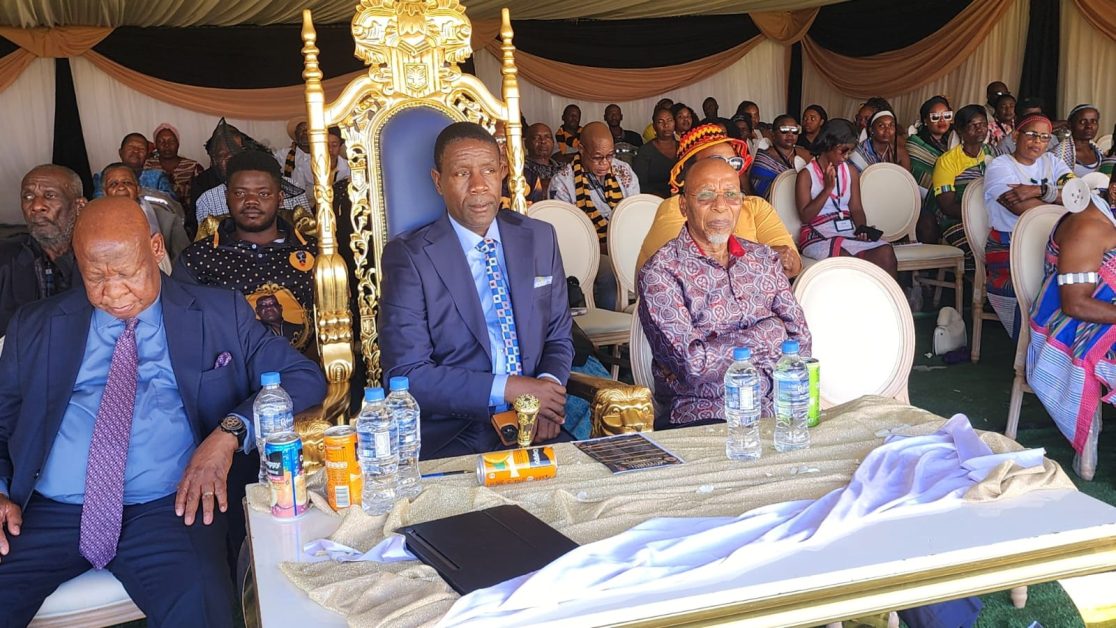
Mutobvu lived by clear principles and objectives, and his attitude of mind and way of life demonstrated that he sought three fundamental achievements for black liberation to become a reality:
- The liberation of black people from white oppression and the establishment of authentic black majority rule – specifically to break the shackles that bound black people to perpetual servitude. We now have a black government, yet those shackles still hang around the necks of the black majority.
- The return of the land to its rightful owners. As I speak, 72% of our country’s land remains in the hands of whites – the former Apartheid beneficiaries and their descendants. In other words, Mutobvu’s objective of land reconquest has not yet been achieved.
Our greatest challenge today is the expectation that meaningful change can be achieved within a constitutional framework never designed to free black people. What is called the new order is, in reality, an amelioration of the old order, dressed in various freedoms and the right to vote. Measured against Amilcar Cabral’s insight, this new order has failed to deliver material benefits to the black majority, failed to produce better lives, failed to secure peace and failed to stop rampant crime. Women can no longer walk freely in the land of their birth. Black people’s lives are not moving forward, and there is no guaranteed future for our children. Criminals run schemes of every kind with impunity, and the police are deeply compromised. Teachers’ posts and other public-sector positions are now for sale. Corruption has become systemic and is now a way of life; nepotism and tenders for the connected are the order of the day.
The Azania envisaged by Mutobvu demands a new order that brings with it new societal relationships. Instead, the black majority is being asked to reconcile with the values and norms of the past system – to reconcile with poverty, joblessness, inferior education, inequality, and unequal life chances. Under these circumstances, Mutobvu would have counselled the poor never to surrender their future to those who ask for another chance. Those seeking another chance should be reminded of the 32 years of chances that have brought misery to ordinary people and continue to do so.
As we salute this soldier, we must remember that true liberation and genuine freedom cannot be achieved until a new, liberatory constitutional order is established. Comrade Thivhilaeli Mutobvu was a revolutionary, a committed Black Consciousness exponent and practitioner – a Zim-Zim for life.
- This is an edited version of the inaugural Thivhilaeli Mutobvu Memorial Lecture delivered on May 01 2026, at Makwarela Stadium, Thohoyandou, in Limpopo by Pandelani Nefolovhodwe, former President of AZAPO.