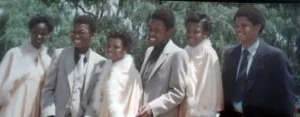
BLACK weddings in South Africa are an interesting phenomenon. You will normally have what is called a white wedding, suits for men, and the white dress for women.
Then there will be what is called a traditional wedding, either before the white or after, the sequence doesn’t seem to matter. In the traditional wedding both the men and women wear what is regarded as traditional clothing in that area or that clan or community.
But even in the white wedding, after the priest, vows and pictures are done, there is a change of clothing to more relaxed attire, mostly traditional with women either wearing SeShoeshoe and the men in matching shirts.
The whole affair is an attempt to marry the two traditions, if you will pardon the pun.
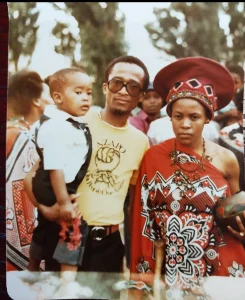
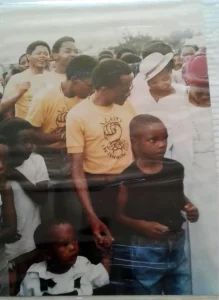
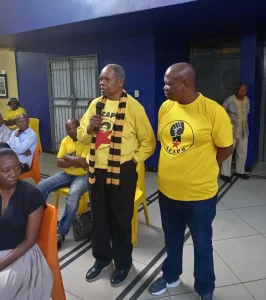
Not so for Nthibedi Sammy Tloubatla’s wedding to Sbongile in Soweto in 1979. For this diehard black consciousness activist, once the suits were done the changeover to traditional clothing meant the groom and his male escorts changed to T-shirts of the Azanian People’s Organisation (Azapo).
Tloubatla had been elected the founding Secretary General of Azapo just months earlier following the banning of Black Consciousness organisations by the then government on October 19, 1977. The BCM had emerged in 1967 following the banning of the ANC and PAC in 1960. Between 1960 and 1967, there was a lull in overt political activity.
The 1977 leaders were not going to allow for that vacuum again, hence the immediate formation of Azapo. Accepting leadership positions at that time equaled to an application for detention by the security police. But that is exactly what Tloubatla did.
And to top it all, to use his wedding as a mobilizing tool that sent the message to everyone present that Aluta Continua, the struggle continues, was to show the oppressive system the middle finger. That was Tloubatla, or Sammy as everyone who knew him called him. For him it was freedom or death, victory is certain.
The lineup of his male companions at the wedding was a who-is-who of the political struggle at the time, there was the now late George Wauchope, who was Azapo Publicity Secretary; June 16 1976 student leader and ex political prisoner Thabo Ndabeni; and Pule Monama a seasoned BC activist.
The T-shirts, with the words “AZAPO One People One Azania”, a clenched fist with a dangling chain on it in the middle, was a statement to the oppressive system that we shall mobilise from any platform, anytime, weddings not excluded.
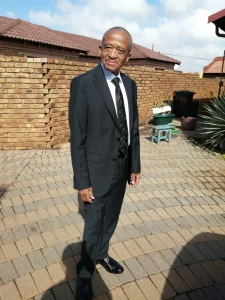
That was the character of the diminutive Tloubatla, a consummate humanist whose political stature belied his height which was just over a metre, if that. He cared for not just the theoretical freedom of the clichéd “our people”, but loved and worked for real people and always made a positive difference to the lot of black people.
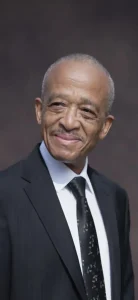
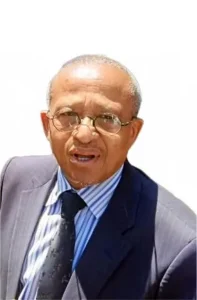
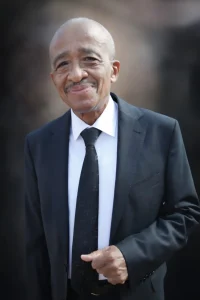
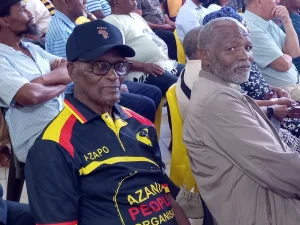
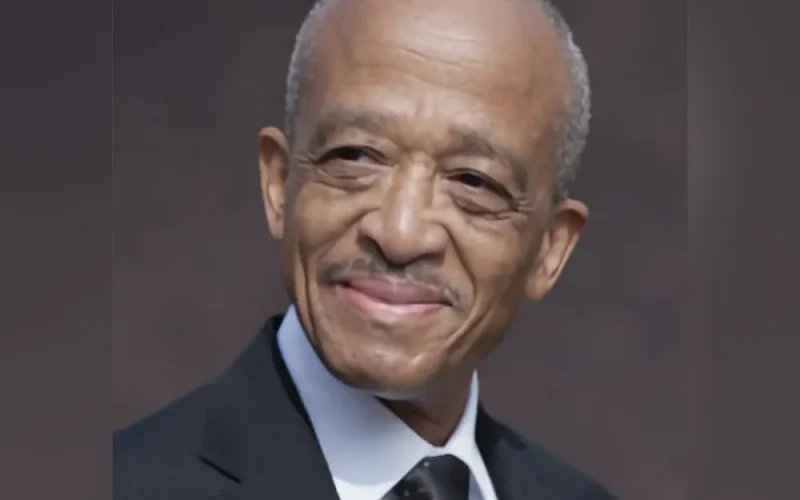
Tloubatla died at 1 Military hospital in Tshwane on Monday March 30 after months of treatment for cancer. Since his passing, tributes have been pouring in on various platforms from people who were beneficiaries of Tloubatla’s love, care and legal expertise. Azapo in its message said “In his passing, we have lost not only a leader, but a repository of revolutionary knowledge and experience and unwavering patriotism”. Anglican Bishop Emeritus Jo Seoka, said “Go well, people’s lawyer. You fought a good fight and we salute you”. Artist and Poet, and BCM activist, Ujebe Masokoane wrote “Sammy my brother, rest well and know that you were one of the pillars of our movement.” Kingsley Tloubatla wrote: “Uncle Sammy belongs to that rare category of individuals who gave absolutely everything to the struggle of the South African people. His life was the embodiment of selfless dedication to freeing his people from the yoke of apartheid oppression. It can be said without fear of contradiction that our victory over the brutal system would not have been possible without the unwavering commitment of indispensable patriots like him.” Writer Tshepo Koka, son of the late BC trade unionist, Dr Drake Koka, in a poem titled An Ode to Uncle Samuel Nthibedi Tloubatla wrote:
“O towering spirit in measured frame
Son of the soil, shaped in the crucible of awakening
Where Turfloop’s winds carried the fire of becoming
And the voice of Black Consciousness
Stirred the marrow of young lions
You walked among giants, yet needed no height
For yours was the stature of mind
The unyielding spine of conviction
The quiet thunder of one who knows
That dignity is not bestowed
It is claimed, lived, defended
But who is this man about whom so much is being said?
Tloubatla was born in Alexandra township on May 28 1951. He was the son of Madidimalo Clement Tloubatla and Musoni Winnie Tloubatla. He did his primary schooling at Malokong Primary School in the Mokerong district, Limpopo, where he passed his standard 6 with distinctions. He matriculated from Setotoloane High School and then enrolled at the University of the North (Turfloop).
It was here that he emerged as a prominent student leader within the SA Students Organisation (SASO) and a political activist in the Black Consciousness Movement. He served as Interim President of the Student Representative Council (1974–1975), a period marked by heightened political tension after the expulsion of Onkgopotse Tiro in 1972.
He played a key role in the organisation of the “Viva Frelimo” rallies in 1974, celebrating the victory of Frelimo forces over the Portuguese colonial power and the advent of independence of Mozambique under Samora Machel.
Tloubatla was at the forefront of a generation that reshaped Black political identity and resistance and a new militancy that precipitated the 1976 student uprisings that started in Soweto almost 50 years ago.
For this, he was arrested alongside fellow activists and became one of the defendants in the historic SASO/BPC Trial (1975–1976), where the philosophy of Black Consciousness itself was effectively placed on trial.
After the banning of Black Consciousness organisations on “Black Wednesday” in 1977 and the murder in detention of the founding father of BC, Steve Biko, Tloubatla remained steadfast in his commitment to the movement.
This led to numerous detention spells, which he said in his application for his military veteran status that “I lost count of the number of times I was detained.” In his capacity as Secretary General of Azapo, Tloubatla and the late Letsatsi Mosala were the liaison between Azapo and its External wing, The Black Consciousness Movement of Azania (BCMA).
In this role, he was responsible for the relocation of ex Robben Island prisoner Mosibudi Mangena, from his banishment house in Mahwelereng, Limpopo, to exile, where he was called to lead the BCMA. Mangena later became a cabinet minister in President Thabo Mbeki’s government.
Tloubatla travelled extensively between SA and Botswana to consult with the BCMA leadership as its military wing, the Azanian National Liberation Army (Azanla) was formed. He also became a courier for information and weapons into the country and for housing Azanla guerrilla fighters when they were in the country.
It was this work that was recognised by the Department of Defence and Military Veterans and which entitled him, as a military veteran, to treatment at 1 Military hospital.
Tloubatla completed his legal studies and practiced privately defending political activists in the main. Post 1994 he used his legal expertise to help ex freedom fighters in accessing their pension funds. He also served on the Parole Board of the Department of Correctional Services.
Tloubatla was a complex character too. He combined the BC militancy with a high sense of humour, and loved comics and enjoyed the Andy Capp strip which featured a British layabout who lived on the dole and whatever his hardworking wife earned.
Besides donning Azapo Tshirts at his wedding, one friend tells the story that when his first born son was born, Tloubatla had wanted to name him Azapo. Sibongile put her foot down and Tshepo, the son became, meaning trust and faith that freedom would come.
He was also able to move from espousing Black Consciousness in one moment to the identity politics of the Lemba clan, who assert a linkage with Jewish history, without creating a conflict with his broader anti tribalistic political stance. In his latter years, he had achieved the status of Ishe or The Elder, within the Lemba clan.
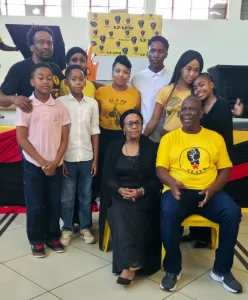
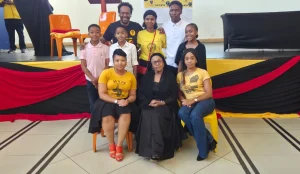
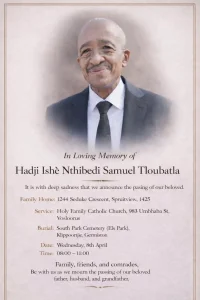
He leaves behind his wife, Sibongile, and three children, Tshepo, Lerato, and Karabo and five grandchildren. He will be laid to rest at the Elspark cemetery in Germiston on Wednesday, April 08, 2026, following a funeral service at the Holy Family Catholic Church in Spruitview, Ekurhuleni.