Our website use cookies to improve and personalize your experience and to display advertisements (if any). Our website may also include cookies from third parties like Google Adsense, Google Analytics, and Youtube. By using the website, you consent to the use of cookies.

Will oil prices ever truly go back to ‘normal’?

Will oil prices ever truly go back to ‘normal’?

THE fallout from the war between the United States, Israel, and Iran has dominated global oil markets. And not just because the Strait of Hormuz, which normally carries about 20% of global oil and gas, remains effectively closed to shipping traffic. Deep uncertainty about how long the disruption will continue has added a persistent “risk premium” – an extra cost built into oil prices to account for the risk of disrupted supply. Rising insurance costs, reduced ship traffic, and longer transit routes avoiding the Middle East have all added further friction to global oil supply chains. An optimist might say…
Read More
Middle East crisis deepens: UN warns of maternal despair in Lebanon, first aid reaches Iran amid Strait blockade

Middle East crisis deepens: UN warns of maternal despair in Lebanon, first aid reaches Iran amid Strait blockade

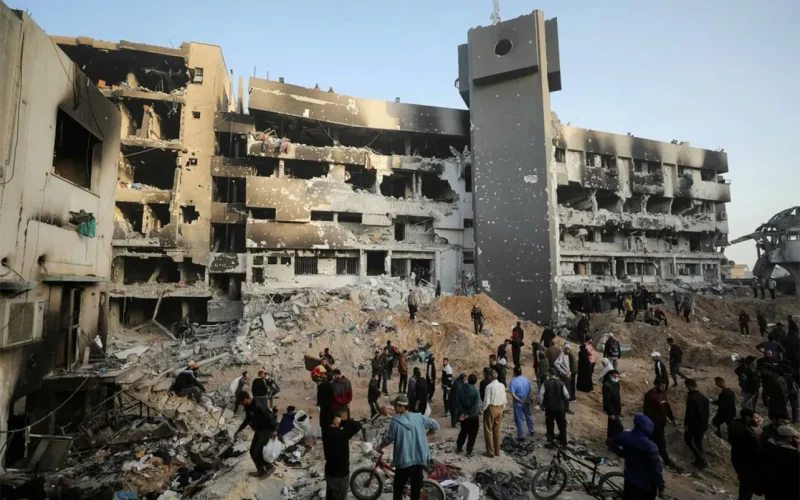
ESCALATING violence in southern Lebanon and stalled Iran talks are unleashing a humanitarian catastrophe across the Middle East, with civilian deaths surging, mass displacement, and global trade choked—threatening food security and economic stability far beyond the frontlines—as UN agencies race to deliver aid under fire. In Lebanon, Israeli ground operations intensify as the UN Security Council convenes Tuesday and Israeli-Lebanese envoys meet for the first time in Washington. Lebanese authorities report at least 2,089 deaths since March 2, with Israel's military striking 150 Hezbollah positions in the past 24 hours alone, confirming one reservist killed and three injured. The bloodshed…
Read More
The Islamabad talks were doomed to failure – and Hormuz blockade has thrown another obstacle to any Iran‑US deal

The Islamabad talks were doomed to failure – and Hormuz blockade has thrown another obstacle to any Iran‑US deal

TWENTY-ONE hours of direct negotiations. The highest-level face-to-face engagement between Washington and Tehran since the 1979 Islamic Revolution. And yet, U.S. Vice President JD Vance boarded Air Force Two in Islamabad on the morning of April 12, 2026, with no deal to end the U.S. and Israeli war against Iran, including an understanding over Tehran’s nuclear ambitions. The U.S. has since begun what it says is a blockade of any and all ships originating in Iranian ports and would interdict every vessel that has paid a toll to Iran. The collapse of the talks wasn’t the fault of bad faith…
Read More
They served their prison time. Then came deportation

They served their prison time. Then came deportation

JJ had a five-year plan to turn his life around.  After being released from prison in 2022, he completed an 18-month job training program with the Los Angeles-based organization Homeboy Industries and began working as a cook for the group’s onsite cafe. He enrolled in two different community college programs to study business administration and culinary arts. He volunteered with groups to help other trans Latinx and formerly incarcerated people get back on their feet. By the time he reached the five-year anniversary of his release date, JJ hoped he would have saved enough to buy a house with his…
Read More
Strait of Hormuz blockade: the complex regional realities the US ignores at its peril

Strait of Hormuz blockade: the complex regional realities the US ignores at its peril

AFTER the breakdown of ceasefire talks between the United States and Iran, President Donald Trump has now ordered a blockade of the pivotal Strait of Hormuz in the Persian Gulf. It’s just the latest and most combustible phase of a broader regional conflict with global impacts and long, complex roots. But while there has been copious analysis of this “coronary artery” of global oil and gas trade, much less attention has been paid to the history and sociopolitical fabric of the Hormuz region itself. This is something of a blind spot, because understanding the deeper cultural dynamics of the strait…
Read More
What Viktor Orbán’s election loss means for Putin, Trump and the rise of right‑wing populism

What Viktor Orbán’s election loss means for Putin, Trump and the rise of right‑wing populism

HUNGARY’S most consequential election in decades has just delivered an important victory for democracy and accountability. For Hungarians, opposition leader Péter Magyar’s emphatic defeat of Prime Minister Viktor Orbán and his ruling Fidesz Party ends 16 years of corruption and quasi-authoritarianism. The outcome will also be felt widely, from Moscow to Washington and beyond. In a contest characterised as a referendum on whether Hungary should pivot west or continue its authoritarian drift, Magyar’s victory is a stern rebuke to the dark, transnational forces of nativism, division and the politics of resentment that have become part of mainstream political discourse. Perhaps…
Read More
Pope Leo’s resolute response to Trump attack reveals a man of God, not politics

Pope Leo’s resolute response to Trump attack reveals a man of God, not politics

WHEN Pope Leo XIV condemned threats to destroy Iranian civilisation as “truly unacceptable” in April 2026, the backlash was immediate. US President Donald Trump unleashed a tirade against the pope on social media, accusing him of being “weak on crime”, “terrible for foreign policy”, and acting like a politician rather than a religious leader. But the exchange that followed matters more than the accusation. Confronted with criticism from Trump, Leo did not retreat. He made his position explicit: he was not afraid to speak, because his task was to proclaim the gospel. Leo said he had “no fear of the…
Read More
Trump’s Strait of Hormuz blockade risks new costs for the global economy

Trump’s Strait of Hormuz blockade risks new costs for the global economy

FOR weeks now, the world economy has been on tenterhooks, waiting for one outcome: reopening the Strait of Hormuz. In response to the war with Israel and the United States, Iran has effectively closed the narrow waterway through which about a fifth of the world’s oil and gas normally passes. Some ships have passed through the strait during the war, but largely on Iran’s terms, including by reportedly paying tolls for safe passage. Opening the Strait back up to all shipping traffic was a key condition of the two-week ceasefire agreed to last week. But after “marathon” talks between the…
Read More
Pakistan, Turkey, Egypt and Saudi Arabia emerge as a new regional power bloc amid Iran war

Pakistan, Turkey, Egypt and Saudi Arabia emerge as a new regional power bloc amid Iran war

PAKISTAN’S prime minister, Shehbaz Sharif, announced that a two-week ceasefire had been agreed between the US and Iran in the early hours of April 8. Delegates from both sides are expected to attend further talks in the Pakistani capital of Islamabad on Friday. This comes less than two weeks after Pakistan hosted talks with Saudi Arabia, Egypt and Turkey in which the four countries called for an end to hostilities in the Gulf. The meeting established the quartet as the primary negotiating channel between Tehran and Washington, and may signal the beginning of a new regional order designed to curb…
Read More
What a Chinese crackdown on corruption meant for Beijing’s high‑end restaurant market

What a Chinese crackdown on corruption meant for Beijing’s high‑end restaurant market

CORRUPTION crackdowns are bad for businesses that thrive on their proximity to political power centres. In fact, they can change the physical layout of an entire industry. That is what my colleagues and I found when we looked at the impact of a major Chinese government campaign against corruption on Beijing’s restaurants. In 2012, the Chinese Communist Party introduced its eight-point regulation initiative. This put in place new rules to stop public officials from enjoying lavish banquets and luxury travel, or having extravagant meetings at the expense of taxpayers and businesses. The sudden change in rules in China presented an…
Read More