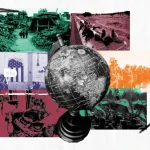
AS African nations scramble to protect their economies from punitive trade measures and mounting debt burdens, South African President Cyril Ramaphosa delivered a defiant warning to world leaders that global commerce has been weaponised against developing countries.
Speaking at two major UN forums this week, Ramaphosa painted a stark picture of an increasingly hostile trading environment where African economies – already constrained by debt and limited access to capital – face new threats from what he termed “unilateral trade practices and economic coercion.”
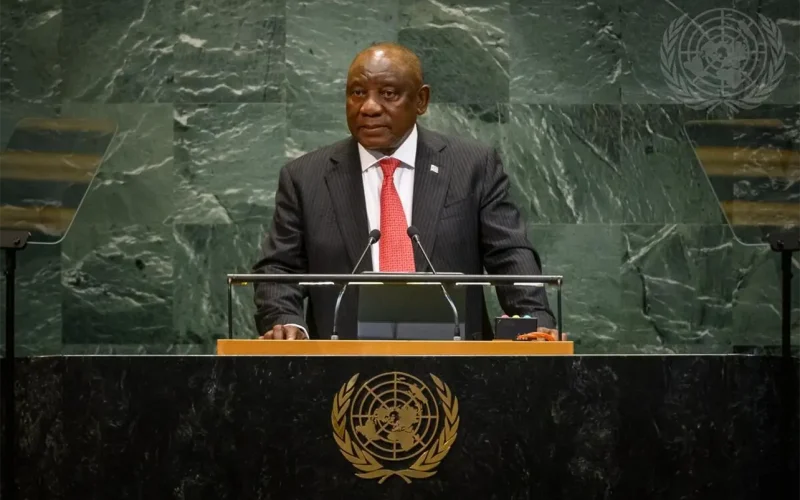
“It is concerning that geopolitical shocks and unprecedented trade policy volatility are destabilising the global economy and jeopardising a critical source of development financing,” Ramaphosa told the 80th UN General Assembly on Monday. “We must redouble our efforts to strengthen the link between trade and development.”
The comments underscore a growing crisis across Africa, where governments are battling to maintain economic stability as global powers increasingly use trade policy as a geopolitical weapon. For many African nations, the stakes could not be higher – their development ambitions hang in the balance as traditional trading relationships face unprecedented strain.
The urgency of Ramaphosa’s message became clear as his own country faces devastating 30% tariffs imposed by US President Donald Trump, effective from August. The punitive measures, part of Trump’s “Liberation Day” initiative, target what Washington considers the “worst offender” countries in trade relationships.
Speaking later at the UN’s Biennial Summit for sustainable development, Ramaphosa was even more direct: “In fact, trade is now being used as a weapon against a number of countries in the world.”
South Africa, as the continent’s most industrialised economy, has become a test case for how African nations can respond to such economic pressure. Ramaphosa revealed his government is in active negotiations with US trade representatives, telling the Council on Foreign Relations: “We want tariffs that President Trump is seeking to levy on us and has already started, to be reduced.”
Continental Response: Unity Through AFCFTA
Faced with such challenges, African nations are increasingly looking inward for solutions. Ramaphosa highlighted the African Continental Free Trade Area (AFCFTA) as a critical response to global trade uncertainty.
“In the midst of global trade uncertainty, the African continent is providing a pragmatic example of constructive collaboration by using the African Continental Free Trade Area as an engine for sustainable growth and development,” he told UN delegates.
The AFCFTA, which aims to create a single continental market for goods and services, represents Africa’s largest economic integration project since the formation of the African Union. For many African economies, it offers a potential lifeline – reducing dependence on volatile relationships with traditional trading partners while building intra-African trade that reached $192 billion in 2022.
Debt Crisis Deepens Development Challenge
The trade pressures come as African nations grapple with a mounting debt crisis that threatens to derail development goals. Many countries now spend more on debt servicing than on essential services like health and education—a reality Ramaphosa highlighted in his UN address.
“Many countries with developing economies, especially in Africa, do not have adequate capital to finance their development goals. They are indebted and are paying more on debt servicing than they do on health and education,” he said.
This debt burden makes African economies particularly vulnerable to trade disruptions. Nigeria, also targeted under Trump’s tariff regime, faces similar pressures as it struggles with foreign exchange shortages and mounting external debt. Ghana, Kenya, and other African nations have seen their currencies weaken as global investors retreat from emerging markets.
AGOA Under Threat
The situation is particularly acute regarding the African Growth and Opportunity Act (AGOA), which has been crucial for African textile and manufacturing exports to the US. The preferential trade arrangement, which benefits 32 African countries, faces an uncertain future under Trump’s tariff-focused approach.
South Africa has historically been AGOA’s largest beneficiary, but the program failed to secure congressional renewal last year. With Trump’s return to the White House casting further doubt on its extension, African textile industries—employing hundreds of thousands across countries like Lesotho, Kenya, and Ethiopia—face potential devastation.
Climate and Inequality Add Pressure
The trade challenges compound other pressures facing African economies. Climate change is “reversing economic growth and development gains in many countries, especially in the Global South,” Ramaphosa noted, despite Africa bearing the least responsibility for global warming.
“Extreme weather events like floods and droughts are driving food insecurity, displacing populations, causing damage to infrastructure and leading to the unnecessary loss of livelihoods,” he said.
Through South Africa’s G20 presidency – the first time the summit will be held in Africa – Ramaphosa has launched an initiative to address global wealth inequality. The Extraordinary Committee of Independent Experts, chaired by Nobel laureate Joseph Stiglitz, will deliver the first-ever report on global inequality to G20 leaders.
A Call for Global Solidarity
As African nations face these mounting challenges, Ramaphosa’s speeches reflect a broader call for reformed global economic governance. His emphasis on “solidarity, equality and sustainability” as themes for South Africa’s G20 presidency signals Africa’s determination to reshape international economic relationships.
“We are building weapons when we should be building social infrastructure,” Ramaphosa told the UN General Assembly. “We are fighting wars that cause death and destruction, when we should be fighting poverty and developing the livelihoods of vulnerable people.”
For Africa, the message is clear: as global powers weaponise trade, the continent must accelerate its own integration efforts while pushing for fairer international economic rules. The success or failure of these efforts could determine whether Africa’s 1.4 billion people can achieve their development aspirations in an increasingly hostile global trading environment.
The stakes extend beyond individual countries – they represent a defining moment for Africa’s economic future and its ability to chart an independent course in a multipolar world where trade has become the new battlefield of geopolitical competition.