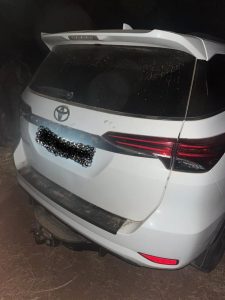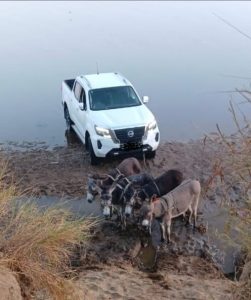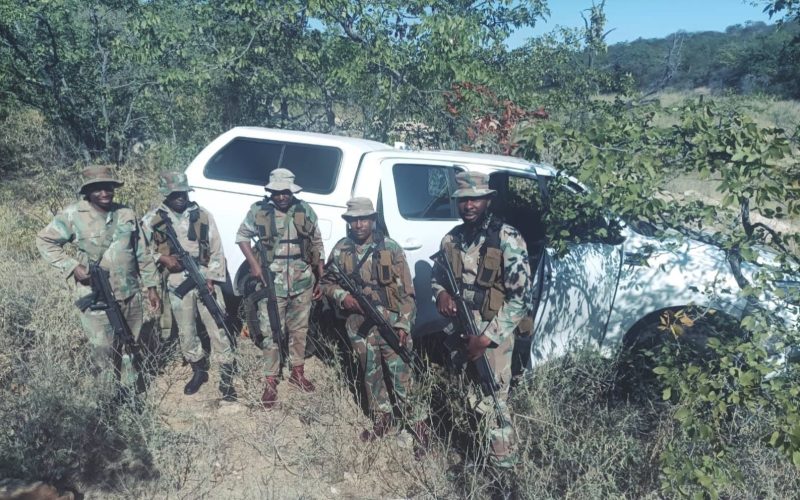
UNDER a starlit Limpopo sky, soldiers lying in wait on the riverbed watched two sets of headlights cut through the bush toward the water’s edge. Within minutes, gunfire cracked across the riverbank. By morning, two more stolen vehicles – a Toyota Fortuner and a Nissan Navara, together worth almost R1.7 million – had been wrestled back from a smuggling syndicate that had readied donkeys on the South African bank to haul the loot across the river into Zimbabwe. It was the kind of close-quarters, high-stakes confrontation that has come to define life along South Africa’s most porous frontier – and the latest evidence that the men and women in camouflage patrolling it are winning real, if costly, victories against the criminal networks terrorising South African motorists and feeding off their misery.
A TWO-WEEK RECKONING
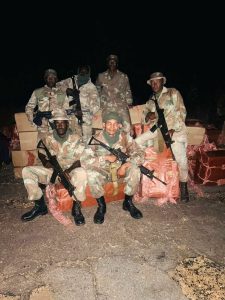
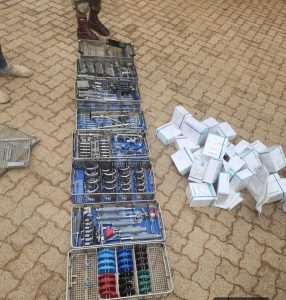
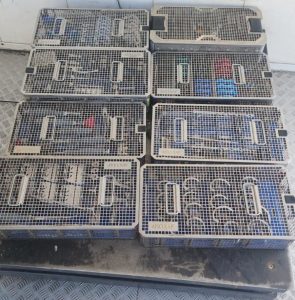
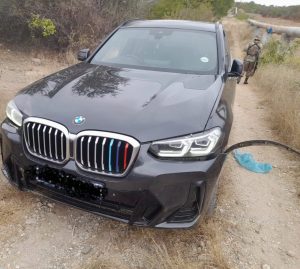
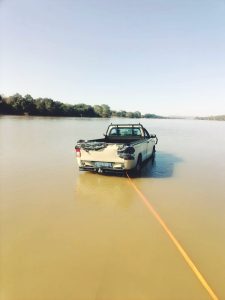
Over a fortnight of coordinated operations, Joint Tactical Headquarters Limpopo and 4 Artillery Regiment of the South African National Defence Force (SANDF), under Lieutenant Colonel Mmamaeke Emmanuel Mello, delivered one of the corridor’s most consequential interdictions in recent memory. Soldiers recovered orthopaedic surgical kits and implants valued at R735,400, handed over to Port Health and Customs at the Beitbridge Point of Entry, alongside a BMW X3 xDrive 20d worth R1,158,477, a GWM double cab bakkie worth R567,000, and a Toyota Hilux single cab worth R195,000 – the last driven into the Limpopo River by fleeing suspects before being towed out with the assistance of the South African Police Service.
At Echo Station 2, soldiers traded gunfire with suspects – one allegedly dressed in foreign military regalia – before confiscating illicit cigarettes worth R603,899. Across the two-week sweep, security forces arrested 87 undocumented persons.
DONKEYS IN THE DARK
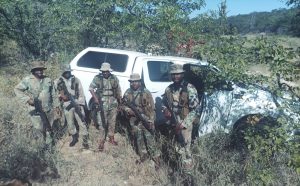
The riverbed ambush that yielded the Fortuner and the Navara was a study in the audacity of the syndicates working the corridor. Soldiers on waylay duty spotted the two vehicles advancing toward the water and moved to intercept; suspects opened fire from inside the vehicles before abandoning them and fleeing on foot. One bakkie was found already being pulled by donkeys positioned on the riverbank – patient, pre-positioned mules of an operation built for exactly this crossing. Both vehicles, confirmed stolen and already reported to the South African Police Service, were towed out under police escort, their would-be journey into Zimbabwe cut violently short.
BEHIND EVERY STOLEN CAR
It is easy, in the language of seizure values and operation names, to lose sight of the human stakes. Vehicle theft and hijacking remain among the most traumatic crimes South Africans face – encounters that frequently turn violent and sometimes fatal, leaving survivors carrying the scars of having had a firearm pointed at them in their own driveway or at a red light. The vehicles recovered on the Limpopo riverbed were not abstractions; each had an owner whose ordeal began long before soldiers’ torches found the smugglers in the dark. The diversion of orthopaedic implants into the same illicit pipeline is its own quiet tragedy – medical devices meant for someone’s hip or spine, swallowed instead into a black-market economy that profits from crime layered upon suffering.
The prominence of the SANDF in what is, on paper, a policing function continues to raise hard questions. Colonel Dikgabane Herold Tladi, Officer Commanding Joint Tactical Headquarters Limpopo, received Lieutenant Colonel Mello’s report on the operation’s outcomes, with senior defence leadership – including Chief of Joint Operations Division Lieutenant General Siphiwe Sangweni and Chief of the South African Army Lieutenant General Lawrence Mbatha – signalling support for intensified patrols and joint operations along the corridor. Yet analysts caution that the army’s deepening footprint at Beitbridge demands clearer legal mandates and stronger civilian oversight, lest the line between military defence and civilian policing blur further. The presence of a suspect allegedly wearing foreign military insignia during an armed exchange sharpens the point: this is a transnational contest with diplomatic as well as criminal dimensions, and the risk of escalation is real.
Tactical wins, however dramatic, mean little if they are not converted into lasting disruption. Security analysts argue that the evidence and arrests from this sweep should now feed full investigations capable of tracing and dismantling the networks behind the smuggling – not just the foot soldiers caught at the riverbank. They are also calling on Pretoria to clarify the legal framework governing military deployment in border policing, and for deeper cross-border cooperation with Harare to choke off supply chains and reduce the armed confrontations now becoming routine on both banks of the Limpopo.
For now, the soldiers of 4 Artillery Regiment have given South Africans something rare in the fight against cross-border crime: a clear, countable victory. Whether it holds depends on what Pretoria and Harare do next.
Photographs: Captain Madonsela