SOUTH AFRICA is the latest country to scrap plans to raise value-added tax after a push-back by voters, in a significant reversal of legislation in one of Africa’s largest economies.
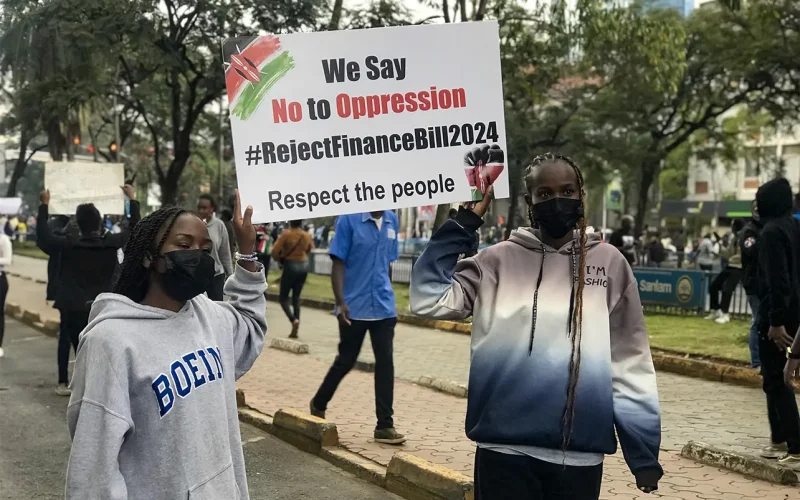
This follows a trend that became particularly visible during a campaign on social media led by Kenyan activists in June 2024. Protests by Gen-Z activists in east Africa’s biggest economy forced the government to withdraw the contentious Finance Bill 2024, which proposed a 16% value-added tax (VAT) on essentials like bread and financial services transactions.
In the third week of April, South Africa’s Finance Minister, Enoch Godongwana, abandoned plans to increase VAT by half a percentage point to 15.5% effective May 1, to prevent the collapse of the country’s historical ‘unity’ government and potential protests. The climb-down came after an original proposal tabled by the majority party in South Africa’s coalition government, for a rise to 17%.
“After listening to submissions from political parties and the public and considering extensive consultations with various stakeholders, the decision was made to withdraw the proposal, as the court mandated,” South Africa’s Finance Ministry announced in a press statement.
The proposed VAT increase was a key component of South Africa’s 2025 budget, designed to address a fiscal shortfall of US$ 1.2 billion (R22.3 billion) and fund critical initiatives, including early childhood development, public sector wages, and commuter rail revitalisation.
The plan of a 0.5% hike to 15.5% in 2025 was to be followed by another increase to 16% in 2026.
Godongwana’s decision came after the second-largest party, the Democratic Alliance (DA), threatened to exit the government, warning that a VAT hike would disproportionately affect the poor.
Godongwana, a member of President Cyril Ramaphosa’s African National Congress (ANC), maintained that the increase was necessary due to the government’s financial crisis.
“The withdrawal creates a medium-term revenue shortfall of approximately R75 billion, necessitating reduced government expenditure, which will likely impact service delivery,” He said in a statement.
Now the South African Finance Ministry has to go back to the drawing board to seek alternative ways of fixing budget gaps.
Godongwana said “he remains committed to fiscal responsibility” and would pursue alternative measures to ensure sustainable public finances.
Kenya’s Cabinet on April 29th approved plans to slash its budget for 2025/26 financial year from US$ 33.3 Billion (Ksh. 4.263 Trillion) following a cabinet meeting chaired by President William Ruto, directing the cabinet secretaries and the National treasury to work together to identify and implement necessary adjustments within ministries and state departments.
According to a cabinet dispatch, the move aims to cap the fiscal deficit at no more than 4.5% of the GDP for the Financial year 2025/26 and with a medium target of reducing the deficit to 2.7%.
“As a result, the initial estimates of Ksh 4.3 trillion will undergo substantial revisions before being tabled in parliament,” said the dispatch.
The Cabinet also approved Finance Bill 2025, which it said focuses primarily on enhancing efficiency, including addressing loopholes related to tax expenditures that have historically been exploited to siphon funds from public coffers, such as through inflated tax refund claims.
“Importantly, the Bill seeks to minimise tax-raising measures through a new legislative framework,” read the dispatch, allaying fears that the government would introduce new taxes in this year’s Finance Bill.
While Kenya and South Africa are experiencing similar push-back to tax raises, the big difference is that in Kenya, it took deadly protests to effect the changes in tax laws.
The latest Amnesty International Kenya report, ‘The 2024/25 State of the World’s Human Rights Report,’ shows that 65 young people were killed and 89 are still missing, with at least a thousand arrested arbitrarily.
In June 2024, just a week after the national assembly rejected a set of “punitive taxes,” Kenya’s President William Ruto, during a televised address from State House in Nairobi, announced that he would not sign the Finance Bill into law and called for its withdrawal.
“Having listened to the views of Kenyans, who have been clear that they want nothing to do with this Finance Bill 2024, I concede that I will not sign it, and it shall be withdrawn,” he told the nation at the time.
President Ruto also affirmed his commitment to engage with young people and address their concerns.
As Kenya continues to seek solutions to its considerable budget deficit, it is treading carefully to avoid alienating and upsetting its young voters again, even as the 2027 General Election beckons.
In early April, Kenya’s Finance Cabinet Secretary, John Mbadi, moved to allay public fears about media reports suggesting that the Finance Bill 2025 would introduce new or increased taxes.
During a meeting with senior government officials that month, Mbadi said that the Finance Bill 2025 had not yet been published or presented to the National Assembly, and the Treasury was still collecting input from government agencies and other stakeholders.
“We have not developed a Finance Bill. There is no plan to tax Kenyans more. Please do not stir up unnecessary emotions,” Mbadi asserted.
Mbadi announced that Kenya’s Treasury would provide a detailed explanation for every tax proposal once the bill is finalised.
“We will publish the Finance Bill and include an explanation, just as we did in December with the tax laws. If there are any proposals from the National Treasury, we will provide a detailed explanation in the newspapers so that Kenyans are informed,” he explained.
The Finance Bill 2025 is expected to be tabled in Parliament ahead of the 2025/2026 financial year and budget reading in June.