AT least 32 people were killed and potentially dozens more when a makeshift bridge collapsed at a copper and cobalt mine in southeastern Congo, as panicked miners fled what witnesses described as gunfire by soldiers securing the site.
The tragedy unfolded at the Kalando mine in Mulondo, Lualaba province, approximately 26 miles southeast of the provincial capital Kolwezi, where thousands of illegal miners had forced entry despite government prohibitions triggered by heavy rains and landslide warnings.
The death toll remains disputed and could rise substantially. Provincial Interior Minister Roy Kaumba Mayonde confirmed 32 fatalities at a Sunday press conference, while SAEMAPE, the government agency overseeing artisanal mining, reported 49 deaths and 20 people in critical condition. The uncertainty reflects the chaos of the incident and the challenges of accounting for victims in a flooded mining pit.
According to SAEMAPE’s official report, soldiers fired shots near the mine, triggering mass panic among the estimated 10,000 wildcat miners working at the site. As miners stampeded toward the bridge to escape, the structure—built to span a rain-flooded trench—gave way under the weight and pressure. “Miners then piled on top of each other, causing injuries and death,” the agency stated.
The Initiative for the Protection of Human Rights has called for an independent investigation into the military’s role in the deaths, citing reports of clashes between miners and soldiers. The military has not yet commented on the incident.
“Despite a formal ban on access to the site because of the heavy rain and the risk of a landslide, wildcat miners forced their way into the quarry,” Mayonde said, adding that the site’s security had become a flashpoint among illegal miners, a cooperative meant to regulate operations, and the legal operators backed by the government and reportedly involving Chinese companies.
Provincial authorities suspended operations at the site on Sunday. Images released by the National Human Rights Commission showed miners digging bodies from the flooded trench, with at least 17 corpses laid out nearby.
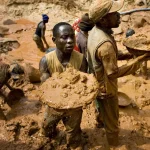
The disaster highlights the deadly risks facing Congo’s vast informal mining workforce. An estimated 1.5 to 2 million people work in artisanal mining across the country, supporting more than 10 million indirectly. At Kalando alone, more than 10,000 wildcat miners operated at the site, according to Arthur Kabulo, provincial coordinator of the National Human Rights Commission.
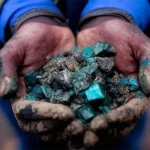
These miners work without modern equipment, often using only hand tools or their bare hands to extract ore from tunnels that can descend 100 meters underground. Many earn less than $2 per day, well below the national minimum wage of $5. An estimated 40,000 children are believed to work in cobalt mining across the country, some as young as six years old.
The Democratic Republic of Congo produces more than 70 percent of the world’s cobalt supply, a mineral critical for lithium-ion batteries that power electric vehicles, laptops, and smartphones. Chinese firms control approximately 80 percent of the country’s cobalt production, dominating an industry worth billions to international corporations while delivering poverty wages to those who extract it.
The cobalt mining sector has long been plagued by accusations of child labor, hazardous working conditions, environmental devastation, and endemic corruption. In 2019, Congolese families launched a high-profile lawsuit against major technology companies, including Apple, Google, Tesla, and Microsoft, over deaths and injuries sustained by child labourers in cobalt mines.
Mining accidents are tragically common in Congo’s unregulated artisanal mines, with dozens of deaths reported annually. The country’s mineral wealth—which also includes copper, gold, coltan, and diamonds—has paradoxically left it among the world’s poorest nations, with more than 5.7 million people displaced and one in four unable to meet basic food needs.
The disaster comes against a backdrop of escalating violence in mineral-rich eastern Congo, where the Rwanda-backed M23 rebel group has intensified conflict in recent months, deepening a humanitarian crisis that has persisted for decades. Since 1996, wider conflict in eastern DRC has led to an estimated six million deaths.
Despite Congo’s immense natural resources and its critical role in powering the global transition to electric vehicles and renewable energy, the benefits have failed to reach most Congolese citizens. Instead, the rush for cobalt continues to extract a devastating human toll from some of the world’s most vulnerable workers.
Provincial authorities have pledged to investigate the incident, though questions remain about the enforcement of safety regulations at sites where desperation drives thousands to risk their lives daily in collapsing tunnels, flooded pits, and now, makeshift bridges unable to bear the weight of people fleeing in terror.