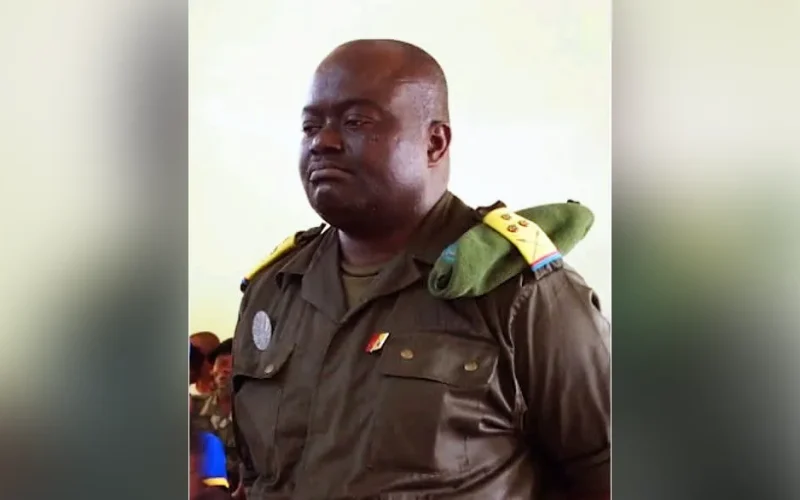
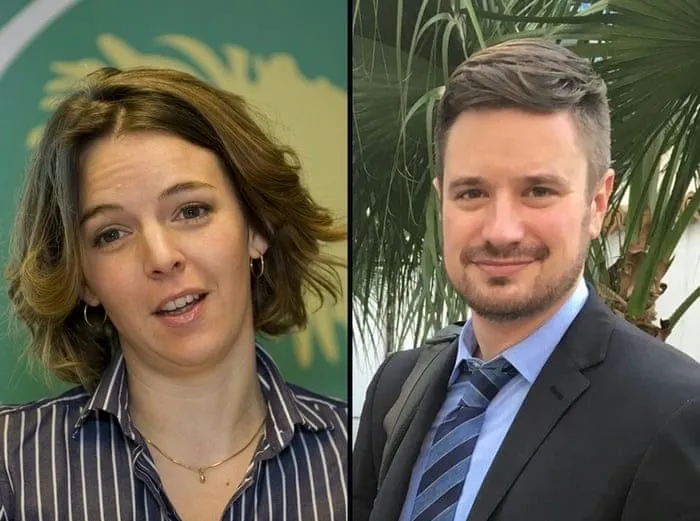
THE Democratic Republic of Congo’s High Military Court in Kinshasa has convicted Colonel Jean de Dieu Mambweni of the war crime of murder, ruling on appeal that the officer actively orchestrated the March 2017 assassinations of United Nations Group of Experts investigators Zaida Catalán, a Swedish-Chilean national, and Michael J. Sharp, an American. The verdict, delivered on June 5 and reviewed on video by Human Rights Watch, closes a trial chapter that dragged through Congolese military courts for nine years. It also does something no previous ruling in this case had done: it places a named, uniformed, senior officer of the Congolese armed forces at the centre of a plot to kill two people investigating his own government.
FROM TEN YEARS TO A DEATH SENTENCE
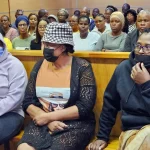
The reversal is dramatic. In 2022, a military tribunal in Kananga convicted Mambweni of the comparatively minor offence of failing to assist persons in danger and disobeying orders, and sentenced him to ten years – a verdict that Catalán’s own sister publicly dismissed at the time as a smokescreen shielding the real architects of the killings. On appeal, prosecutors argued Mambweni’s role went far beyond negligence. The High Military Court agreed, convicting him of murder as a war crime and sentencing him to death alongside 53 alleged fighters of the Kamuina Nsapu militia, the armed movement Congolese authorities have long blamed for the killings. Of the 54 condemned, 27 were present for the verdict, 22 were convicted in absentia, and five had already died during the nine years the case took to resolve — a timeline that itself speaks to how reluctant Kinshasa’s justice system has been to move quickly on a case implicating its own men in uniform.
“We believe Colonel Mambweni could not have engineered such a crime on his own authority.”
John Sharp, father of murdered UN expert Michael Sharp
THE ‘STATE CRIME’ THE VERDICT DOESN’T REACH
What the ruling does not do is answer the question that has driven the Catalán and Sharp families for nearly a decade: on whose authority did a colonel order the murder of two UN experts investigating atrocities his own government had an interest in concealing? Catalán and Sharp were in Kasai Central documenting mass graves linked to the brutal 2016-2017 counter-insurgency against the Kamuina Nsapu uprising – a campaign in which Congolese security forces themselves stood accused of grave abuses. Human Rights Watch has previously flagged video evidence, ignored at the 2022 trial, showing government agents helping steer the two experts toward the ambush site near Moyo-Musila. Paul Nsapu Mukulu, president of Congo’s National Human Rights Commission, has said plainly that the evidence points to a state crime — and a state crime, he noted, is never easily prosecuted by the same state accused of committing it.
A FATHER’S VERDICT ON THE VERDICT
John Sharp, Michael’s father, welcomed the conviction while insisting it cannot be the final word. He does not believe a single colonel had the authority to engineer an operation of this scale on his own initiative, and has called for Congolese authorities to pursue whoever stood above Mambweni in the chain of command. That demand is echoed by Michael Sharp’s mother, Michele, who, after the 2022 verdict, asked simply who in the upper echelons of power gave the order. Nearly a decade on, no answer has come. Also unresolved is the fate of the Congolese interpreter and motorcycle drivers who accompanied Catalán and Sharp on their final mission – Congolese nationals whose disappearance has drawn far less international attention than that of the two foreign experts, but whose families deserve the same accounting.
A DEATH PENALTY KINSHASA WON’T USE – BUT WON’T RENOUNCE
The 54 death sentences arrive against an uneasy legal backdrop. Congo has not executed anyone since 2003, and in practice, the sentences are expected to be commuted to life imprisonment, as has happened in comparable cases. But the government formally lifted its de facto moratorium on executions in 2024, restoring capital punishment as a live instrument of state power even where it goes unused. Human Rights Watch, which opposes the death penalty in all circumstances, has renewed its call for Congo to abolish it outright — a position rooted not in sympathy for the convicted but in the view that a state which reserves the right to kill its citizens, even symbolically, cannot fully separate itself from the culture of impunity that made the Catalán-Sharp murders possible in the first place.
WHY THIS VERDICT MATTERS BEYOND KASAI
For the wider community of UN investigators, journalists and human rights monitors working in Africa’s conflict zones, the Kasai case has stood for nearly a decade as a grim marker of how easily a state can turn on the very experts sent to document its failures. A conviction of a serving colonel for orchestrating their murder is not nothing: it is the first judicial acknowledgment that this was not simply militia violence but a plot with military fingerprints. Yet without the officers, if any, who authorised or shielded Mambweni, the verdict risks becoming exactly what Catalán’s sister feared in 2022 — a conviction that satisfies international pressure for accountability while insulating the hierarchy that benefited most from the experts’ silence. Congo’s authorities, and the UN Secretariat that lost two of its own, now face a test of whether justice in this case ends with a colonel, or continues up the chain of command it was designed never to reach.
| THE CASE, AT A GLANCE |
| ● March 12, 2017: Zaida Catalán and Michael Sharp are stopped by Kamuina Nsapu fighters at a bridge near Moyo-Musila, Kasai Central, and shot dead. Their bodies were found 16 days later. ● 2022: A Kananga military tribunal convicts dozens of militia members of murder; Colonel Mambweni is convicted only of failing to assist persons in danger, sentenced to 10 years. ● January 2026: Human Rights Watch reports the trial ignored video evidence of government agents directing the experts toward the ambush. ● June 5, 2026: On appeal, Kinshasa’s High Military Court convicts Mambweni of murder as a war crime, sentencing him and 53 others to death. ● Unresolved: the identity of anyone above Mambweni in the chain of command, and the fate of the Congolese interpreter and drivers who vanished alongside the two experts. |