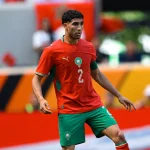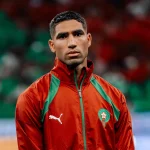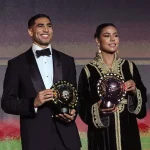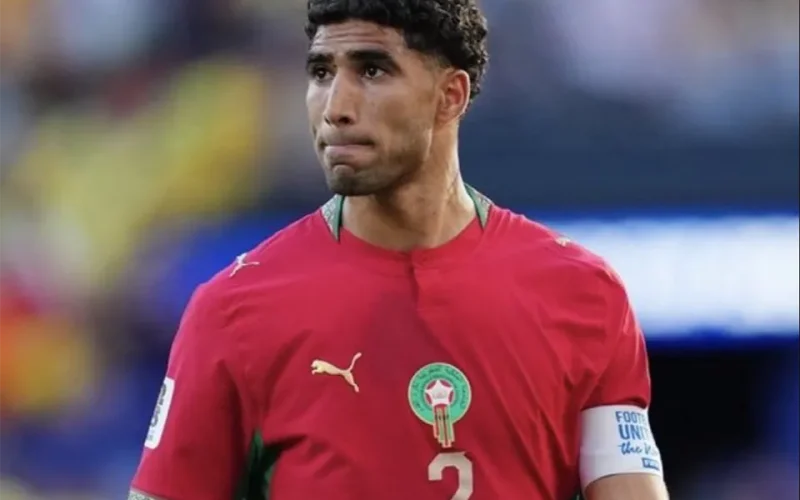
ACHRAF Hakimi spent 2026 collecting the game’s highest individual honours. He lifted a second consecutive Champions League with Paris Saint-Germain, was crowned CAF Men’s Player of the Year in Rabat — the first defender to win Africa’s top prize in more than half a century — and captained Morocco into the World Cup as one of the most recognisable footballers on the planet. Now he faces a different kind of contest, one with no away goals rule and no away form to hide behind: a French criminal trial on a charge of rape.
On 19 June, the Versailles Court of Appeal confirmed that Hakimi must stand trial, upholding an investigating judge’s earlier decision to refer him to a French criminal court. The ruling came hours before Morocco’s World Cup group match against Scotland, a jarring split-screen moment that captured the strange collision of Hakimi’s two realities: idolised on the pitch, under formal criminal investigation off it.
Three Years, One Allegation
The case traces back to February 2023, when a woman, then 24, told French police that Hakimi had raped her at his home in Boulogne-Billancourt, an affluent suburb west of Paris. According to accounts drawn from the investigation, the woman said she had met Hakimi on Instagram the previous month and travelled to his residence in a taxi he had arranged. She alleged that he kissed and touched her without consent before raping her, and that she pushed him away and texted a friend, who came to collect her.
Hakimi was placed under formal investigation the following month, a step in French criminal procedure — ‘mise en examen’ — reserved for cases where investigators believe there is serious or corroborating evidence of possible involvement. It is not, under French law, a conviction, and it does not establish guilt. Over the three years that followed, investigators in Nanterre gathered testimony, cross-examined accounts, and commissioned psychological assessments of both parties before prosecutors formally recommended that the matter proceed to trial.
Hakimi’s legal team fought that recommendation through the appeals process and lost. His lawyer, Fanny Colin, insists the case should never have reached this point. “The multitude of exculpatory elements uncovered during the investigation and judicial inquiry would, in any other case, have led to the dismissal of the proceedings,” she said, arguing that the complainant’s own inconsistencies and a documented ambivalence in her account were not given sufficient weight by the courts.
“If You Were Not Famous”
Hakimi has not stayed silent. In a statement posted to X after the Versailles ruling, he framed the case as a consequence of his fame rather than the strength of the evidence against him. “Justice looked me in the eye and told me: ‘If you were not famous, there would never have been a case,'” he wrote, adding that he had chosen patience and dignity over public rebuttal for three years and now feels he has become “an easy target.”
“Relief that she has been heard by the justice system, and hope that this trial will help other women and further weaken the fortress of denial and impunity surrounding sexual violence, including within the world of men’s football.”
Rachel-Flore Pardo, lawyer for the complainant
The woman at the centre of the case, who has used the pseudonym “Jeanne” in the only public interview she has given, told the investigative outlet Mediapart she wanted the trial precisely so she could finally “defend myself, to be heard.” Her lawyer, Rachel-Flore Pardo, has been sharply critical of the defence’s public strategy over the past three years, describing her client as having been “defamed and dragged through the mud.” For Pardo, the Versailles ruling is not a verdict but a vindication of process — an acknowledgment, after years of legal wrangling, that a French court will now hear the case in full.
The Latest Twist: An Appeal to France’s Highest Court
The story did not end with the Versailles ruling. Hakimi’s legal team has since lodged an appeal with the Court of Cassation, France’s highest court for civil and criminal matters, seeking to overturn the referral order itself. Crucially, the Court of Cassation does not retry facts or assess credibility; its role is narrower, confined to whether the lower courts correctly applied the law and followed proper procedure in sending Hakimi to trial. If the appeal fails, the case proceeds to the criminal court in Hauts-de-Seine, though no trial date has yet been set. If it succeeds, the matter returns to an investigating chamber to reconsider, once again, whether Hakimi should face trial at all. Either way, the presumption of innocence remains the governing legal principle until — and unless — a court delivers a verdict.
A Continental Reckoning, On and Off the Pitch
For African football and for the broader conversation this newsroom has tracked around accountability without fear or favour, the Hakimi case sits at an uncomfortable intersection. He is, by consensus of CAF’s panel of experts and journalists, the finest footballer produced by the continent in 2025 — a Moroccan trailblazer whose rise mirrors his country’s own emergence as an African football power, from a World Cup semi-final in Qatar to co-hosting rights on the horizon. That same platform now amplifies a case that advocates for survivors of sexual violence say has implications well beyond one player’s guilt or innocence.
Legal analysts following the case caution against treating either the referral to trial or Hakimi’s public denials as dispositive. A decision to send a case to trial in France reflects a judicial finding that there is sufficient evidence to warrant a full hearing — not a finding of guilt. Equally, Hakimi’s continued protestations of innocence, however forcefully made, carry no more legal weight than the allegation itself until tested before a criminal court. What is certain is that African football’s newest laureate will now spend the coming months, and likely longer, navigating a legal process that neither his trophy cabinet nor his public statements can resolve. The verdict, whenever it comes, will be delivered not by CAF voters or Ballon d’Or panels, but by a French jury.
The African Mirror will continue to follow developments in the case, including the Court of Cassation’s ruling on the referral and any subsequent scheduling of a trial date.