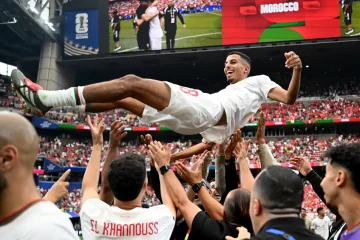
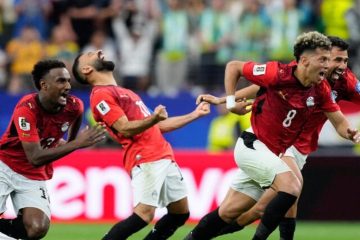
The Court of Arbitration for Sport (CAS) has confirmed that the Senegalese Football Federation (FSF) has formally lodged an appeal challenging one of the most convulsive rulings in African football history – the Confederation of African Football’s (CAF) decision to retroactively strip Senegal of the 2025 Africa Cup of Nations (AFCON) title and hand the trophy to tournament hosts Morocco.
The appeal, registered at CAS’s headquarters in Lausanne, Switzerland, on 25 March 2026, formally asks the global sports arbitration tribunal to set aside CAF’s March 17 decision entirely and restore Senegal as the rightful champions of AFCON Morocco 2025. The move signals the opening of a legal battle that could define the governance of African football for a generation.
In a statement that carries the unmistakable weight of a nation’s wounded pride, the FSF has also demanded that CAF provide the full written grounds for its ruling before the appeal brief submission clock begins to run – a demand CAS has upheld, noting that the CAF decision rendered on 17 March was “operative only,” meaning it was handed down without accompanying legal reasoning.
SIXTY-SEVEN DAYS. ONE GOAL. THEN THE TROPHY WAS GONE.
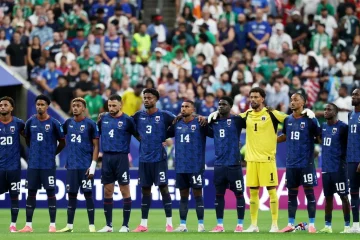
The sequence of events that has convulsed African football began in torrential rain at the Prince Moulay Abdellah Stadium in Rabat on the night of 18 January 2026. Senegal and Morocco, two of the continent’s most storied footballing nations, met in the AFCON 2025 final. The match ended goalless through ninety minutes of tense, grinding football, punctuated only by controversy.
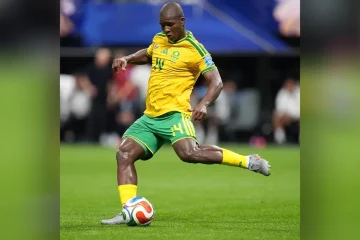
In the 98th minute – deep in stoppage time – Congolese referee Jean-Jacques Ndala was directed by VAR to review a challenge by Senegalese defender El Hadji Malick Diouf on Morocco’s Brahim Diaz, and subsequently awarded a penalty. The decision detonated a fury in the Senegalese camp. Coach Pape Thiaw, in a decision he would later defend as born of genuine outrage at a series of perceived refereeing injustices, instructed his players to leave the field of play in protest. All but captain Sadio Mané complied.
For seventeen minutes, the AFCON final stood suspended. Thousands of Senegalese supporters attempted a pitch invasion. Moroccan and Senegalese fans clashed in the stands. It was not merely a football controversy; it was a flashpoint of barely suppressed continental tensions playing out on live television across Africa.
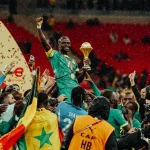
Mané ultimately persuaded his teammates to return. When play resumed, Diaz’s attempted Panenka – a cheeky, slow-chipped spot-kick – was saved by goalkeeper Édouard Mendy. Senegal went on to win 1-0 in extra time through a goal by Pape Gueye. Mané lifted the trophy. A nation celebrated its second continental title.
Sixty-seven days later, CAF’s Appeals Board met and wiped it all away.
THE RULING THAT REWROTE HISTORY
On 17 March 2026, CAF’s Appeals Board – acting on a challenge filed by the Royal Moroccan Football Federation (FRMF) – ruled that Senegal had breached Articles 82 and 84 of the AFCON regulations. Article 82 classifies a team’s refusal to play or exit of the ground without the referee’s authorisation as grounds for elimination. Article 84 mandates an automatic 3-0 loss as the penalty for such a breach. The result: Senegal was formally declared to have forfeited the match, Morocco was recorded as the winners by three goals to nil, and the trophy was administratively transferred.
CAF president Patrice Motsepe had previously sanctioned both federations for their roles in the chaos – with fines totalling over one million dollars, along with bans for players and officials – but crucially, left the match result intact. It was only after Morocco’s federation appealed those initial sanctions that the Appeals Board took the extraordinary step of reversing the result itself. The initial CAF Disciplinary Board’s decision was “set aside” in its entirety.
“This decision is based on absolutely nothing. It has no legal foundation. We will not back down. The truth is on Senegal’s side, the law is on Senegal’s side.”
Abdoulaye Seydou Sow, Secretary General, Senegalese Football Federation
The Senegalese government, in an unusually direct intervention for a football matter, declared the ruling “unprecedented and exceptionally serious,” describing it as based on “a manifestly erroneous interpretation of the regulations, leading to a grossly illegal and deeply unjust decision.” Dakar said flatly: “Senegal unequivocally rejects this unjustified attempt at dispossession.”
The government’s language was significant: this was not a sporting federation speaking in carefully calibrated footballing terms. This was a sovereign state declaring its refusal to submit. And crucially, the trophy, still in Senegal’s possession, is not going anywhere. Senegalese players have made that explicit on social media. Defender Moussa Niakhate posted a photograph of himself holding the silverware with a message that translates simply as: “Come and get them. They’re crazy.” Winger El Hadji Malick Diouf was more blunt: “It’s not what I expected. This thing isn’t going anywhere.”
THE VOICE OF CONSCIENCE FROM WITHIN MOROCCO
Perhaps the most remarkable development in a saga already crowded with extraordinary moments has come from within the Moroccan camp itself. Achraf Hakimi, Paris Saint-Germain’s world-class right-back and captain of the Atlas Lions, has publicly and formally rejected the AFCON title on behalf of both himself and, he hopes, his teammates.
“I respect the CAF decision, but I am officially rejecting the trophy. I didn’t win the 2025 AFCON. Congratulations to Senegal once again.”
Achraf Hakimi, Captain, Morocco National Football Team
Hakimi’s statement was unambiguous. Senegal, he said, “beat us fairly and deserved it.” He called it football: “Sometimes you win, and sometimes you lose.” He said accepting the trophy under the circumstances would be “unfair” to the Senegalese players and their supporters who had fought for it. Before issuing his formal rejection, he had posted cryptically on social media — “Energy speaks, I don’t” – a line widely interpreted as his pre-emptive distancing from the ruling even before it was formally issued.
It is rare, perhaps without modern precedent at this level, for a national team captain to publicly reject a title awarded to his country by the governing body of his sport. Hakimi’s stance does not nullify the administrative decision, but it has exposed a profound fault line within Moroccan football itself. While the FRMF pursued the legal avenue to its logical conclusion, its own players – the men who actually played the match – cannot bring themselves to celebrate.
Sky Sports’ African football expert Mimi Fawaz captured the mood across the continent: “It’s quite sad to see how things have developed. For such a long time, there’s been a big debate about AFCON and African football getting the respect that it deserves. But reading the reaction from a lot of African football fans, they’re saying it has put a stain on African football.”
THE GHOST OF 1976: AFRICA’S UNCOMFORTABLE MIRROR
CAF’s ruling did not merely inflame the present. It ripped open half a century of buried history. Within hours of the March 17 decision, observers across the continent pointed to an uncomfortable parallel: the 1976 AFCON final, also involving Morocco.
In that tournament, contested in a round-robin format, Morocco and Guinea faced each other in the decisive final match in Addis Ababa. Guinea needed a victory to claim the title; Morocco required only a draw. Guinea led through the opening period. Moroccan players — in a sequence the continent now views through newly awakened eyes — briefly walked off the pitch in protest over a refereeing decision, before returning to continue the match. Morocco eventually equalised through a late goal by Makrouh to secure the 1-1 draw they needed. Morocco was crowned champions. They were not stripped of the title. No Articles 82 and 84 were invoked. No retroactive boardroom verdict erased what had happened on the field.
The Guinean Football Federation, responding to viral social media reports, was forced to clarify that it had not formally filed a complaint with CAS or CAF over the 1976 incident — but the symbolism of the comparison had already detonated across African football discourse. Former CAF Head of Disciplinary Raymond Hack, speaking to journalist Robert Marawa, went further: “There are precedents in this regard. Go back to the 1976 AFCON. Morocco walked off the pitch. Then they came back. The game was not abandoned.”
The question that now hangs in the air over Lausanne, Dakar, Rabat, and every football federation office on the continent is deceptively simple: if the same conduct — a walk-off in protest, followed by a return to play and a result on the pitch — was permissible in 1976 but grounds for title forfeiture in 2026, what has changed? And, more pointedly, why does it appear that what has changed is who is playing host?
GOVERNANCE UNDER THE MICROSCOPE
The CAF Appeals Board ruling has attracted criticism from voices that span the continent’s football and political establishment. George Weah, the 1995 Ballon d’Or winner, three-time African Footballer of the Year and former President of Liberia, described the decision as one that “has further scarred and blemished African football, undermining confidence in the fairness, consistency, and integrity of football on the continent.” He invoked FIFA’s Laws of the Game, specifically Rule 5.2, which states that “decisions of the referee regarding facts connected with play, including whether or not a goal is scored and the result of the match, are final.” CAF’s Appeals Board appears to have overridden a sitting referee’s management of the match, a contradiction with IFAB’s foundational rules that Senegal’s legal team is expected to place at the centre of their CAS brief.
Former Nigeria captain William Troost-Ekong, the 2024 AFCON tournament MVP, spoke for many: “When I first heard the news that the result of this year’s AFCON final had been overturned, I thought it was a joke. When I realised it was actually real, after reading the official statement from CAF, it just made me feel quite sad. African football seems to be the only place where you can play extra time in the courts, and it happens too often.”
The broader political context adds another uncomfortable layer of scrutiny. Morocco — the tournament’s host nation, and a country with enormous continental influence as a co-host of the 2030 FIFA World Cup — had resources and political capital that few African nations could match in pursuing a legal challenge of this complexity. Critics, including the Senegalese government, which has called for an international investigation into suspected corruption within CAF, have pointed to the asymmetry of power between the two nations as a factor that cannot honestly be ignored.
Former Moroccan journalist Jalal Bounar noted that the ruling was met with “great excitement and joy” in Morocco, with a sense that justice had been delivered. Algerian journalist Maher Mezahi offered the harder assessment: “It feels like CAF has once again embarrassed the sport.” He pointed to the governing body’s history of contentious decisions, several of which have been overturned by CAS, as evidence of a structural governance deficit that this ruling has now placed under an international spotlight.
WHAT CAS MUST NOW DECIDE
The Senegalese Football Federation’s appeal before CAS is not merely a procedural objection. It is a fundamental challenge to the authority of a national football federation to win a match on the field, be sanctioned for misconduct during that match, and still retain the result — as opposed to having the result itself retrospectively annulled by an appellate body.
Senegal’s legal team has requested that CAS suspend the deadline for submitting its full appeal brief until CAF provides a written reasoning for its decision — since, as CAS confirmed, the Appeals Board delivered an “operative” ruling without accompanying grounds. CAS Director General Matthieu Reeb has pledged that proceedings will move “as swiftly as possible while respecting the right of all parties to a fair hearing,” though no procedural timeline has yet been set.
Hack, the former CAF disciplinary chief, has suggested the process could take up to six months. Others believe the significance of the case — its potential to reshape the relationship between on-field results and administrative governance across all of African football — may prompt CAS to handle it with a degree of urgency that reflects its historic weight.
CAF president Motsepe, under sustained pressure, said last week that his organisation would “respect the decision which is taken at the highest level” — an implicit acknowledgement that CAS, not CAF’s own Appeals Board, now holds the legitimate authority over this matter.
A TROPHY IN LIMBO, A CONTINENT IN RECKONING
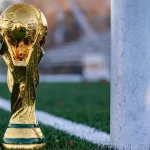
As things stand on this 26th day of March 2026, the AFCON trophy remains in Senegal. The FSF’s appeal has been registered. CAS will appoint an arbitral panel. The 20-day clock for Senegal’s full brief, once full grounds are provided, will begin to run. Morocco and Senegal — both preparing for the upcoming FIFA World Cup — continue their seasons while this case makes its way through the corridors of sports justice in Lausanne.
But the legal formalities are almost secondary to the human reality that has played out across African football in the past ten days. Achraf Hakimi — captain, superstar, arguably the best right-back on earth — has looked at a trophy he could have worn around his neck and said: not like this. Senegalese players have posted photographs of silverware they earned on a football pitch, daring the world to come and take it. The Guinean federation scrambled to distance itself from comparisons that nevertheless refuse to disappear. George Weah has spoken of a wound inflicted on the game he loves. William Troost-Ekong has said the continent has “taken two steps backwards.”
None of these voices is a voice of defeat. They are, collectively, the voice of a continent that has grown tired of watching the meaning of its most prized football tournament be determined not by those who play the game, but by those who govern it — and govern it, far too often, in ways that provoke more questions than they answer.
The 1976 parallel will not disappear. The question of whether Morocco’s extraordinary influence in contemporary African football governance shaped this outcome will not disappear. The image of a world-class captain rejecting a title his own federation pursued will not disappear.
And until a CAS panel delivers its verdict — which could take months — the 2025 Africa Cup of Nations will remain, in the eyes of most of the continent and much of the world, the tournament that Senegal won on a rainy night in Rabat, only to have it taken away in a boardroom two months later.