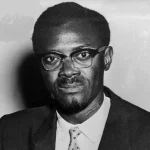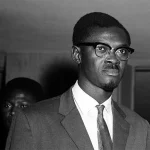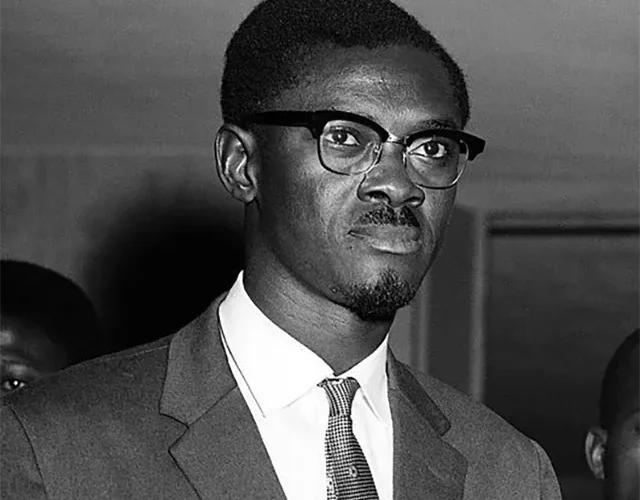
IN African culture, the dead do not die. They sleep. And if their death was not natural — if they were taken by treachery, by the hands of those drunk on power and colonial privilege — they speak. They speak across decades. They speak from the earth itself. On Tuesday, 17 March 2026, the voice of Patrice Émery Lumumba — Congo’s martyred first Prime Minister, Africa’s slain prophet of liberation — rang out from beyond the grave with a clarity that not even 65 years of silence, denial, and impunity could dim.
A Brussels court ordered 93-year-old Count Etienne Davignon, the last surviving Belgian figure connected to the 1961 assassination, to stand trial for participation in war crimes. In doing so, it made history. For the first time in the post-colonial era, a former colonial power has opened a criminal court door to examine individual responsibility for the murder of an African head of government. It is not yet a conviction. It is not yet justice. But it is, at last, an accounting.
“No-one believed when we first brought the case in 2011 that Belgium would prove capable of seriously investigating this. It’s very hard for a country to judge its own colonial crimes.”
Christophe Marchand, Lawyer for the Lumumba Family
A CRIME 65 YEARS IN THE MAKING
The facts of Lumumba’s murder constitute one of the most documented state-sponsored political assassinations of the 20th century. He became the DRC’s first Prime Minister on 24 June 1960, when Congo wrested independence from Belgium. Standing before Belgian King Baudouin at the Palais de la Nation in Léopoldville — now Kinshasa — Lumumba, aged 34, delivered what history now recognises as one of the most defining speeches of the African decolonisation era: a searing indictment of Belgian colonial brutality, a declaration that the Congolese had been held in humiliating slavery, and a solemn vow that the resources of their land would finally benefit their own children.
Belgium was incensed. The West was alarmed. Cold War paranoia — stoked by Lumumba’s outreach to the Soviet Union when Washington and Brussels abandoned him — provided political cover for what followed. Within three months of independence, Lumumba was ousted in a Belgian-backed coup. By November 1960, he was in custody. On 17 January 1961, he was driven to Katanga province — a secessionist enclave backed by Belgian mercenaries and the financial interests of Société Générale de Belgique — where he was tortured, then executed by firing squad alongside two comrades, Senate Vice-President Joseph Okito and Youth Minister Maurice Mpolo. He was 35 years old. His body was dissolved in acid. Only a single gold-capped tooth survived.
In a ceremony laden with grief and symbolic power, that tooth was repatriated to the DRC by the Belgian government in June 2022. Then-Prime Minister Alexander De Croo offered his government’s formal apologies, acknowledging Belgium’s ‘moral responsibility’ in the events leading to Lumumba’s disappearance and death — the third such apology Belgium has issued, following findings by a 2002 parliamentary commission. Yet a moral apology, however meaningful, is not a criminal proceeding. It was the Lumumba family themselves who, in 2011, forced the legal reckoning forward — filing a criminal complaint in Brussels, a case that would take 15 years of legal battle before reaching Tuesday’s historic threshold.
“We are all relieved. Belgium is finally confronting its history.”
Mehdi Lumumba, Grandson of Patrice Lumumba
THE MAN IN THE DOCK: A LIFE BUILT ON IMPUNITY
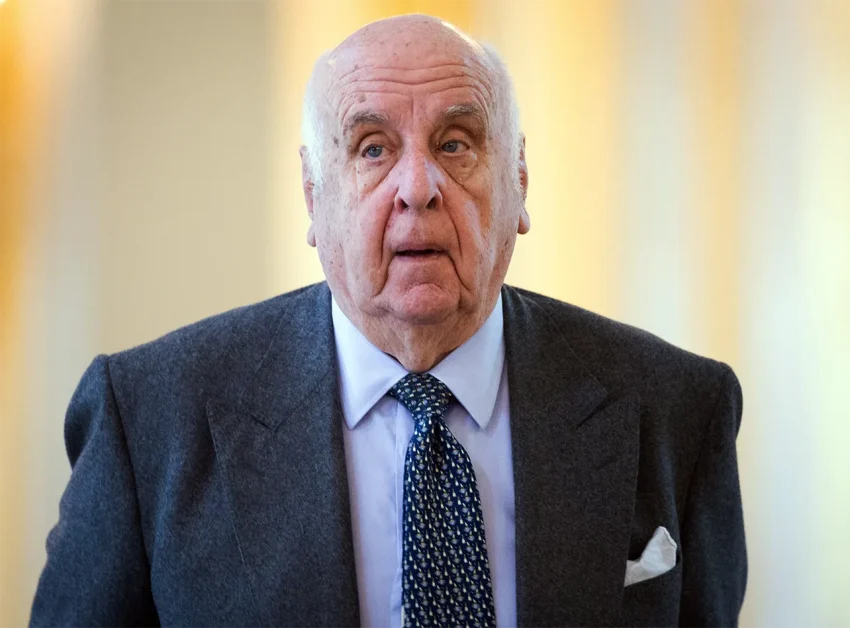
Etienne Davignon is not a minor functionary from a forgotten archive. He is one of Belgium’s most decorated and celebrated establishment figures — a man who, until this week, moved through the corridors of European power as if the blood of 1961 had never touched his hands. At the time of Lumumba’s assassination, Davignon was a 28-year-old diplomatic intern posted to the Belgian foreign ministry’s Congo unit, working directly under Foreign Minister Pierre Wigny. Belgium, at the time, was orchestrating the destabilisation of Lumumba’s government and actively working to achieve the secession of Katanga Province. That task fell in part to Davignon.
A 2002 parliamentary commission found that Davignon had been required to produce legal arguments to justify Lumumba’s removal from office. In telexes from September 1960, uncovered by Congo scholar and author Ludo De Witte, Davignon himself wrote that it appeared a ‘fundamental problem to remove Lumumba and achieve unity among the Congolese leaders against him.’ The Belgian foreign ministry is further alleged to have approved the fateful transfer of Lumumba to Katanga — a transfer that Davignon subsequently claimed he had opposed. It is precisely this contradiction that the criminal trial will now be required to interrogate.
Following his Congo posting, Davignon ascended to the heights of European and Belgian power. He served as the first head of the International Energy Agency. He was Vice-President of the European Commission from 1977 to 1985. He chaired Société Générale de Belgique — the very holding company whose financial tentacles extended into the Katanga copper mines that Lumumba had died trying to bring under Congolese control. He sat on numerous corporate boards, became a Privy Councillor in 2004, and in 2018 was elevated to the rank of Count by King Philippe. In 2026, he stood charged with war crimes.
Davignon was not present in the Brussels courtroom on Tuesday. His lawyers, who argued in January that too much time had elapsed to mount a credible prosecution, declined to comment. The ruling remains subject to appeal — and Davignon’s legal team is expected to test every available avenue of delay.
CASE AT A GLANCE
| The Man on Trial | Count Etienne Davignon, 93, former EU Commissioner, former Vice-President of the European Commission, former Chairman of Société Générale de Belgique. Elevated to the rank of Count by King Philippe in 2018. The sole surviving accused among 10 Belgians named in the Lumumba family’s 2011 criminal complaint. |
| The Charges | Participation in war crimes: unlawful detention and transfer of a prisoner of war; deprivation of the right to a fair and impartial trial; inflicting degrading and inhuman treatment. The court also extended the scope to cover the murders of Maurice Mpolo and Joseph Okito. |
| Lumumba’s Fate | Executed by firing squad on 17 January 1961, aged 35, in Katanga province. His body was dissolved in acid. The only surviving physical remains — a single gold-capped tooth — were returned to his family by Belgium in a state ceremony in Kinshasa on 27 June 2022. |
| The Family’s Fight | Case first filed in Brussels in 2011 by François Lumumba, Patrice’s eldest son. Over 14 years of proceedings. On 20 January 2026, ten more members of the grandchild generation joined as civil parties. The ruling on 17 March 2026 confirms the case goes to criminal trial — subject to appeal. |
| Belgium’s Prior Acknowledgement | A 2002 parliamentary commission found Belgium bore ‘moral responsibility’ for Lumumba’s death. The Belgian government subsequently issued formal apologies — first to Lumumba’s family, later to the DRC at the 2022 tooth repatriation ceremony. |
DRC AND FAMILY REACTION: RELIEF, CAUTION, AND THE LONG ROAD AHEAD
In Kinshasa and among the Lumumba diaspora, Tuesday’s ruling was met with an emotion caught somewhere between vindication and exhaustion. Mehdi Lumumba, a grandson of Patrice, described the Brussels court decision as ‘historic’ and expressed relief that Belgium was ‘finally confronting its history.’ His cousin Yema Lumumba, speaking to Reuters, was measured but resolute: the ruling, she said, was ‘a step in the right direction.’ What the family sought, she emphasised, was not merely punishment but truth — ‘to search for truth and establish different responsibilities.’ Grandson Yvan was perhaps most precise in capturing the emotional tenor of the moment: ‘We are relieved; we have got what we had hoped for. It is a step forward; we are a little closer to justice,’ he told VRT. ‘He is not seeking revenge,’ reporters noted, ‘but recognition.’
The family’s lawyer, Christophe Marchand, described the ruling as ‘a gigantic victory,’ expressing frank astonishment that Belgian justice had proved capable of pursuing it. The European Centre for Constitutional and Human Rights (ECCHR), which has supported the case, noted that the court had gone even further than prosecutors had requested — extending the scope of the trial to encompass the murders of both Mpolo and Okito alongside Lumumba. For a family that has spent 15 years navigating Belgian courts, the ruling represents a legal and moral watershed. But it remains subject to appeal, and the path to an actual trial verdict may be years long — and complicated by the advanced age of the sole accused.
Across the DRC, reaction on social media and from civil society organisations was one of cautious jubilation. Commentators in Kinshasa noted the cruel irony that justice should come only when Lumumba’s contemporaries have nearly all passed from the earth, and that the DRC itself — whose vast mineral wealth Lumumba died defending — continues to be wracked by conflict in its eastern provinces, where foreign interests still compete for the cobalt, coltan, and gold beneath the soil. The mausoleum erected in Kinshasa in Lumumba’s honour, vandalised in recent years, stands as a monument to both the reverence in which he is held and the unfinished business of his death.
“It is a step in the right direction. What we want is to search for truth and establish different responsibilities.”
Yema Lumumba, Granddaughter of Patrice Lumumba
THE BROADER STAKES: COLONIAL CRIMES, INTERNATIONAL LAW, AND PRECEDENT
The Lumumba case carries a significance that far exceeds a single trial in Brussels. Analysts at the ECCHR have described it as likely one of the last opportunities to criminally prosecute a colonial injustice with a directly involved party in the dock. The proceedings rest on the argument — accepted by the court — that serious violations of the Geneva Conventions committed during decolonisation qualify as war crimes prosecutable under Belgian law. Both Belgium and the DRC were signatories to the Conventions at the time of Lumumba’s murder.
The principle on which the case turns is foundational: that the mere passage of time cannot serve as a shield against accountability when war crimes and state crimes have been concealed by the very institutions responsible for preventing them. This is not merely legal doctrine. It is a moral and historical proposition that carries resonance across the African continent, where the crimes of colonialism — from the Congo Free State horrors of King Leopold II, to the Mau Mau massacres in Kenya, to the slaughter of the Herero and Nama peoples in Namibia — remain largely unaccountable in any criminal court. The Davignon prosecution is, in that sense, unprecedented.
It is also imperfect. All ten Belgians originally accused by the Lumumba family are dead, save one. The CIA’s own role — documented in the 1975 Church Committee Senate inquiry, which confirmed that Washington had plotted to assassinate Lumumba, though the plan was not ultimately executed — will not be tested in a Belgian court. The full architecture of the conspiracy that cut down Africa’s most eloquent anti-colonial voice remains, in its totality, beyond the reach of any single prosecution. What Tuesday’s ruling offers is not complete justice but its opening gesture — the first criminal acknowledgement, after 65 years, that someone must answer.
LUMUMBA’S LEGACY: THE UNFINISHED REVOLUTION
Patrice Lumumba was in office for precisely 78 days. He governed a country that had been stripped to its bones by decades of Belgian extraction, whose infrastructure, professional class, and institutional capacity had been deliberately stunted by colonial design. He was surrounded by enemies — Belgian mercenaries, American intelligence operatives, secessionist warlords, and a Congolese military whose most powerful officer, Mobutu Sese Seko, owed his rise to foreign backing. Against all of this, Lumumba stood and said: Africa’s resources must benefit Africa’s people. For that, he was murdered.
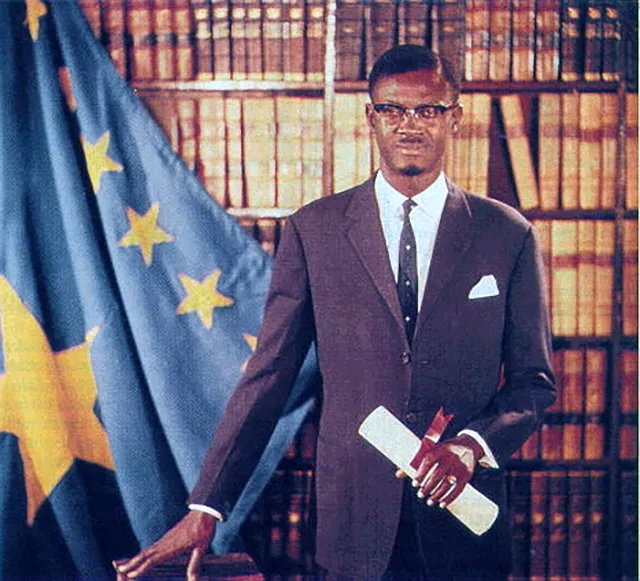
The DRC today holds some of the world’s most strategic mineral deposits — cobalt, coltan, copper, uranium, and gold — essential to the global clean energy transition and to the lithium-ion batteries powering the technologies of the 21st century. Yet roughly three-quarters of the Congolese population lives in poverty, and the eastern provinces continue to bleed in conflicts whose fuel is, in no small part, mineral extraction. The contradiction Lumumba diagnosed in his independence day speech — that the children of the land do not benefit from the land’s wealth — persists with a fidelity that history can only call haunting.
Al Jazeera’s analysis, published in January, observed correctly that while Belgium edges toward a criminal reckoning, much of postcolonial Africa still declines to seriously engage Lumumba’s political thought — invoking his martyrdom while setting aside his demands. His name adorns streets, airports, and mausoleums. His ideas — pan-African economic sovereignty, the right of a people to the full wealth of their own soil, the rejection of neo-colonial financial architecture — remain, in many capitals, quietly inconvenient.
The African Mirror would suggest that the true honouring of Lumumba is neither a street name nor even a criminal conviction in Brussels, welcome as that would be. It is a continent that finishes what he started.
ANALYSIS: WHAT HAPPENS NEXT
The Brussels ruling of 17 March 2026 is not yet a trial date. Davignon’s legal team has two weeks to lodge an appeal against the referral decision. Should they do so, a higher court must rule before any criminal hearing proceeds. Given Davignon’s age — 93 — the timeline is acutely sensitive. If he dies before a verdict is rendered, the case dies with him: there are no other living suspects. The Lumumba family’s lawyers are acutely aware of this and have pressed for urgency throughout the proceedings.
Should the appeal fail and the trial proceed, Davignon would face charges of participation in war crimes as defined under Belgian law. The prosecution’s case rests substantially on documentary evidence — diplomatic cables, telexes, and the findings of the 2002 parliamentary commission — rather than living witnesses. For the family, a guilty verdict would represent not merely the closing of a personal wound but a historical marker: the first time a European court has held a named individual criminally responsible for the state-sponsored murder of an African leader by his former colonial rulers.
The wheels of justice, as the Lumumba family knows with a depth that most of us will never understand, turn painfully slowly. But on the morning of 17 March 2026, in a courtroom in Brussels, those wheels turned. Africa heard them. And the dead — who do not die, but sleep — stirred.